
Sporting Wheelies’ Raising the Bar, an in-school program led by people with disability known as ‘Game Changers’ who share their personal experiences, teach inclusive language, and demonstrate adaptive sports, is providing students with an opportunity to rethink disability and see the world through a new lens.
Approximately 946,300 children and young people aged between 0 and 24 live with disability in Australia, and of those, almost a quarter report being excluded from broader school activities such as assemblies or sport.
“Our goal is to develop young people or students into that person who graduates, who is confident in engaging with people with disability, but also is conscious of the barriers that people with disabilities face,” Dane Cross, Chief Operating Officer at Sporting Wheelies, tells EducationHQ.
“So, it might be I’m a student who graduates as a hospitality worker, and then I’m conscious of the requirements that people with disability might need if they come into my cafe that I’m working at, or my hotel that I’m working at.
“But I also might be an architect or building designer who also needs to build with accessibility at the forefront of my thinking.
“So, it develops that mindset of inclusion from a young age.”
The Pathways to Inclusion program combines adaptive sport, immersive learning experiences and powerful lived-experience storytelling to help students better understand disability, challenge assumptions and build empathy.
“True inclusion starts with understanding,” Cross shares.
“Pathways to Inclusion gives students the opportunity to step into someone else’s shoes, challenge their own perceptions and develop the confidence to become inclusive leaders.
“At the same time, it provides teachers and families with practical strategies to help create environments where every student feels valued, respected and able to thrive.”
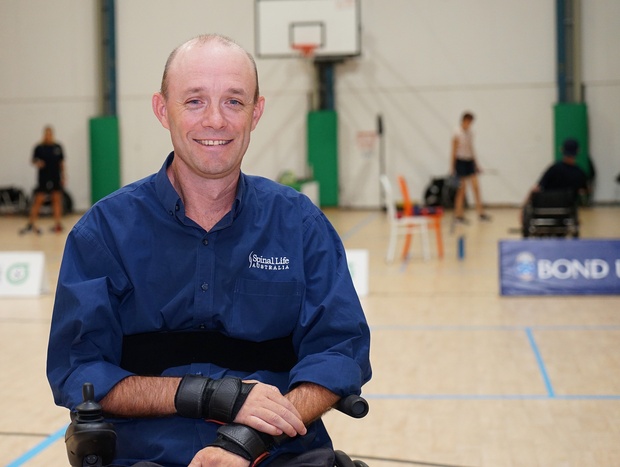
What Jacob Lake, pictured above, loves about Pathways to Inclusion is students get to participate, ask questions and learn through experience. “I think there’s something really powerful about hearing directly from someone who has lived with disability,” he says.
The beauty of the program is its flexibility and the ease in which it can fit in with schools’ needs.
“What we deliver aligns to various elements of the school or the Australian school curriculum, and so it’s very easy for a teacher to hand over a session, dedicate a timeslot within their school term to enable us to facilitate those outcomes that they’re trying to achieve as part of what aligns to the school curriculum,” Cross explains.
“And we’re quite flexible in what we can deliver and the time frames in which we are restricted to.
“We understand that it’s a full curriculum and that it may just be one class, on one day in one term, in one year, that we can come in and do this on – but we can also do it over double periods or we can do a whole day of immersive awareness training.”
Sporting Wheelies offers tailored experiences across multiple year levels, enabling schools to embed inclusion throughout their community.
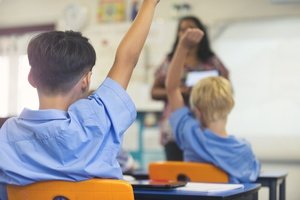
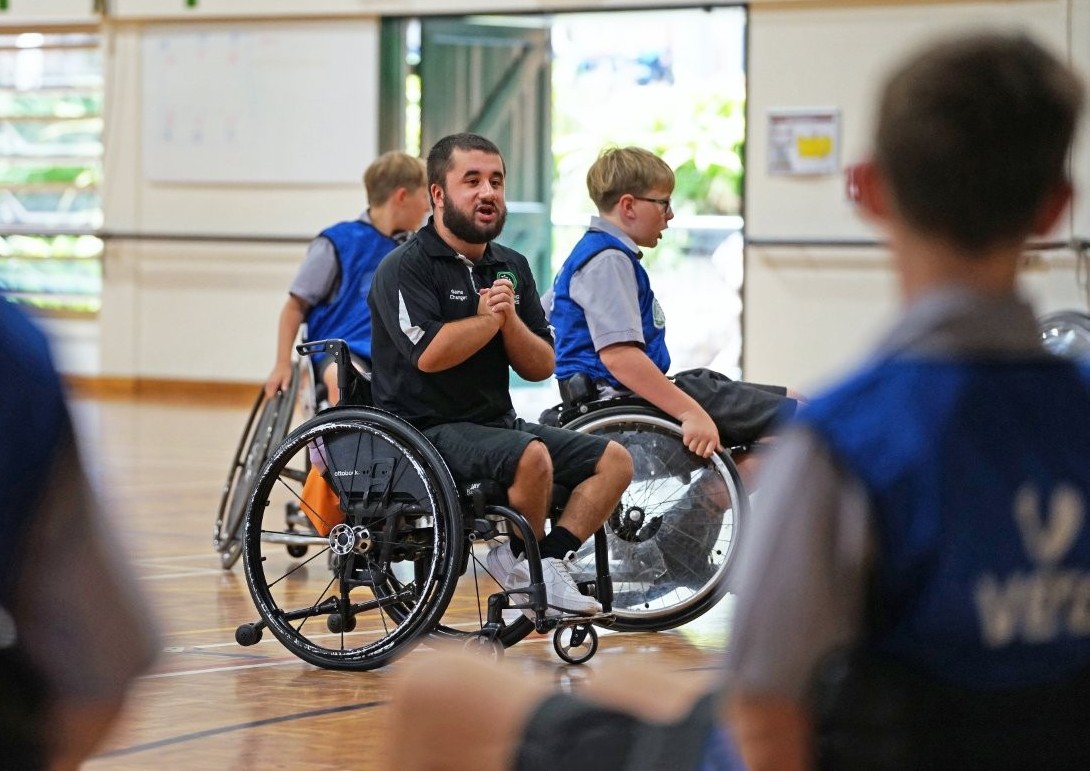
For Year 7 students, through adaptive sports such as wheelchair basketball, in Raising the Bar students experience first-hand the importance of teamwork, resilience, and accessibility while developing a deeper understanding of disability through participation.
As part of what’s called Realistic Race, Year 10 students work in teams to complete practical challenges using a range of mobility aids and assistive devices, building problem-solving skills while gaining a greater appreciation of everyday accessibility barriers.
Year 12s later take part in what’s called the Lived Experience Leadership Talk, where students hear directly from presenters with lived experience of disability, gaining valuable insights that challenge stereotypes and encourage respectful, inclusive attitudes.
With more than one in four Australian school students now receiving educational adjustments because of disability, and with the number of students receiving adjustments increasing over a decade from 18 per cent in 2015 to 27 in 2025, schools are increasingly seeking practical ways to foster understanding, empathy and inclusion across their communities.
“I think part of the value of the experiential side of the program is that they are exposed firstly, to people with lived experience of disability, showcasing what they can do on a basketball court, for example, and then in that immersive-style awareness training aspect, what the barriers are that they may not have noticed before,” Cross shares.
“So all of a sudden, their eyes are open to this world that they ... may not have been aware of before, so it starts that conversation.”
Cross says there have been some great examples of students who live with disability experiencing the program for the first time, and feeling confident enough beyond or after that program engagement, to speak openly about their disability.
“We’ve had one student with an arm amputation, and we got a report back from a teacher, that she hadn’t spoken about her disability at all, and she would be very shy in the class and was quite reserved.
“But after the program came to her school, all of a sudden she found a new confidence. She’s seen other people doing and achieving things, seeing other people like her. And so ... she started to feel more confident.
“And that’s just one example of many of those types of instances where we’ve got some really great outcomes from this program.”
Jacob Lake is a Game Changer who is helping to challenge perceptions and inspire others through his experience living with Osteogenesis Imperfecta, commonly known as Brittle Bone Disease.
Throughout his life, he has experienced more than 100 fractures.
“One of the best things about going into schools is watching that moment when a student’s perception changes,” Lake says.
“They might start with an assumption about disability but, after playing an adaptive sport or hearing someone’s story, they start asking different questions and seeing things differently.”
He says you can tell someone to be inclusive, but it’s much more powerful when you give them the opportunity to experience what inclusion actually means.
“That’s what I love about Pathways to Inclusion – students get to participate, ask questions and learn through experience.
“I think there’s something really powerful about hearing directly from someone who has lived with disability.
“Students can see that we’re not defined by our disability – we have the same interests, ambitions, personalities and dreams as anyone else.”
Lake says if students walk away from the program thinking differently about disability, being more willing to include someone or simply feeling more comfortable starting a conversation, then something really meaningful has been achieved.
“Inclusion isn’t about treating everyone exactly the same. It’s about making sure everyone has the opportunity to participate, belong and be themselves.”
Cross says the biggest challenge at present is getting the word out. Once schools get onboard, the program has proven track record of delighting all who’ve signed on.
“The hardest part that we experience at the moment, is getting on schools’ radar, helping them understand what we deliver, how it aligns to the curriculum, and then getting a space within their calendar,” Cross shares.
“They’re the barriers that we face getting it in, but once we get in, schools get us back, year on year.”