The new analysis has revealed serious shortcomings in the materials and advice used to guide schools’ policy and practice when it comes to student behaviour, finding government websites largely contained ad-hoc and inconsistent information that was hard to locate.
Some gave outright mixed messages.
One site included discredited advice to teach according to students’ learning style, as well as material on peer mediation – a popular approach one school bullying expert has warned is potentially harmful and based on just one compromised study.
“...the advice should acknowledge sources or provide links to its evidence,” the research team, led by Russell Fox from Monash University, urged.
The same site also contained several publications about the use of restrictive practices.
This risks sending the wrong message to schools and the general public, the study warns.
“Providing information on restrictive practices alongside behaviour policy and procedure risks giving the impression that using such practices to manage student behaviour is acceptable.”
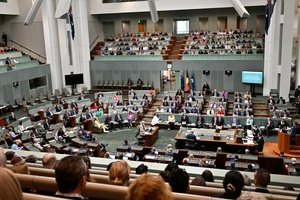
The latest PISA data shows the disciplinary climate in Australian classrooms is among the worst in the OECD, with comparatively high levels of noise, disorder and other behaviours routinely interfering with teaching and learning.
Among the 38 countries involved, Australia had the fifth lowest disciplinary climate in science lessons – although some have noted there is no single, consistently applied definition of classroom disruption.
A CIS study released earlier this month found one third of lesson time is being lost to student misbehaviour in schools across the country, suggesting repeated low-level disruptions that can derail learning and escalate into more violent behaviour have become normalised.
Fox and his research team say it is incumbent on education departments to provide a clear take on what an evidence-based approach to behaviour support entails – but instead their websites offer “an array of student engagement initiatives with no common language or clear indication of alignment or the priority attached to each”.
“For example, within one website there were references to “tiers of support”, a “care continuum”, and an “ecological” approach.
“The scale of the recommended strategy or practice varied, with some sites providing more materials on individualised support compared to universal or school-wide supports.”
Only a minority provided overarching documents that actually gave a policy direction and an organising framework that would help educators contextualise the array of initiatives noted.
Some sites offered a confusing array of potential strategies for schools to consider.
Meanwhile, clunky or ‘non-intuitive’ website architecture, coupled with the dubious organisation of materials, made finding information on student behaviour a challenge.
“For example, in some cases the behaviour support information was grouped with parent and family information or found in the student wellbeing area. In other cases, it was found in linked publications or even across several different locations within the website,” the study found.
From a national perspective, a ‘discernible lack of alignment and consistency’ was evident in the language used on the websites. Researchers found ‘a panoply of terms’ – such as ‘resilience development’ and ‘meditation practices’ – related to supporting student behaviour, some without a clear justification for why schools should adopt them.
And while the policies from five states and territories steered schools to take a prevention-focused, supportive approach to behaviour before applying disciplinary consequences, the main emphasis on two other sites was on detention, suspension, and exclusion.
A lot of the information provided across the websites lacked the detail needed for practical implementation, with limited information on instructional practices to bolster student engagement in the classroom.
While there were frequent references regarding the need for teachers to explicitly teach behaviour and to establish rules and routines, additional elaboration was missing.
Similarly, recommendations to take a whole school approach to behaviour support were frequently iterated on the sites, yet specific examples on how to do this were commonly missing – as was any explanation of what a “whole school approach” might actually entail.
While AERO is ‘attempting to fill the gap’ left by ITE courses and state education websites with its range of resources including explainers, practice guides, and instructional videos showing evidence-based behaviour support in action, governments need to do better on this front, the study concludes.
“Access to high quality advice concerning behaviour support is an ongoing concern to Australian teachers.
“Not only should advice be congruent with current research evidence, but it should also be easy to locate, useable, and comprehensive.”