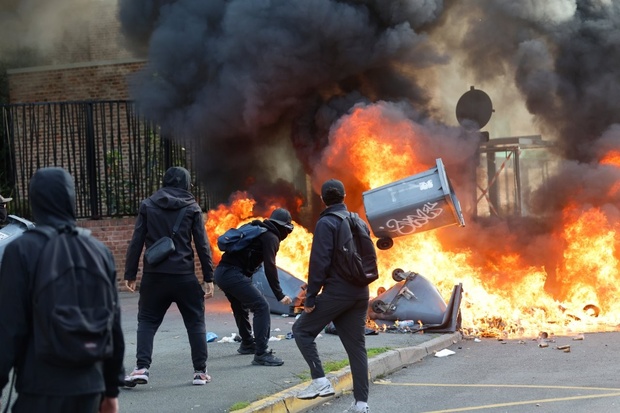
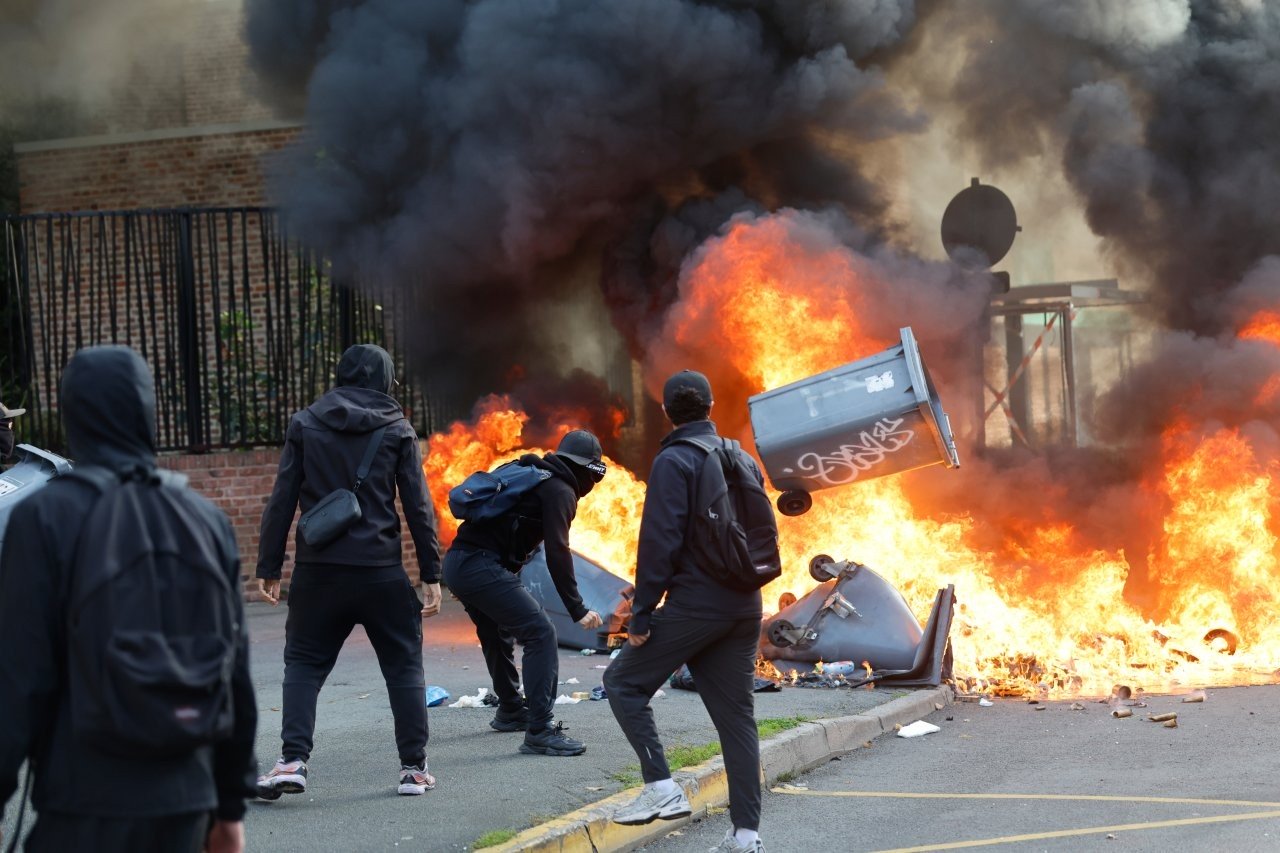
What began with demonstrations in the Paris region last week has since snowballed across the country, with about 900 demonstrations, blockades and related incidents currently under way outside high schools and 160 already shut down because of the violence.
According to The Guardian website, access was also blocked to about 30 university campuses on Thursday, including in Paris and Marseille.
Guardian reporter Jon Henley said nearly 3000 secondary school students, aged between 15 and 18, have been detained since the start of the protests, including 1949 on Thursday, the interior ministry said.
More than 300 police and dozens of firefighters, teachers and pupils have been injured, Henley said.
Many of the schools have switched to online classes to protect teachers and pupils.
The pupils’ main grievances include overloaded timetables and overcrowded classes, insufficient teachers and having to endure unbearable temperatures during Europe’s well publicised record heatwaves over the recent northern summer.
Student protesters have started fires in at least two French schools, while teachers were inadvertently splashed with petrol at a third, amid increasingly violent clashes over staff shortages and dilapidated buildings.
At Marseille’s Victor Hugo high school on Thursday, the teachers were inadvertently splashed as a student attempted to throw petrol into a rubbish bin, local authorities said.
Earlier the prosecutor’s office had said the teachers had been assaulted and “doused in petrol”.
At another school in the city, Saint-Exupery high school, hundreds of young people surrounded a fire truck that had arrived to put out a blaze in the morning, police said. The attackers forced the firefighters to flee the vehicle, then set it alight.
Another blaze hit a school in the western city of Nantes, fire crews said.
French education minister Edouard Geffray said on Thursday evening that he would successively meet representative staff unions, parent associations and student associations on Friday.
The demonstrations and blockades, which began last week, have become a political flashpoint at a sensitive moment for the government, which announced a series of deeply unpopular spending cuts in its 2027 budget on Thursday.
Prime Minister Sebastien Lecornu’s office held a crisis meeting on Thursday afternoon on the protests, which have left dozens of people injured. Hundreds have also been arrested, most of them teenagers, officials have said.
In a statement, Lecornu’s office said: “This upsurge in violence makes it virtually impossible to maintain the continuity of public education and is exposing staff and students to danger”.
In the Parisian suburb of Saint-Denis, crowds of young people massed in front of a line of police.
One student held up a sign marked with: “Can we explain ourselves without being tear-gassed?”
Students have accused the police of using heavy-handed tactics, including the use of tear gas.
The government criticised the violence that broke out during some of the protests, but said difficulties in high schools should be acknowledged and addressed.
Interior minister Laurent Nunez said in some places troublemakers were moving from school to school to incite violence.
Geffray called for schools to hold classes remotely if protesters were blocking their premises.
“Violence will not keep our students from their fundamental right to an education,” he said on X.
In Nantes, Olivier Chateau, a deputy to the mayor, told broadcaster franceinfo that the fire at Nelson Mandela high school was under control and that there had been no injuries.
People in the building had been evacuated, while students due to arrive at the school were turned away, he said.
(with AAP)