I'd like to describe for you a laboratory experience carried out with 1st and 2nd year secondary school students (Years 7 and 8s in Australia), in which the effects of different alcohol concentrations (equivalent to beer, wine, whisky, and fernet) on rosemary plants were studied, using a control plant treated only with water.
Beyond its biological value, the proposal sought to have students build their own process of observation, comparison, and hypothesis formulation through the application of the scientific method.
At the conclusion of the experiment, the interpretation of the results, the progressive deterioration of the alcohol exposed plants contrasted with the vitality of the control plant, was used as a starting point for a collective reflection on the normalisation of alcohol consumption among adolescents, without replacing scientific rigour with a moralising discourse.
The experience shows how an experimental design in Biology can become a pedagogical tool for developing critical thinking and a conscious perspective on social phenomena, integrating scientific knowledge with value-based education.
The theoretical foundations
The best questions do not always arise inside a laboratory. Sometimes they appear in the most everyday places and, almost without intending to, end up becoming the starting point of an educational experience.
This project began that way, with me standing in front of a supermarket shelf filled with alcoholic beverages. While I stood there, a question came to me that stayed with me for several days: how is it possible that alcohol consumption has become so normalised that it has become part of the weekend entertainment of so many adolescents?
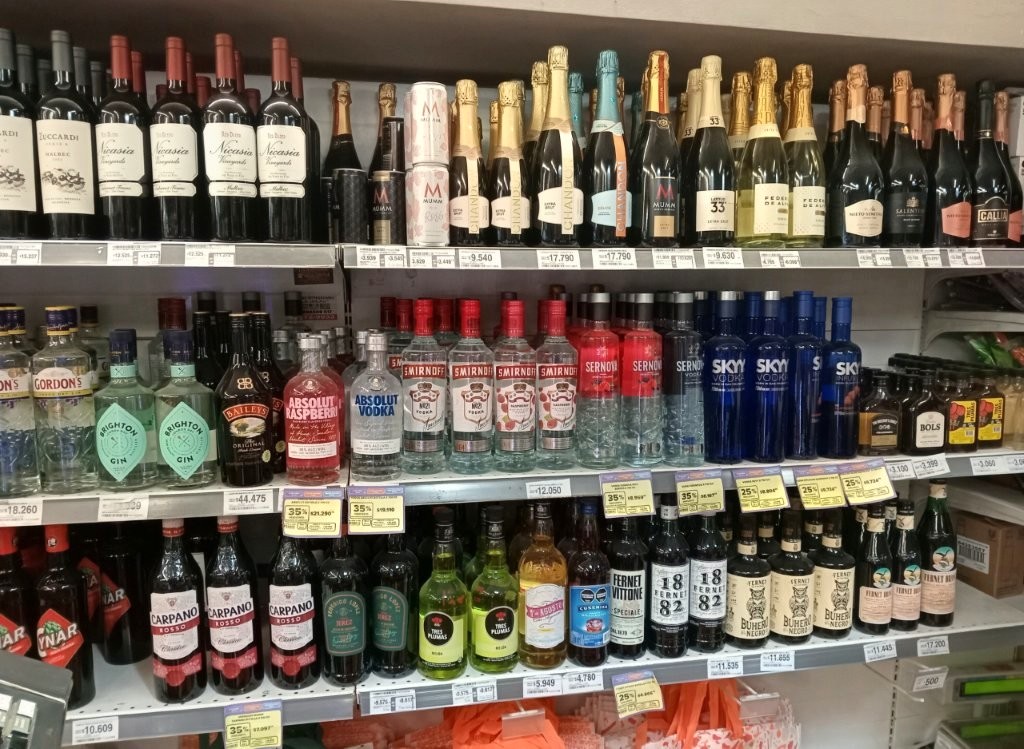
The answer could not be found in a theoretical explanation or a traditional class alone.
As a Natural Sciences teacher, I felt the need to build a different kind of experience a proposal in which the scientific method on its own terms could generate questions, spark curiosity, and open a space for reflection without abandoning the rigor of Biology.
The goal was not to talk to students about alcohol, but to invite them to discover, through an investigation built by themselves, how scientific observation can help us think about problems that are part of our reality.
With that idea, a laboratory experience began to take shape.
The initial purpose seemed straightforward: to study the effects of different alcohol concentrations on rosemary plants. However, from the very beginning, it became clear that the real challenge went far beyond observing a biological phenomenon.
What we were seeking was to build an experience in which scientific knowledge would not end with the explanation of a plant-based process, but would instead invite students to formulate questions capable of transcending the laboratory.
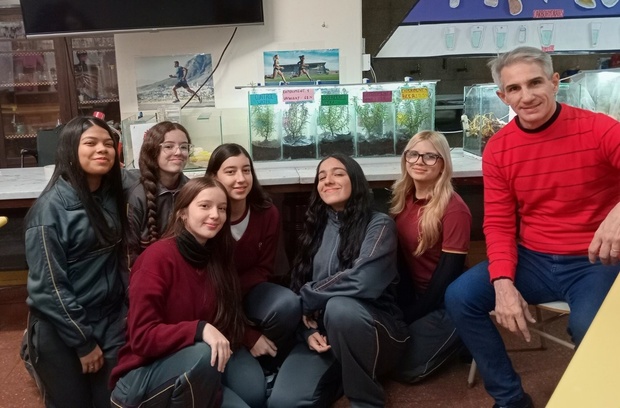
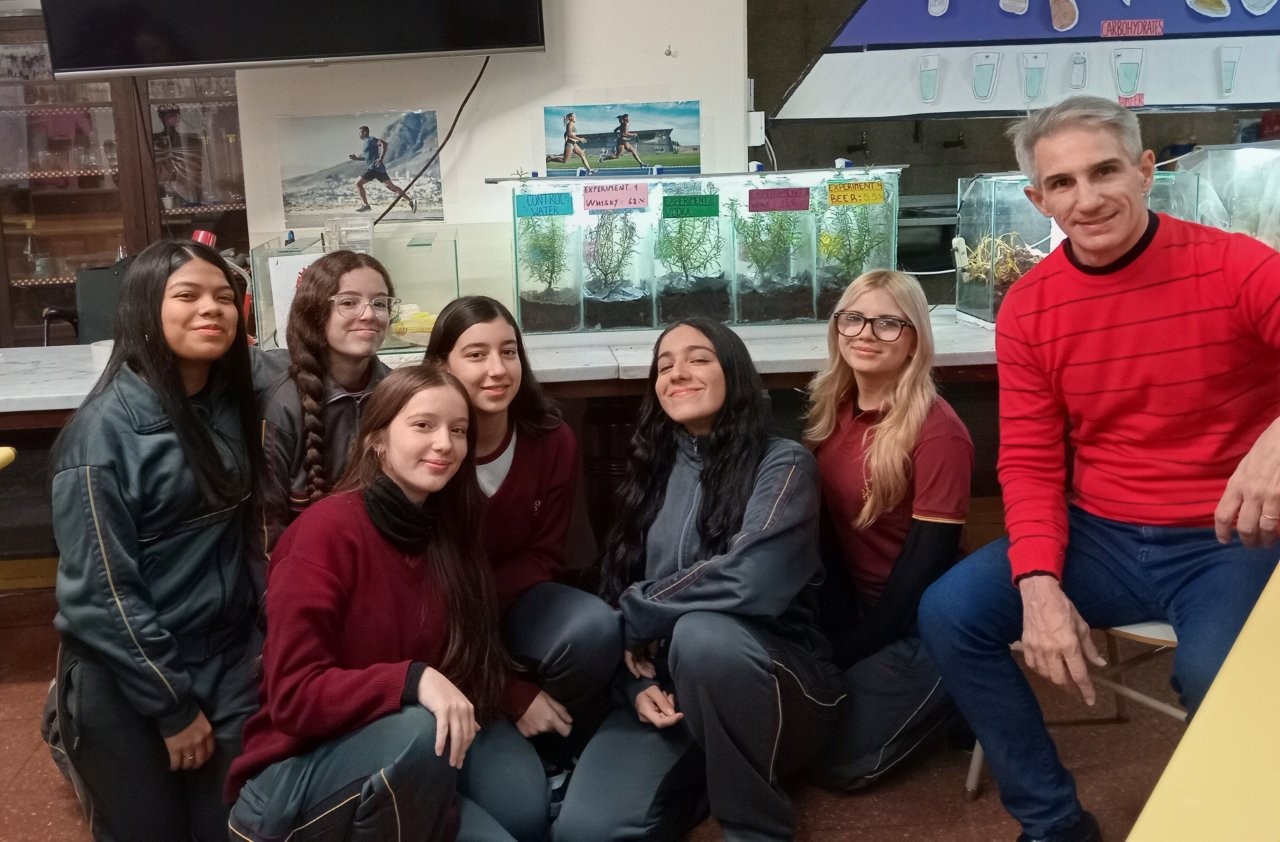
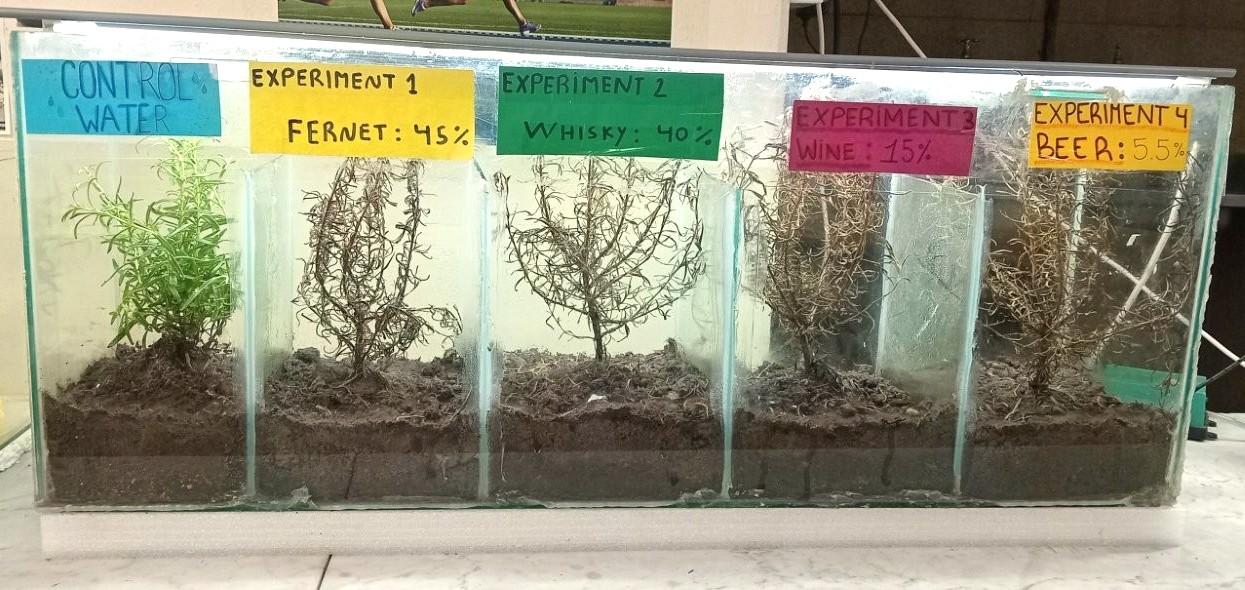
Students participated actively from the first day. They organised the experimental setup, prepared the materials, divided a tank into independent compartments, labeled each section, and prepared the different alcohol solutions equivalent to commonly consumed beverages such as beer, wine, whisky, and fernet (a bitter herbal liqueur widely consumed in Argentina).
A fifth plant, treated with water only, would serve as the experimental control. My role was to guide the work, accompany the research process, and help transform each observation into a new question. The students were the ones who built the project with their own hands.
The choice of rosemary responded to practical criteria. It was a plant of appropriate size for the experimental setup and showed enough resilience to withstand several weeks of monitoring. This characteristic allowed us to clearly observe the changes produced by the different alcohol concentrations, comparing them continuously with the control plant.
From that moment on, the laboratory was no longer simply the place where Biology classes were held.
Each session began with a routine that the students themselves naturally incorporated. They prepared the sprayers, carefully applied each solution to the experimental plants, and almost immediately gathered to observe whether any difference had appeared since the previous class.
During the first few days, almost nothing visible occurred. Yet, far from diminishing, curiosity only grew. The question that kept coming up was always the same: ‘Hey teacher, did something change today?’
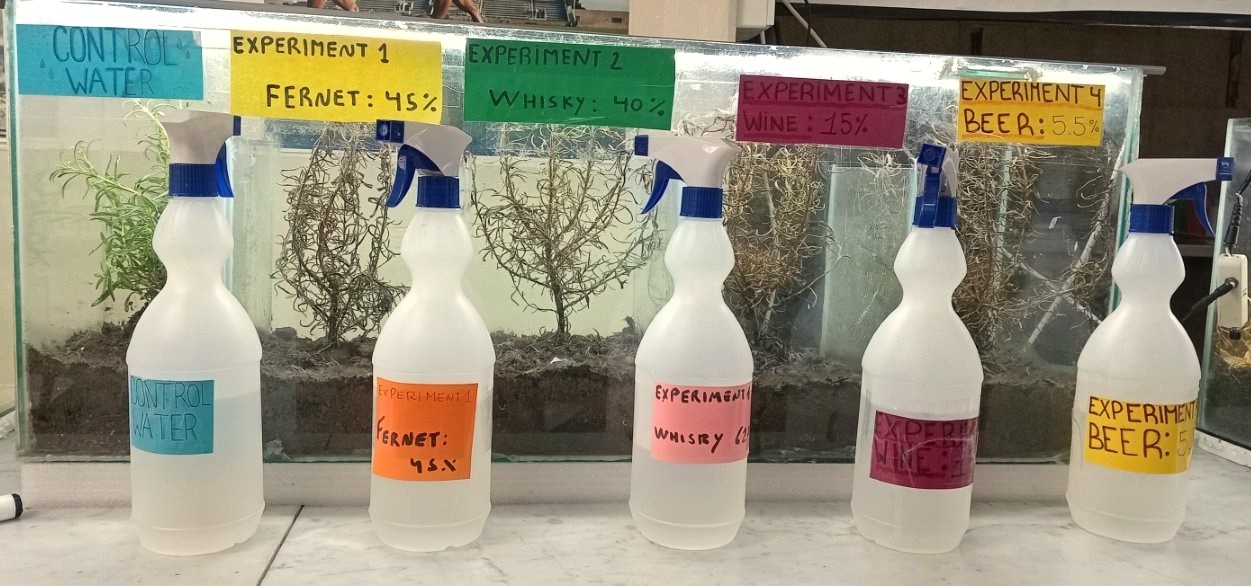
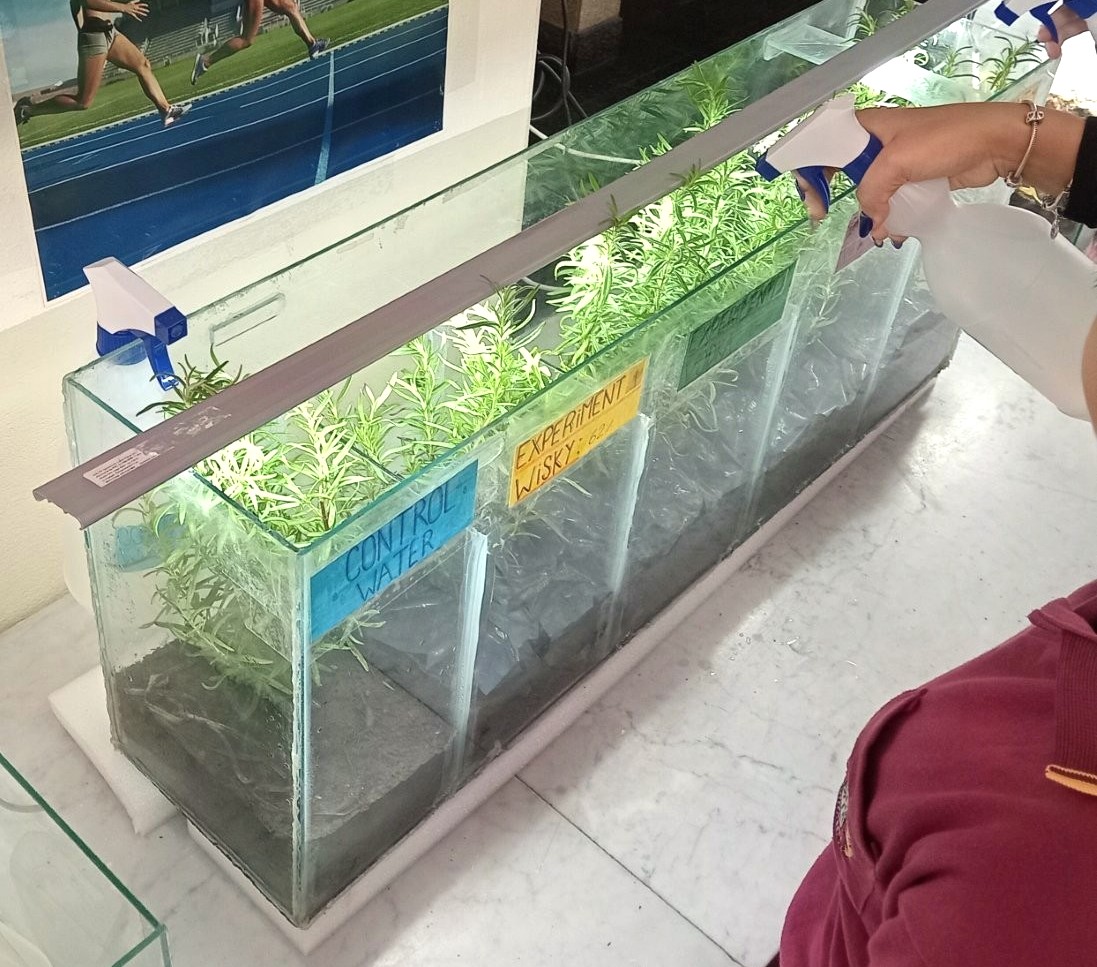
That daily anticipation transformed the dynamics of the laboratory.
Students began moving through each compartment of the tank with increasing attention. They compared the colour of the leaves, noticed small variations, discussed possible explanations, and formulated hypotheses about what might happen in the days ahead.
Without realising it, they were incorporating one of the most important lessons of scientific work: understanding that knowledge does not appear immediately, but is built through observation, comparison, recording of evidence, and waiting for results to speak for themselves.
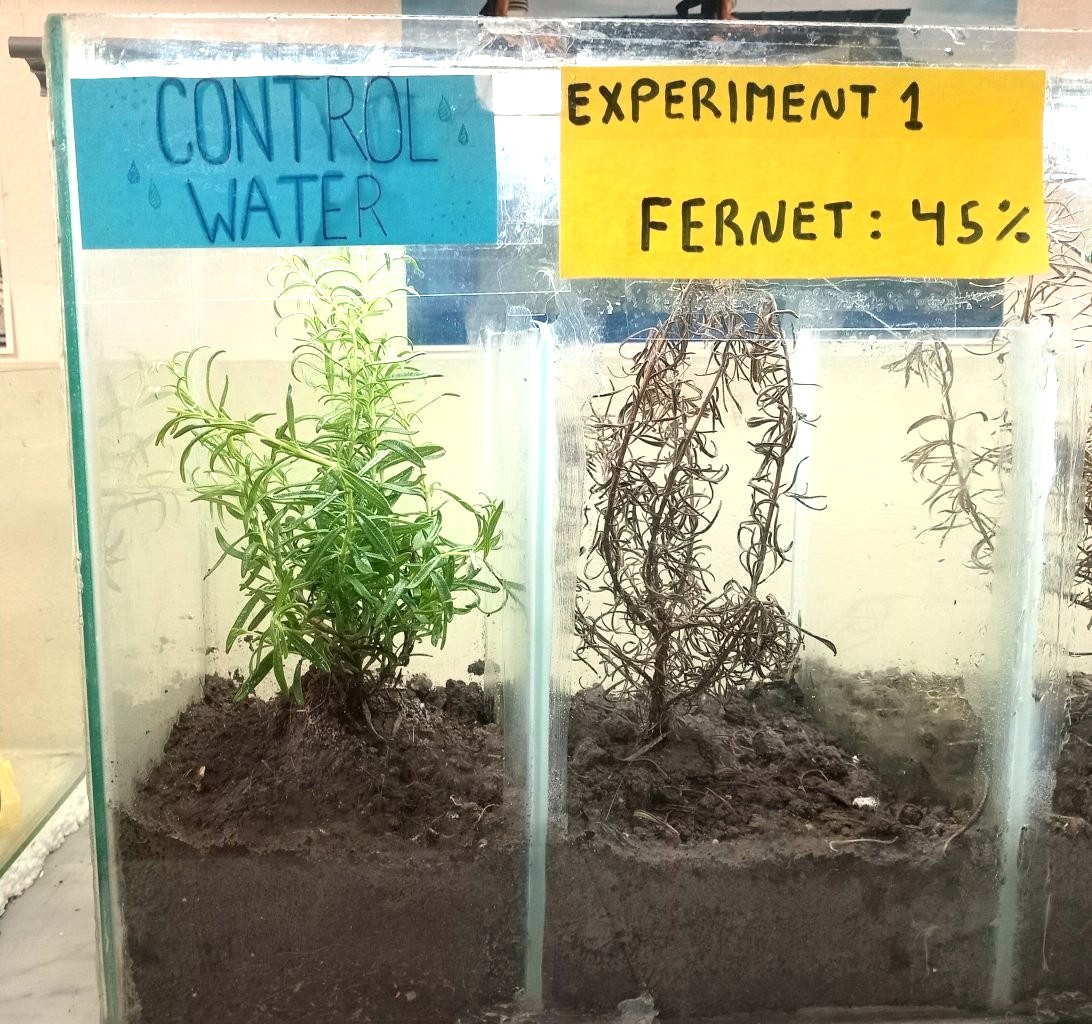
As the weeks passed, the first visible changes began to appear. The plants treated with concentrations equivalent to whisky and fernet were the first to show clear signs of deterioration. Shortly after, the same occurred with those corresponding to wine and beer.
Meanwhile, the plant receiving only water remained green, firm, and healthy. Everyone observed these differences with great interest, convinced that the experiment was reaching an important moment. Yet no one could yet imagine that the deepest change of the entire experience would not occur in the plants. It would occur in the way of interpreting them.
The moment the perspective changed
After several weeks of observation, the experiment reached its final stage.
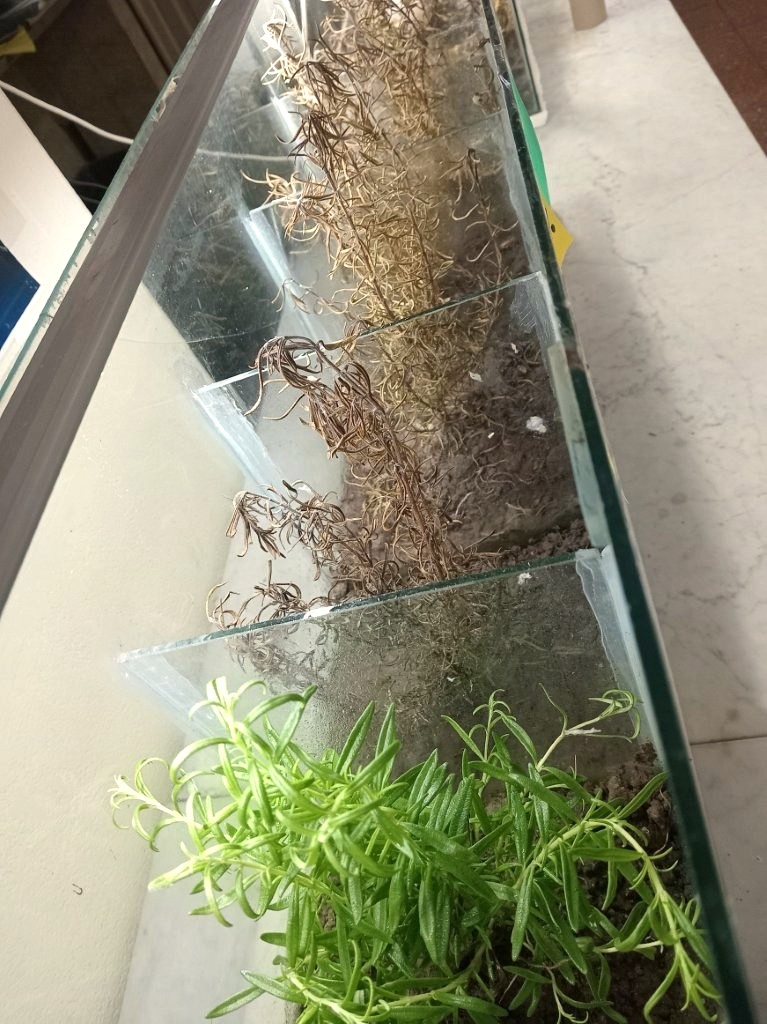
The differences among the plants were striking. Those exposed to the different alcohol concentrations had progressively lost their green colour, their leaves had begun to dry out, and the deterioration was evident.
In contrast, the plant treated only with water maintained a healthy appearance, preserving the growth and vitality that had characterised the entire experimental process.
With all the students gathered around the tank, the final observation of the project began.
The first question was simple and aimed to recover everything learned during the previous weeks. ‘What happened to the plants?’ The answers came immediately. ‘They oxidised, teacher. They dehydrated.’
The answers were absolutely correct. From a biological standpoint, that was exactly what had happened. Throughout the project, the effects of alcohol on plant tissue had been studied, and the students were correctly interpreting the evidence obtained through observation.
After a few seconds of silence, a new invitation was offered. ‘Yes… that is the biological explanation. But now let us try to observe them from a different perspective’.
The atmosphere in the laboratory changed immediately. The plants were still exactly the same. The experiment had not changed, nor had the results or the scientific evidence. The only thing that began to change was the way of interpreting them.
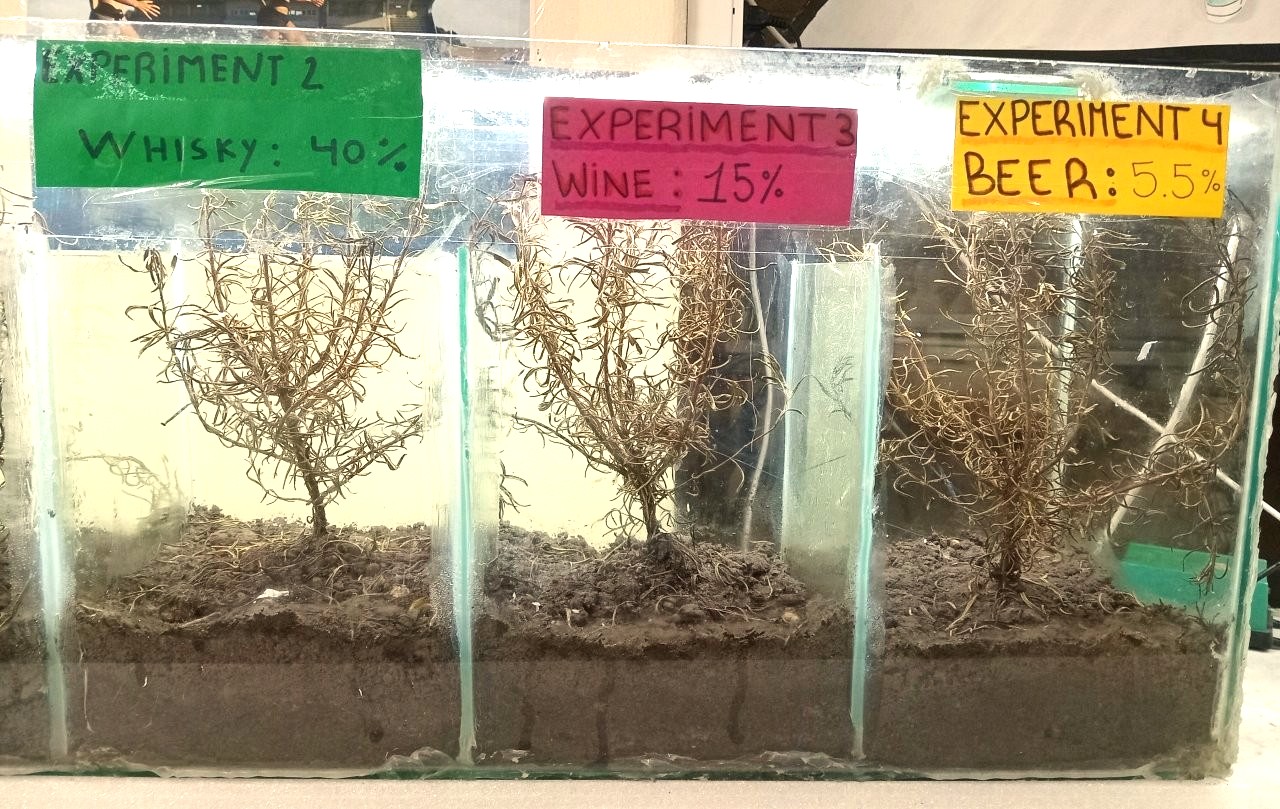
From that moment on, those plants began to represent human situations present in our society.
They were no longer simply plant organisms affected by different concentrations of alcohol. They could also symbolise people who were gradually beginning to isolate themselves, who were losing connections, who were finding it difficult to keep up with their studies, whose physical and emotional health was deteriorating, and whose quality of life was slowly being altered.
No attempt was made to replace the scientific explanation with a moral discourse, quite the opposite. Biology continued to occupy the central place in the experience. What changed was the scope of the learning.
The scientific method stopped explaining only a plant-based phenomenon and became also a tool capable of opening a reflection on a reality that is part of the everyday lives of many adolescents.
For a few seconds, no one spoke. That silence was probably one of the most meaningful moments of the entire project. It was not an uncomfortable silence – it was a silence of reflection. Each student continued looking at the same plants, but was no longer seeing them in the same way.
When the activity ended, something else occurred that had not been planned. The students began to applaud spontaneously. As the materials were being put away, several came forward to express their gratitude for the experience and share what they had felt.
Some said the workshop had made them think in a different way. Others expressed the wish that the activity could be carried out with other classes as well. They were no longer talking about the colour of the leaves or the effects of alcohol on plant tissue. They were talking about what the experience had allowed them to understand.
In the days that followed, teachers, school administrators, and other students began to approach, curious to learn how the project had come about and what the students’ reaction had been.
Little by little, the experience stopped belonging only to the laboratory and became a topic of conversation within the entire educational community.
Over time, it became clear that the most important result of the project was never inside the tank. It was not the dried leaves, nor the different alcohol concentrations, nor even the plant that remained healthy.
The true result was confirming that an experience built through the scientific method can become a powerful pedagogical tool for fostering observation, critical thinking, and reflection – without abandoning scientific rigour.
That was, probably, the most valuable lesson of the entire experience.
Teaching Natural Sciences does not consist only of explaining how the biological world works. It also means creating situations in which that knowledge allows us to better understand the world we live in.
When that happens, the laboratory stops being simply a place where experiments are conducted. It becomes a space where, in addition to building scientific knowledge, citizens are also formed – citizens capable of observing reality with a more critical, more conscious, and profoundly human perspective.