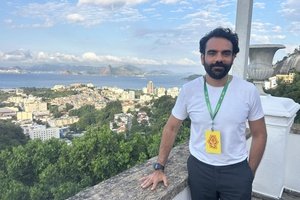


So suggests gifted education expert Dr Jae Jung from UNSW Sydney, who notes that currently there is no explicit mention of gifted and high-potential students in the Standards.
“If you [do] a careful examination of the standards, there’s explicit mention of Aboriginal and Torres Strait Islander students. There’s clear mention of students with disability… gifted students are only broadly mentioned in Standard 1.5 when it says, ‘differentiating teaching to meet the specific learning of students across the full range of ability’.
“So, it’s a very generic mention,” Jung says.
Decades of neglect
Experts in the field of gifted education have warned for years of the continued systemic neglect of Australia’s high potential and gifted students.
Dr Michelle Ronksley-Pavia, an expert in giftedness and twice-exceptionality from Griffith University, has called out the lack of federal government direction for meeting gifted students’ learning needs or for tapping into their potential.
“Where policies do exist at state and territory levels, they often languish on websites but are not implemented or ‘enforced’, or surprisingly are removed altogether and subsumed in inclusive education policies that lack specific direction for schools in supporting these learners,” Ronksley-Pavia previously told EducationHQ.
Jung queries why the Standards make explicit mention of Aboriginal and Torres Strait Islander students and those with disability, but fail to acknowledge gifted and high potential students.
“Obviously they’re important student groups to support, but why is it only them, why aren’t gifted students being explicitly focused on? That’s one thing I’d like to see change.”
‘Out of touch with the evidence’
In April, AITSL commissioned a phased review of the Teacher Standards (APST) which is due to conclude in February next year.
Jung says he will be closely involved in the review process to ensure gifted students get something of a look in.
The Standards were endorsed by Education Ministers in 2010 and have been in place for over 15 years. They have not been comprehensively reviewed since they were introduced and have faced growing scrutiny in recent years.
NSW school leader Rebecca Birch, for one, has previously argued the Standards are ambiguous, vague and out of touch with the evidence about what works best in teaching and learning.
The Standards now function as a ‘blank canvas’ when it comes to defining best practice by inviting a host of unhelpful interpretations from initial teacher education (ITE) and PD providers, Birch said.
“I think they read like a bit of a shopping list, rather than the setting of a standard,” the educator from an independent school in Sydney told EducationHQ.
Focus on assessing student potential
Jung would like some further changes made to the standards – and first up is including how teachers can actually assess student potential.
“At the moment, there’s nothing on [this]. There’s nothing on the appropriate pacing of instruction. There’s nothing on the appropriate progression of students according to their capabilities.
“And there’s nothing on supporting students to fulfill their potential,” he says.
These are all important principles that apply across all students, not just gifted learners, he flags.
“And also Standard 5, which [has] a focus on assessing, providing feedback and reporting on student learning.
“There’s a lot on reporting on student achievement, but there’s nothing on reporting on student potential … this is not being mentioned at all.”
AITSL have outlined the ‘content considerations’ that are shaping the review of the Standards, with no mention of gifted students.
Rather, the institute highlight a focus on:
“Using the evidence to identify key renewal priorities, including optimising teacher effectiveness; maximising the progress and achievement of learners; articulating the inclusivity of learners with disability; strengthening the safe, effective and ethical use of digital tools and technologies; strengthening child safety requirements; and strengthening cultural responsiveness and social cohesion.”
Defining the ‘effective’ teacher
Research published last year accused the APST of failing to acknowledge the complexity of teachers’ actual work with their narrow focus on teaching and teaching practices.
Led by Western Sydney University’s Dr Rachel White, the research team contended that despite decades of research around the world on what the ‘effective’ teacher entails, no set of standards to date has attempted to capture the full spectrum of teacher quality.
“A lack of support for the development of teacher qualities has led in many cases to teacher burnout, as the interpersonal labour of teaching takes a toll on teachers’ emotional capacity,” they argued.
White told EducationHQ that while the APST do serve a purpose in their current form, they fail to acknowledge the dispositions and personal characteristics that shape how teachers apply their expertise.
There is more to exceptional teaching than just possessing sound content and instructional knowledge, she emphasised.
“It’s not just that you go into a classroom, you know what you’re teaching, and therefore you’re a good teacher. It’s why are you making the decisions that you’re making? What level of resilience are you at? How are you being supported in creatively approaching your teaching, all of that kind of stuff.
“And that’s where the standards can be a bit restrictive, in that it doesn’t account for all of those differences that come into who teachers are that make them fabulous in front of different kinds of classrooms.”