

ACARA’s latest National Report on Schooling in Australia shows some 27 per cent of students across the country received an educational adjustment due to disability last year.
This was up from 25.7 per cent in 2023 and 18 per cent in 2015.
More than half of these adjustments were provided to students with cognitive disability, 36.3 per cent to those with social-emotional issues, 8.3 per cent for students with physical disability and 2.4 per cent for those with sensory issues.
Adjustments can range from allowing a student to wear noise-cancelling headphones in class, to providing extra time to complete assessments and/or differentiated instructional practices, among a long and varied list of requirements that schools cater to.
One secondary teacher from a Melbourne public school told EducationHQ that it was a real challenge for her and her colleagues to deliver high-quality Tier 1 instruction with all the individual adjustments in play.
In the average class, the teacher says, she might have anywhere from four to ten students who are on individual learning plans that require specialised supports and adjustments.
Some might have ADHD and are allowed to signal they need a break from the classroom if they become overwhelmed, others need special support in certain learning areas and might need visual aids to help with writing, for example.
Others have first-aid plans in place, while some students have permission to wear headphones at certain times and or/use fidget spinners in the classroom, she adds.
The teacher says disruption for the whole class was common as a result.
“We certainly cater to individual needs,” she begins.
“I’m looking up one student now and it says ‘*Jessie has permission to use fidgets’. And they’re really annoying because the fidgets can be anything, but they’re very fond of these gel-filled squeeze balls – they’re used to help them focus and pay attention in class.
“And so at any one time, students are squeezing these balls in class and they often break them and then you’ve got gel all over a desk.
“It can be disruptive because the other kids will argue, ‘well, she can have one, why can’t I have one?”
Individual adjustments around assessment tasks have also become tricky for schools to manage, the teacher reports.
“This might include rest breaks, a longer period of time to do assessment tasks, but it can also mean being put in separate quiet space to do the assessment with someone supervising them, which is also a challenge because obviously the teacher can’t do that, so you need to request support for someone to sit with that student…”
Teachers are also required to report on how students with disability adjustments are progressing so that this can be used in inclusion support meetings with parents, the educator notes.
“That’s another administrative task. We’re writing, for example in English how they’re going, or ‘Molly is not using headphones and we’re not sure why not’.”
“So it’s a lot to juggle”.
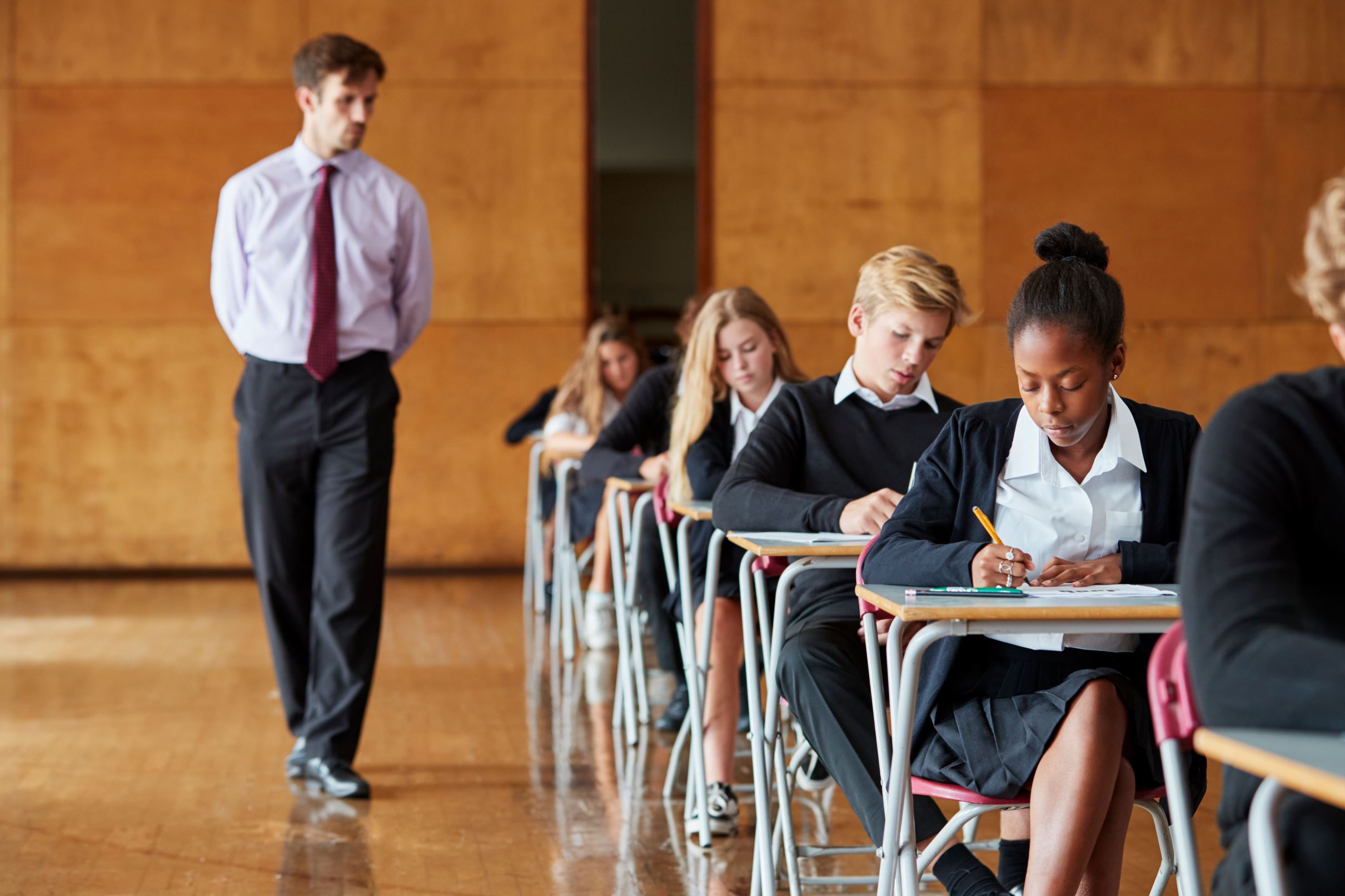
Individual adjustments for students during assessment tasks have also become logistically tricky for schools to manage, one teacher reports.
Taking to Reddit to share their thoughts on the situation, teachers have spoken candidly about what they think might be behind the rising number of students who receive adjustments due to disability.
“The change is real and observable – we are on the front line,” one posted recently.
Another declared that “something is definitely going on”.
“I don’t think it’s just an increase in diagnosis as they say. I remember when I started teaching having one ASD kid across eight classes. Now there’s two or three in every class and more with ADHD.
“Everyone I know with young kids has at least one child diagnosed with ASD or ADHD. Both my own kids have a diagnosis,” they shared.
One posed that “insufficient parental involvement and limit-setting in early childhood” could underlie students’ behavioural difficulties that “present similar to symptoms of recognised disabilities” in the school context.
Another argued that the growing number of children with additional learning needs is fuelled by a world that is “just going too fast”.
“This might be a controversial opinion but …. Parents are so quickly back to work when children are infants. Kids are picked up from school, ferried off to activities, fed, given screen time while parents scramble to get housework/ life stuff done. Parents are stressed and rushed ALL the time. Kids need childhoods back,” they posted.
When the COVID era ended our lives really ramped up a notch, the educator added.
“We have been flung back into the ‘sh** storm’ of financial pressure, stress and busyness and we all just need to slow the f*** down. Kids really do just need more time with their families doing normal home stuff.”
The influence of social media is also to blame, they argued.
“Parents also need to get their kids the f*** off social media. [It’s] destroying them. It’s such a cop out to let your kids (particularly primary aged) consume it. It is robbing them of so much.
“I really do think that this stuff has so much to answer for with what we’re dealing with in classrooms.”
One educator said they felt ‘opportunist’ parents who ‘milk the system’ were part of the issue.
“I feel like there are opportunist parents who milk the system and diagnosis to allow their children special provision for VCE.
“While I firmly believe students with real need should be given one, there are people who use these diagnosis for ridiculous reason (eg. extra time for SAC submission because of stress).
“My belief is the benefit for diagnosis is so that adjustments can be made by teachers, parents and students themselves. But what we’ve seen is when students fail to meet simple expectations (eg. no equipment, late to class) parents excuse these behaviours citing diagnosis.
“It does at times feel like the effort to ensure learning actually happens is one-sided.”
Professor Linda Graham, director of the Centre for Inclusive Education at QUT and colleague Dr Callula Killingly, have flagged that further research is needed to pin-point exactly why these increases are occurring, but suggest a few potential factors.
“For example, growth appears to accelerate from 2020 and it is well known COVID-19 lockdowns impacted young children’s readiness for school, and mental health and wellbeing,” the note in an article for The Conversation.
The fact that some state education departments have also aligned their disability funding models to the national model at different points in time could also be behind the more recent uptick, they say.
But the disability loadings themselves could also be fuelling the increase, they argue.
“The first level attracts no additional funding and is not evaluated for quality or accessibility. Schools are then allocated about $6000 additional funding for each student receiving ‘supplementary’ adjustments, $21,000 for ‘substantial’, and $45,000 for ‘extensive’ adjustments,” they explain.
Over the past 11 years, the greatest increases have been seen in substantial and extensive adjustments (levels 3 and 4), which have risen by 86 and 87 per cent respectively, the academics say.
Currently teachers use their professional judgment to determine student disability adjustments, but the Government is now clamping down on what it calls ’inaccurate’ claiming, saying it will work to close policy and regulatory loopholes and reign in funding.
In the 2026- 2027 Budget, of the estimated $33.3 billion provided in federal recurrent school funding, Student with Disability loading makes up an estimated $5.1 billion.
Yet some $40.4 million will go towards measures to prevent the ‘inappropriate’ allocation of disability funding to schools.
This ‘integrity work’ will be done in consultation with state and territory governments, and is set to involve:
- improving school compliance activities to identify where funding may be over-allocated or accumulated;
- improving the data collected through the Nationally Consistent Collection of Data on School Students with Disability (NCCD); and
- clarifying the NCCD guidelines to ensure adjustments are targeted, effective and meet obligations under the Disability Standards for Education, as well as funding requirements.
The Government says these measures will save $463 million in misappropriated student disability funding over four years and will “provide greater transparency for funding for the non-government schools”.
Some, including AEU Federal President Correna Haythorpe, have expressed concern over the cuts.
“There are more than 200,000 students in the public school system who have been assessed as having a disability, yet receive no disability loadings.
“At the same time we have seen disability funding to private schools grow by $1.4 billion from 2020 to 2024,” she said following the announcement.
Haythorpe flagged a recent AEU survey of public school principals that schools were re-allocating $147,000 from other areas of their budget to support students with disability.
“Public schools educate the overwhelming majority of students with disability, yet too many schools are being forced to stretch already limited budgets to meet growing need…”
* not her real name