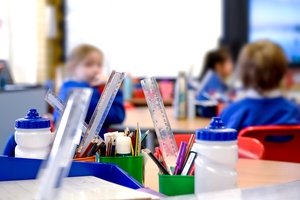
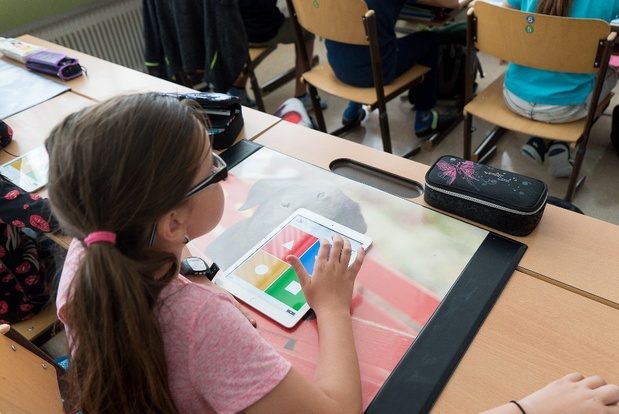
The Victorian coalition has promised to place specialists in Prep classrooms across the state from Term 1, 2028, if it wins the November election.
Under the proposal, billed as the first of its kind in Australia, the allied health professionals would observe students, identify potential learning and developmental needs and provide advice to parents.
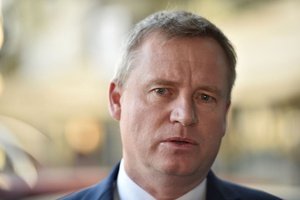
The move would address a gap within Victoria’s primary school nursing program and help kids unlock their potential, opposition education spokesman Brad Rowswell said.
“At the minimum, every one of those Prep students or foundational students ... will have at least 15 minutes observation time,” Rowswell told reporters on Wednesday.
“If the OT or speechy determine that a particular student requires further investigation they’re funded to undertake it.
“They’re funded to produce that report, to sit down with those parents and importantly guide those parents through what the next steps and options might be.”
Clinical psychologist, Dr Kylie Henderson, said while early identification was one of the most effective investments in a child’s future wellbeing, participation and educational outcomes, assessment alone is not enough.
“For this reform to succeed, children and families need timely access to multidisciplinary teams, including psychologists, occupational therapists, speech pathologists and behaviour support practitioners working together to deliver coordinated, evidence-based support,” the founder of allied healthcare organisation Humanity Health Group (HHG), said.
“The focus should not be on diagnosis alone, but on improving functional outcomes including communication, learning, emotional wellbeing, behaviour, independence and participation in everyday life.
“If governments invest in both screening and access to quality allied health services, the Thriving Kids reforms have the potential to provide the right support at the right time, while ensuring children and families receive help based on their individual need rather than funding siloed systems.”
The opposition policy includes a $500 subsidy which will be made available for a specialist appointment to kickstart the path to diagnosis.
The policy has been costed at about $40 million a year and would come from the Department of Education budget, Rowswell said.
“It’s been costed based on the amount of Foundational/Prep students across the state, that’s 85,000 on average,” he said.
It is unclear how many workers will be required to complete the task, with specialists to be contracted who would potentially roam from class to class.
At present, Victoria’s education department recommends parents speak to their doctor or a maternal and child health nurse if concerned about their child’s development to organise an expert referral.
Dr Fiona Aldridge, clinical psychologist and head of assessments at autism support service Aspect, said she wasn’t aware of any state running such a universal identification program within schools.
While offering broad support for the policy, she acknowledged workforce challenges may be a barrier to delivery and argued extra training would be needed.
“The devil is always in the detail,” Aldridge said.
Aldridge said the $500 subsidy would likely not cover the significant cost of an initial assessment with a psychologist who specialises in autism but it was “helpful contribution”.
“It’s more than Medicare would currently give you,” she said.
“The other pathway to a diagnosis is via a pediatrician and $500 would make more an impact on that pathway.”
More than 1.1 million Australian school students received an educational adjustment due to disability in 2025, representing 27 per cent of total enrolments.
Of those, 53 per cent had a cognitive disability and 36.3 per cent had a social-emotional disability.
Teachers are grappling with the need to provide these adjustments, with new data showing a clear uptick in children requiring specialised supports so they can best learn and participate in the classroom.
The percentage of students receiving an adjustment was 18 per cent in 2015 and 25.7 per cent in 2023.
A secondary teacher from a Melbourne public school told EducationHQ that it was a real challenge to deliver high-quality Tier 1 instruction with all the individual adjustments in play, and assessment tasks have also become tricky for schools to manage.
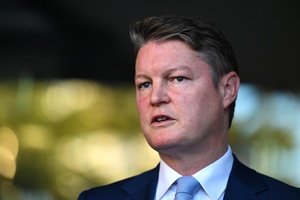
In a duelling announcement, Education Minister Ben Carroll on Wednesday set aside $75.1 million for free public school extension and enrichment programs.
(with AAP)