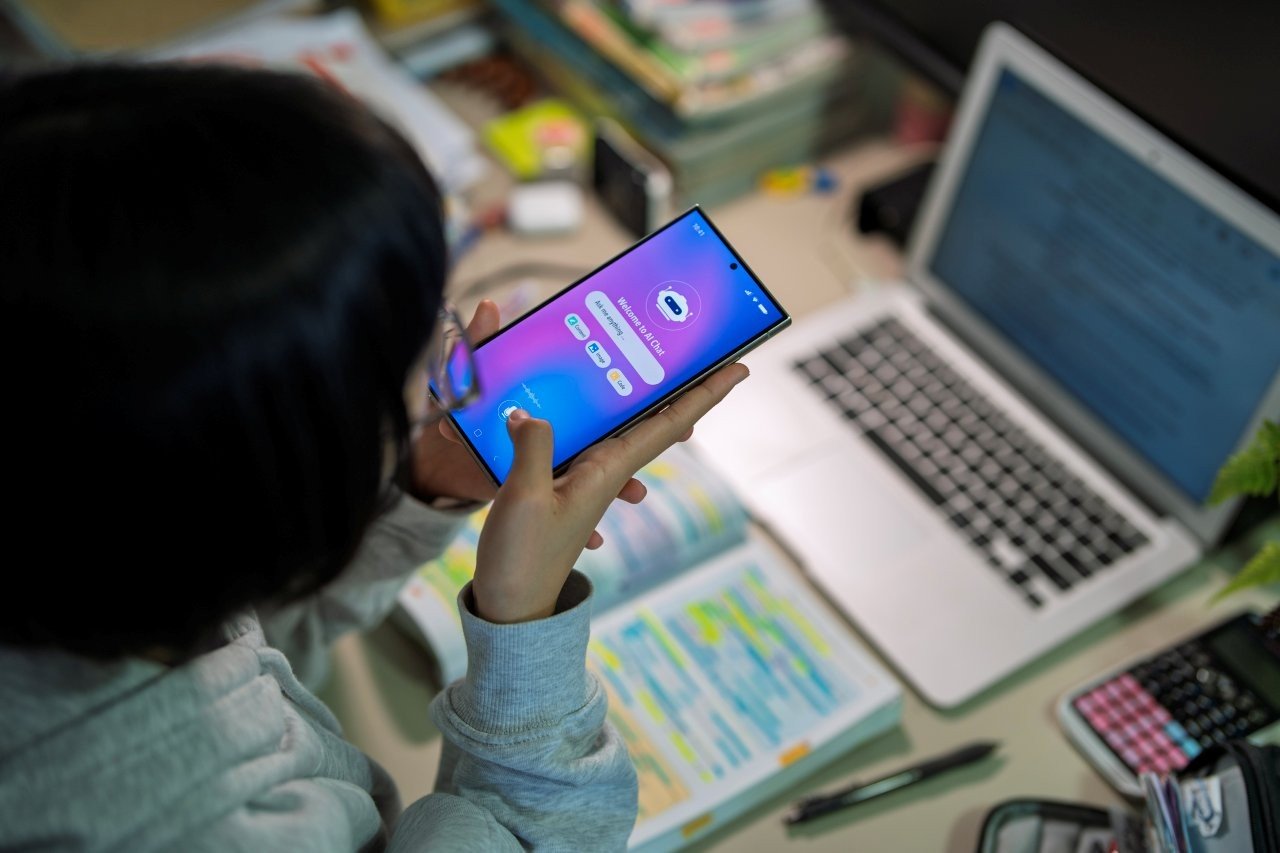
But in essence that is leading to what is called ‘cognitive off-loading’, which is the delegating of mental tasks such as problem-solving, data synthesis, and memory recall to an AI tool to reduce one’s mental effort. While it frees up working memory for other tasks, over-reliance risks hindering critical thinking and skill development.
In the Curiosities Live webinar, titled ‘When AI does the homework, are students still learning?, alongside education superstar Eddie Woo who leads teacher growth for the NSW Department of Education, Professor Leslie Loble explained last week that this cognitive off-loading to AI is stopping us from building those mental structures upon which we not only continue to learn, but we think from, but that also not all is lost.
The vast majority of AI-backed learning tools are not connected to the Australian curriculum, for example – and UNESCO, amongst others, has found that they very rarely are built on strong evidence-based pedagogical design principles.
So all of that user testing was fine and good, Loble contends, but all the focus was on the technology and not the pedagogical structure of the tools.
The foundational aspects of teaching remain
“And what we are seeing in many of the studies on cognitive offloading, is evidence that when it’s a well-designed tool, it, in fact, can flip that equation – so that it can prompt and deepen student thinking by not providing an answer, for example, by challenging a student’s reasoning, and all sorts of ways you can design it so that it can be a positive influence and drive deeper learning,” she explained.
But Loble shared that the most important thing is going to be what teachers can do here.
One of the foundational aspects of teaching is when you start, it’s highly structured and scaffolded learning, and you build through progressive amounts of information, practice and repetition.
You move students towards mastery and progressive independence, she explained.
“We have to take that same principle to how we teach students about using AI and how we structure the use of AI,” Loble said.
“Highly structured and guided at the beginning, and I think especially for the youngest learners, and then more and more independence, once those metacognitive skills and knowledge stores have been developed.
“Things like checking for understanding are very important in an AI context – every good teacher does it reflexively. We need to do that very intentionally, explicitly, now with AI.”
Focus on verification
Loble explained that rather than saying things like ‘I don’t trust AI, it’s dangerous or it hallucinates’, we need to build verification processes into the muscle memory of every student, so that they aren’t having to verify everything that AI has given them.
“But maybe two or three sources go to the primary source and see whether it’s accurate, so that you’re building a verification mindset, which, by the way, is part of critical thinking as well.”
So, these are some techniques that build on the fundamentals of what teachers already know how to do, she added.
“Metacognition and self-regulation as a core part of what teachers are doing, because we’re imparting skills to young learners about what it means to take initiative, to understand where they need to learn more and so forth.”
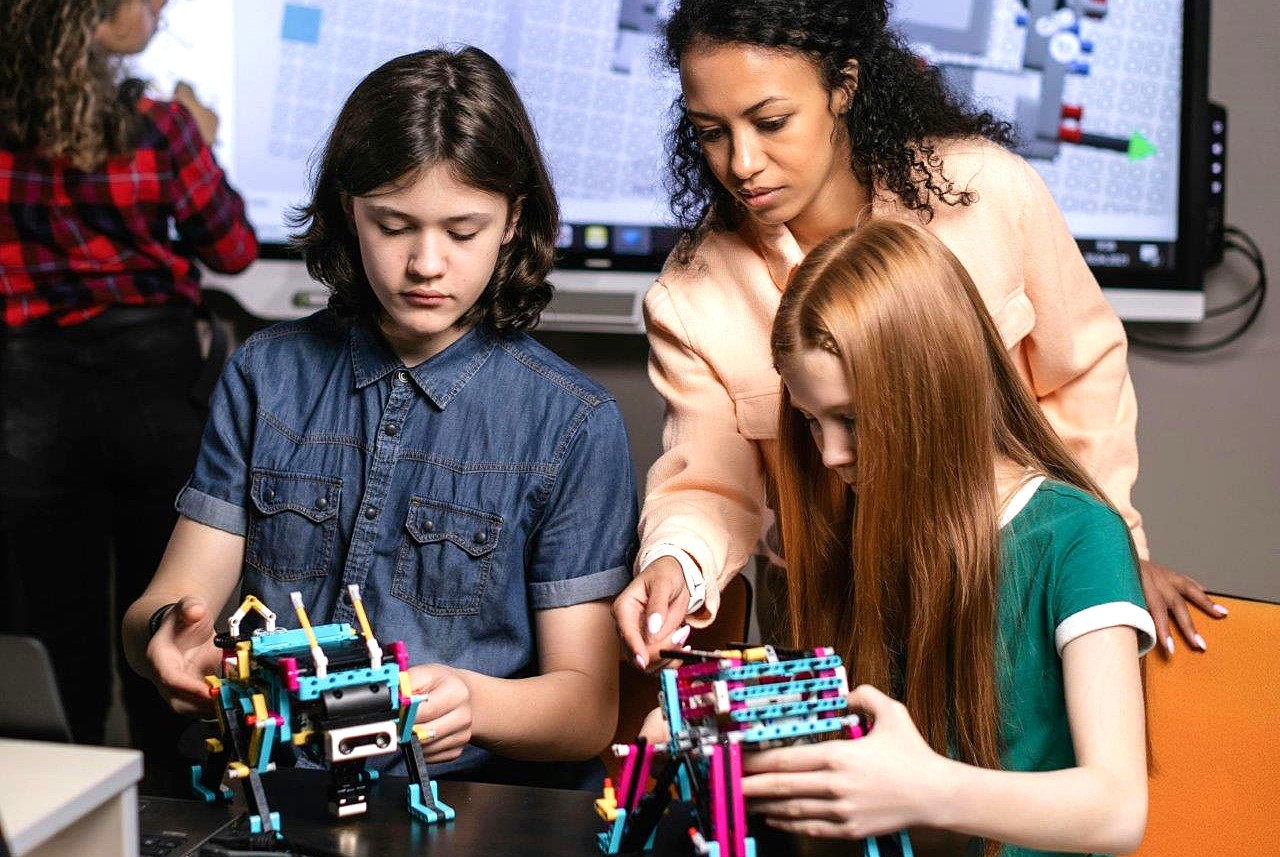
Quality teaching and the way we learn isn’t changing because of AI - but the context means we have to really focus on it, the learning expert shared, and we have to make it the centrepiece of what we’re doing and give teachers the support and the agency to do that.
So what can AI not replicate?
Loble asked Woo what teachers are going to be able to do, and do already, that AI just simply won’t be able to.
“As a teacher, what am I doing in the classroom to help my students learn?” he pondered.
“There are a set of things which I do from the front of the classroom, but half of the actual teaching and learning that I’m helping to lead is actually happening as I wander around the classroom.”

“As human beings, our cognitive framework and our affective framework is all built to have relationships with other human beings, that is not a thing that AI can produce. I don’t think it ever will,” Eddie Woo says.
This involves observing what students are doing, listening to the conversations they’re having, and making choices in the moment about intervention, which questions students ask that are responded to, and which ones receive another question from the teacher – which students learn to dislike, but realise is fundamental to their own learning processes.
Woo explained that one of the key things that all large language models share is that they wait for us to come to them.
“They wait for us to prompt, and if you’re a good prompter, if you’re effective at prompting, you’d be better at using that, but if you do not prompt the model to begin with, or if you don’t like the prompts and the responses and you walk away, the usefulness of that model, well, it may as well no longer exist.
“And that activity and initiative and choice of the teacher is something we are still quite distant from AI being able to mimic.”
While teachers love building knowledge and skill and understanding of their students, Woo shared that any teacher worth their salt would say these are a subset of the teacher’s role and privilege in the classroom – and that is that they are there to help grow human beings, not just aspire to academic outcomes.
He said AI is a facsimile that resembles a relationship, and that is all.
“As human beings, our cognitive framework and our affective framework is all built to have relationships with other human beings, that is not a thing that AI can produce. I don’t think it ever will.”
How then should students approach using AI in the context of learning?
‘Is school more like a job or a gym?’
Woo said the key drivers are about motivation, and what is it that students are actually wanting to get out of school?
“Are the tasks and activities that we have our students engage with every day more like a job or more like a gym?” he pondered.
“If you have a job and the primary thing that you care about is the quality of the output, then you’ll use whatever tool is going to be appropriate to help you reach that goal.”
But it would be ludicrous to go to a gym and for someone to say ‘hey there’s a machine you might like to try out – it will lift the weights for you’. That would feel a little counterproductive to us, Woo suggested.
And the same thing applies to essay writing, he flagged.
“The whole point of writing an essay is an essay is a proxy for thinking, for analysis, for understanding a text, what it’s really about and seeing something important about it, something true. That activity is a gym,” Woo explained.
He then referred to a book he loves, titled 10 to 25 - The Science of Motivating Young People by David Yeager.
“Between the ages of 10 to 25, one of the key things that drives a young adolescent brain as that prefrontal cortex is forming and as maturity is developing, [is the notion that] 'I want to have something that I care about in this, and I don’t really want the person in authority to be telling me what to do, because that’s actually a real disincentive for me'.”
He likes to help his students to see that ‘if you’re not paying for a product, you’re not getting a product, you are the product’.
Professor Loble says her sense of hope comes from the fact that human creativity, our passions, our knowledge, our insight, is boundless “and doesn’t need to be invented by somebody twiddling with ones and zeros”.
“I try to help young people realise, ‘actually, hold on a second. I’m the business value here and my attention and my language’.
“These large language models famously need tens of thousands of words to be able to produce their facsimile of human logic – ‘I’m being taken advantage of here’.
“To be able to tap into that, I’ve found to be a very powerful signal to a young person that I’m not just going to be sit here and be taken advantage of – there’s something I want to take for myself here and own my education.”
A word of hope for the days ahead
Finishing on a positive note, both presenters expressed optimism.
“AI’s not going to be taking the teacher’s place, but supercharging and amplifying the ability of a teacher to know their students, how they learn, the content and how to teach it. And do that with the aim of an extremely able helper,” Woo concluded.
Loble said her sense of hope comes from the fact that human creativity, our passions, our knowledge, our insight, is boundless.
“It is absolutely boundless and doesn’t need to be invented by somebody twiddling with ones and zeros. And I think in the end, that will win out.”