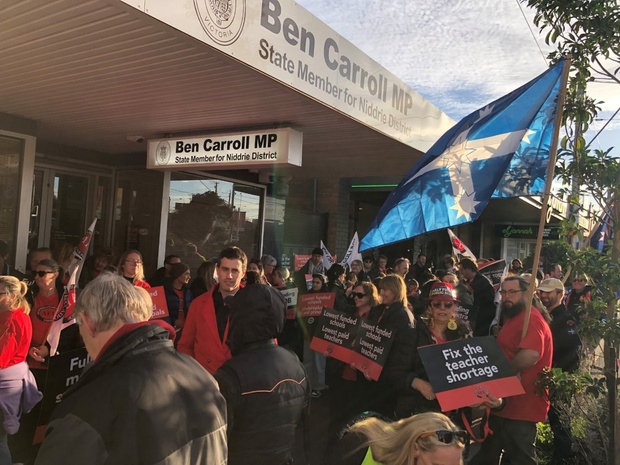
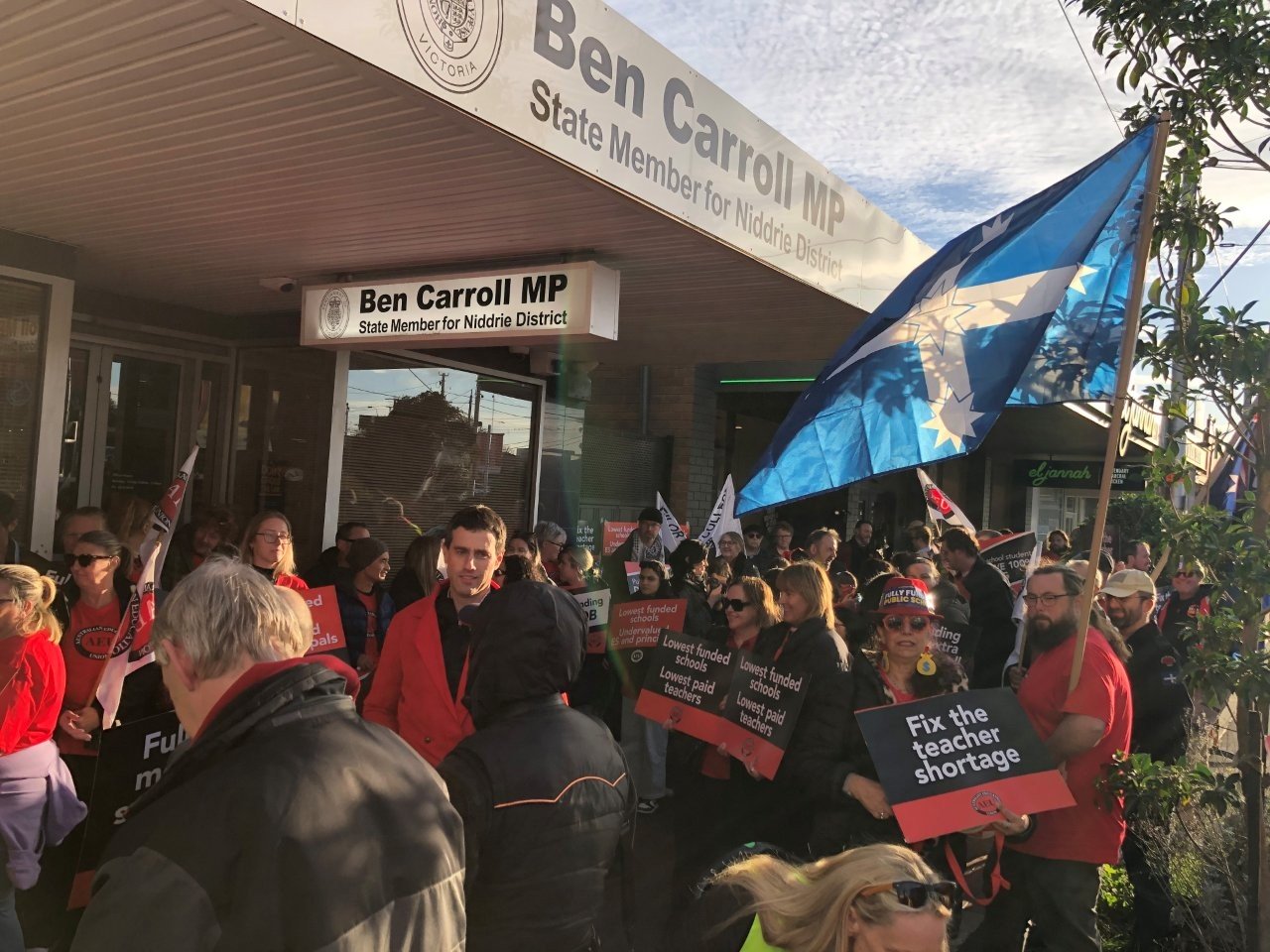
The Australian Education Union said it will stage a 24-hour stop-work action in Victorian state schools on August 19, following a vote by the union’s joint primary and secondary council on Friday.
The strike will go ahead unless union members and the Government reach an agreement beforehand, AEU Victoria branch president Justin Mullaly said.
Union educators have been locked in negotiations with the Government for months, with graduate teachers – the worst paid in the nation – earning $13,000 less than those in the Northern Territory, who are the best paid.
Premier Ben Carroll on Thursday said his door was open to further negotiations and believed the Government was close to sealing a deal after “pulling every lever”.
Mullaly claimed negotiations with the Government had not progressed since the last pay offer was tabled on July 17, with no further talks scheduled.
There are questions about who will front negotiations with the public education sector.
Carroll, who was education minister before being elevated to premier last Tuesday, is preparing to unveil a fresh cabinet this week.
The disruption to parents, families and student learning was “all the more reason” for the Government to return to the table with a revised offer, Mullaly said.
A Government spokesperson said it was “in everyone’s interest” to reach an agreement, calling the latest strike announcement “disappointing”.
Victorian members of the union narrowly rejected the most recent revised Government pay offer on July 17, triggering more than 20,000 educators to strike across Melbourne’s CBD on July 23.
That deal, which was opposed by 51.8 per cent of members, would have increased pay for teachers and support staff by at least 28.3 per cent over four years.
The State Government also pledged to halve meetings to 40 hours a year in the rejected offer.
But the peak representative body for Victorian principals said that change would leave teachers open to further overtime and could harm the quality of students’ learning.
“We feel it really strips away schools’ opportunities to work collaboratively,” Australian Principals Federation (APF) Victorian branch president Andrew Cock said.
“The work that is often done in these meetings is not just disappearing, it’s either going to be shifted onto principals to complete without consultation or collaboration ... or it’s going to shift into the teacher’s own time.”
Cock formally wrote to Carroll to express his disappointment after the most recent pay deal, which included the halving of meeting hours, was not presented to the federation.
“We were little bit blindsided,” Cock said.
“Whether it gets changed or not, we had to table our view that that was going to be a challenging space for schools to operate in.”
Mullaly argued lessening meeting times freed up teachers to work on their individual planning, preparation and assessments.
Cock said he was determined to engage with the Government about other areas of red tape that could be removed to lessen teachers’ workloads, but not remove time for staff to collaborate.
Union-factions have expressed mixed responses to the strike announcement, with rank and file group Fight The Crisis pushing for an earlier stop work action.
The group had been spruiking a strike as early as Tuesday, which would defy education department requirements to give at least five days’ notice of planned industrial action.
“Giving Ben a three-week extension was not on our agenda,” the group wrote on social media ahead of a planned meeting on Friday night.
AAP