


Since penning his latest book Not One More Teacher Lost: How We Can Save the profession, Brad Gaynor’s inbox and direct messages have been blowing up.
A former principal and now a leadership coach, Gaynor says he’s been surprised by the number of teachers and school leaders that have reached out to not just offer a positive review, but to share their own experience and to ask for advice about how they can remain in a job that they feel has become totally unsustainable.
According to Gaynor, focusing on building teachers’ resilience is definitely not the answer to the huge staff attrition problem plaguing schools.
“It’s not just about teachers, it’s also about the system and the way that this has been designed. It has to change.”
This is just one of the core arguments Gaynor fleshes out in his new book, which foregrounds the voices of real teachers to map out exactly why Australia is losing experienced and capable educators from the classroom – and what can be done about it.
Far from a question of individual motivation, it’s the intensifying workload, time poverty, loss of professional agency, and rising expectations from parents and school systems that compound to force great teachers out of a profession they believe strongly in, Gaynor suggests.
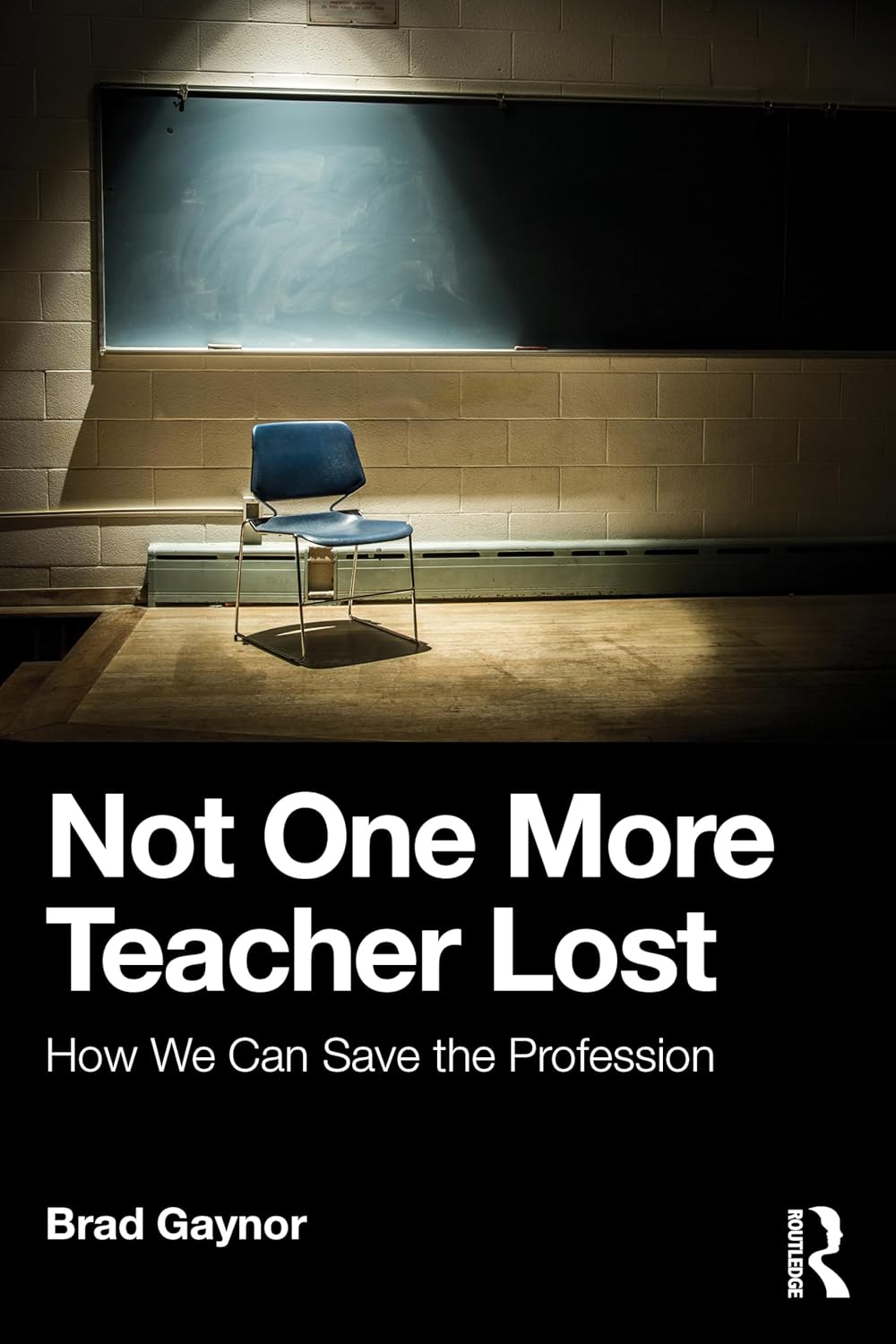
It was important that the voice of teachers be foregrounded throughout the book, Gaynor says.
He says the book’s genesis came from an article published in April last year that posed the best way to solve the teacher shortage crisis was simply to up their pay.
“I just took offense to it,” Gaynor explains.
“So, I just had a rant on my own Facebook page about how the shortage could better be solved, and then a lot of my teacher friends said to me, ‘can you unblock it so we can share it?’
“A couple of days later The Canberra Times asked me could they put it in an opinion piece as a response to the article and I said, ‘sure’.
“It just then opened up this can of worms which I was not expecting. I had so many people contact me on social media, I got emails, I got so many comments from teachers just expressing their thanks to me for being so open and honest, and that I was saying what everyone was thinking. They were also sharing their stories.”
Gaynor collected the growing influx of commentary and realised a clear pattern was emerging – clear enough to form the basis of a book, he concluded.
“So I started to put it together, and within a few months the manuscript was in.
“It wasn’t meant to come out until 2027, but the (publisher) fast-tracked it and it was out in six months – which I think showed that there was obviously an appetite for the conversation.
“But also, all it really is, is me just synthesising the views that so many people gave me.
“So whatever I’m promoting or producing or arguing for or saying what should happen, I say it directly from teachers…” he adds.
For those teachers grappling with the decision about whether to leave or not, even when their heart lies in teaching, Gaynor has some words of advice.
“Prioritise what is really important, and the most important thing is those kids in your class. Looking at anything to do with your kids, and your face-to-face [work] has to be a priority.
“The compliance and all those things of paperwork have to be done, I guess, at some point, but it shouldn’t take over the actual teaching you do.”
Set solid boundaries around work and your personal time as well, he offers.
“I talk a lot about protecting your time and setting boundaries, having family time – don’t answer emails after work.
“Don’t respond to parent emails straight away – follow whatever the school protocol is.”
Too many new teachers feel they have to have everything under control and don’t ask for help when they need it, Gaynor says.
“From the data I’ve been seeing, it shows that it’s [schools] that have a sense of great culture, there’s collaboration, there’s feedback, there’s team teaching, there’s opportunities all the time to collaborate, really helps.
“I think the job is too complex to do it by itself. So really sharing the planning, sharing resources, sharing the expertise, working with your team and backing each other up, I think is really important.”
When it comes to instruction, Gaynor says don’t bother with practices that aren’t high-impact.
“Don’t waste your time on things that don’t work. Really focus your energy on [those that the evidence backs as being effective].”
Gaynor has been buoyed by the feedback he’s received since the book came out.
“The most rewarding thing, which I wasn’t expecting, is people have actually reached out to talk to me. They want to share their story more, or say, ‘I’m thinking of leaving, but I don’t really want to, what do you think I could do?’
“So, people are wanting to have a conversation, and I find that just really powerful.”