
The findings from the Australian Institute of Family Studies (AIFS) report show that while most young people are concerned about social, economic and environmental challenges, many are taking action through collective, digital and community channels alongside more formal pathways such as political party membership.
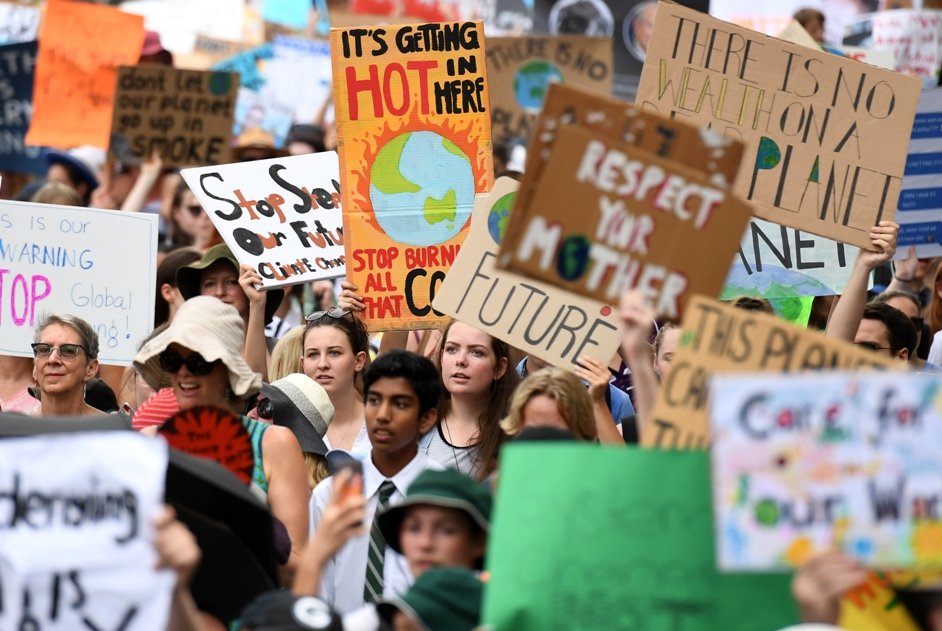
Significantly, 89 per cent of young people voted in the 2022 federal election. Around 41 per cent have expressed their views about government actions in the past five years – most commonly by signing online petitions (82 per cent), while nearly one-third (31 per cent) have taken part in a protest or demonstration. Only 1 per cent reported regular involvement with a political party.
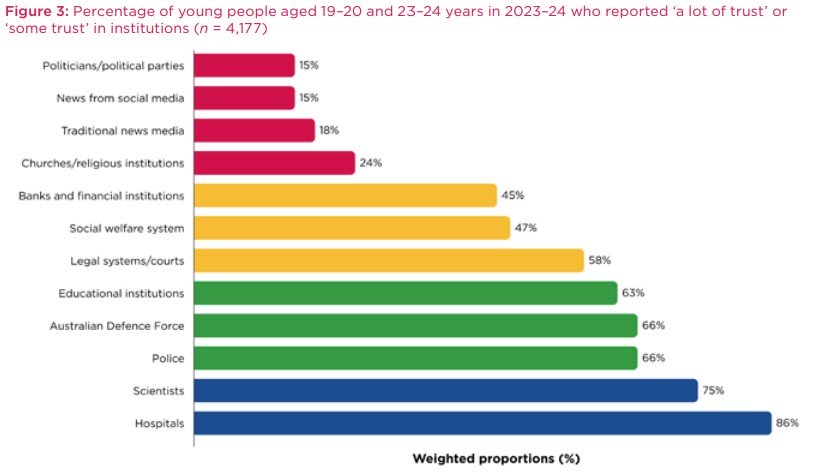
Trust in institutions varies considerably. Young people report high levels of trust in hospitals (86 per cent), scientists (75 per cent) and educational institutions (63 per cent), but far lower levels of trust in political parties (15 per cent), news accessed through social media (15 per cent) and traditional news media (18 per cent).
The report draws on data from more than 4400 young people, followed for over 20 years through Growing up in Australia - The Longitudinal Study of Australian Children (LSAC). The findings are based on responses from two cohorts, aged 19-20 and 23-24 years.
Results from a survey earlier this year by the Rule of Law Education Centre suggested that declining social cohesion in the community has impacted teachers’ capacity to facilitate and model respectful debate in the classroom and raised concerns about future democratic engagement.
Almost half of respondents to the survey said that limited space in the curriculum is the most significant factor that discouraged them from facilitating debate-based discussions on contemporary or controversial issues, while 81 per cent said concerns about reactions from parents or students is the first or second most significant factor that stopped them.
Levels of trust vary across institutions in society
“Effective civics and citizenship education relies on an open classroom climate. This cannot rest on teachers alone,” Rule of Law Education Centre CEO, Sally Layson, said in June.
“Teachers remain strongly committed to their role in developing students’ democratic skills and understanding, but face significant barriers in delivering high quality, relevant civics education.
“These include concerns about challenging reactions from parents or students and a crowded curriculum.”
Dr Ebony Biden, lead author of the AIFS report, says the findings challenge common concerns about youth disengagement.
“Young people have often been described as disengaged from civic life, but these findings show many are actively involved in ways that aren’t always expressed through what might be seen as traditional pathways,” Biden says.
“Understanding how people, across all ages and diverse groups, engage with political and social issues is critical to building a society that remains inclusive and responsive.
“When people feel institutions are listening and are responsive to their concerns, they may be more likely to feel their participation matters and to engage in civic life.”
Of the young people surveyed:
- 83 per cent reported being quite a bit or very much concerned about one or more social, economic and/or environmental issue affecting them;
- there were higher rates of concern among young cisgender women (89 per cent) and trans and gender diverse young people (91 per cent), compared to young cisgender men (77 per cent);
- 37 per cent engaged with political or social issues via social media;
- 38 per cent say politics often feels too complicated to understand; and
- only 11 per cent believe ‘people like them’ have a meaningful say in government decisions.
The research also highlights links between civic engagement and social cohesion. Participation – through voting, volunteering, advocacy or community action – can strengthen a sense of belonging and shared purpose, build trust and connection and create opportunities for diverse voices to be heard.
Even as volunteering rates have decline nationally over time according to the ABS General Social Survey, AIFS findings show volunteering remains an important way that young people contribute to community life, with 34 per cent reporting they volunteered in the past year – many on a regular basis – supporting activities such as sport (38 per cent), church and religious groups (20 per cent) as well as youth services (13 per cent) and community organisations (13 per cent).
Kirsten Campbell, Longitudinal Head of LSAC at AIFS, said fostering these forms of participation is important for strengthening social cohesion over time.
“When young people feel heard, connected and able to contribute, it supports not only their individual wellbeing, but also the strength and resilience of our communities,” Campbell says.
“Ensuring opportunities for participation are accessible and meaningful to all young people is key to maintaining social cohesion in a changing society.”
The findings point to an opportunity for civic and political systems to better recognise the different ways young people are contributing – including through voting, volunteering where it occurs, advocacy, digital participation and community action.
Recognising these diverse forms of participation can help strengthen links between informal and formal pathways, build confidence and capability, and ensure measures of democratic engagement better capture how young people are participating.
LSAC is an ongoing, nationally representative study that follows the lives of children and their families from all over Australia.
In 2004, around 5000 0-1-year olds and 5000 4-5-year-olds and their families were recruited and have been surveyed every two years since.
To read the report ‘Young Australians’ civic engagement’ click here.