

Now known as the Commonwealth Games, it’s been an important fixture in the high performance sporting calendar since then.
The most recent edition had a tumultuous beginning, being abandoned by the Victorian government before being given a last minute reprieve when Glasgow stepped in. Now over 250 Australian athletes are competing in a condensed version of the games across 10 different sports including four fully integrated Para sports.
There’s 3x3 wheelchair basketball and 3x3 basketball, cycling, track and field, swimming, weight lifting and Para weight lifting and artistic gymnastics.
So after rubbing the bleary eyes from an exciting opening ceremony which saw the surprising image of King Charles emerging Dr Who style from a TARDUS, let’s dive into some engaging ways you can make the most of the games in your primary classroom:
Statistics lovers wall of glory
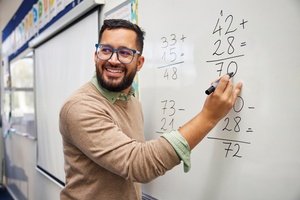
In a maths loving world, sports and statistics enjoy a close bond which is hard to break, and even harder to avoid when it comes to a major event like the Commonwealth Games. From tallies of medals through to team numbers, playing times, record throws and times, statistics and data are a hot favourite and a great way of giving maths real purpose and application.
Flag bearers
There’s something just a little bit spine tingly about seeing the flags of many nations come into the arena together for a big sporting event. Athletes representing their countries, wearing a uniform and following the flag of their country is a special moment.
Our own flag was carried by Nina Kennedy and Tim Hodge. Flags and the tradition of walking behind the flag at the opening ceremony are a great hook to start researching other countries, learning about traditions, sporting favourites, games, food and dance.
A unique baton relay
This year’s games took a unique twist on a time honoured tradition, with each country invited to design their own baton. Australia’s baton relay began at Uluru, where para sprinter Briseis Brittain carried the baton designed by Kalkadoon artist Chern’ee Sutton on the first leg of its journey.
Australia’s relay had a strongly environmental focus, with clean up events and plastic pollution being key elements along the way. This is a theme to pick up on with your own class, either by hosting a clean up event in your local community, or joining in a citizen science project.
Other options with a link to the baton relay include designing your own baton, mapping the journey across the world to Glasgow or finding out about the history of the relay tradition.
Get active
What big games event is possible without its own mini version at school? The games are an open invitation to get up and active, on a scale and timeline that works for your setting.
You could plan your own games day and get the whole school into the spirit, or tone things down a little and simply dedicate a session each afternoon to playing some of the games which we will see over the coming weeks.
One of the highlights of these games is how prominent Para sports are in the program, with a clear focus on positive pathways into high performance sport for all athletes, sitting easily alongside a love of everyday activity.
Sports science
A little bit of sports science can be a wonderful way to engage some students, and the games makes it so easy to do! Students can record movement patterns, predict the best throwing technique then test their prediction, measure their own reaction time, compare different running surfaces to discover how friction affects performance or learn how resting heart rate can tell you about recovery from a training session.
If you’re looking for some engaging ways to meet learning outcomes in the coming weeks, the Commonwealth Games could be just the thing!