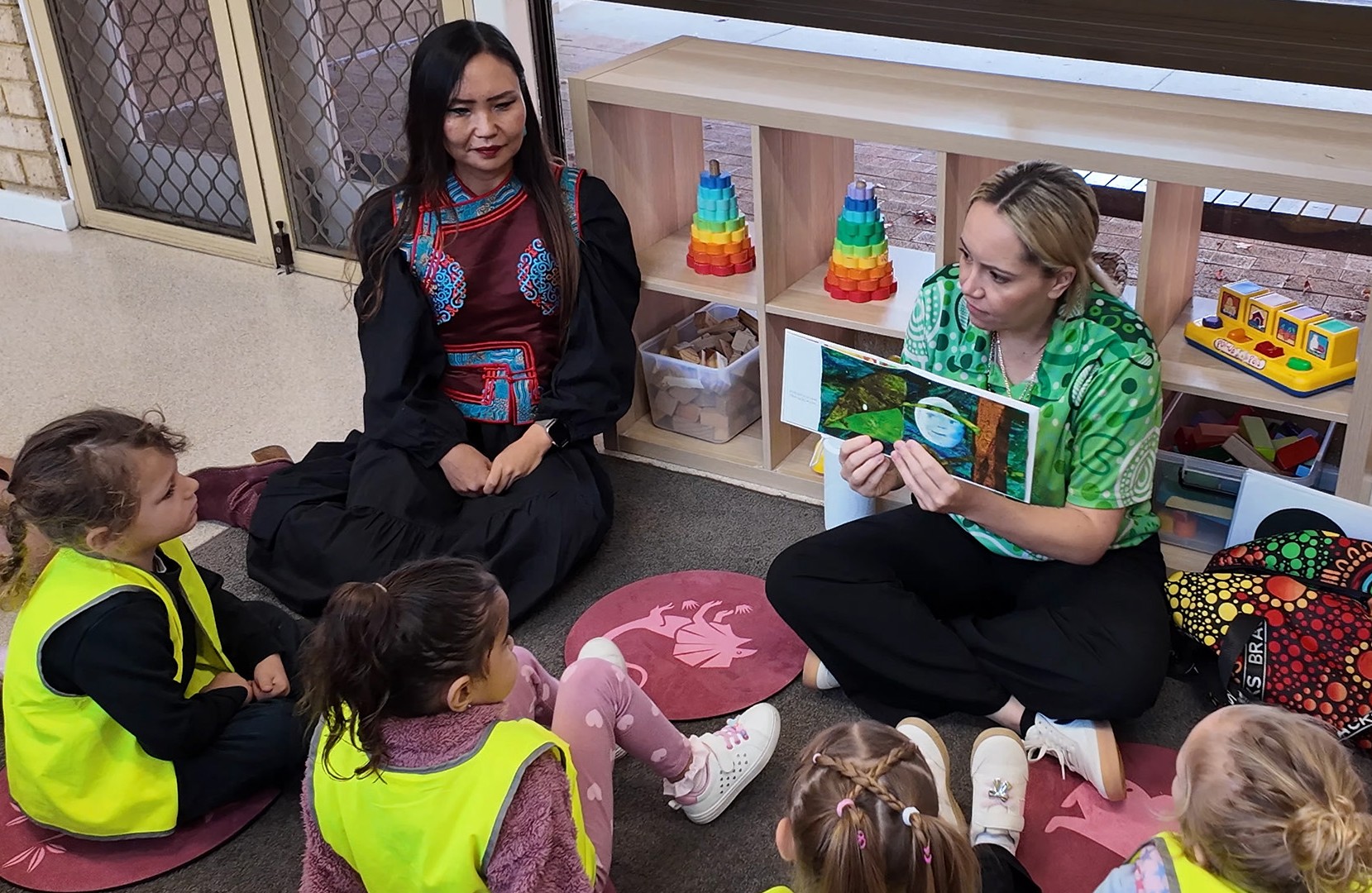
Lead author Professor Sender Dovchin and her research team from Curtin University’s School of Education spent a year in an Aboriginal playgroup teaching children their own traditional language, Noongar, as an additional language via a new model called ‘translingual yarning pedagogy (TYP)’.
TYP combines ‘yarning’ – a traditional Aboriginal practice of storytelling and shared learning – with translanguaging, which encourages students to draw on all of their language skills to communicate, including English, Aboriginal languages and non-verbal communication such as gesture, song and play.
The study saw preschool-aged children take part in yarning circles, songs and storytelling activities, allowing them to move naturally between languages while engaging with Aboriginal cultural knowledge.
Dovchin is a second language acquisition (SLA) linguist whose work has largely revolved around enhancing second language education for young people in diverse environments.
The ex-pat Mongolian says despite being a very much a multicultural nation, Australia has a very monolingual mindset.
Students in our schools are taught standard Australian English, she says, whereby they are taught grammar, how to speak the language purely, in the correct way.
“You’re not allowed to speak in any other varieties of languages, you are only supposed to speak that one particular standard language,” she tells EducationHQ.
The research findings highlight the importance of shifting away from rigid English-dominated teaching methods, she says.
While linguistic revitalisation efforts continue in pockets across the continent, Aboriginal languages are frequently excluded from both national and international Languages Other Than English (LOTE) agendas, with many in danger of disappearing altogether.
Indeed, Aboriginal languages remain among the most underrepresented language groups in formal language education systems.
With the recent revelation that a majority of the Closing the Gap goals are no chance of being met by 2031, language offers a shining light of positivity, and a core vehicle for Indigenous identity, traditional ecological knowledge, and community wellbeing.
Learning ancestral languages helps Aboriginal and Torres Strait Islander peoples by strengthening cultural identity, improving mental wellbeing, and boosting educational engagement.
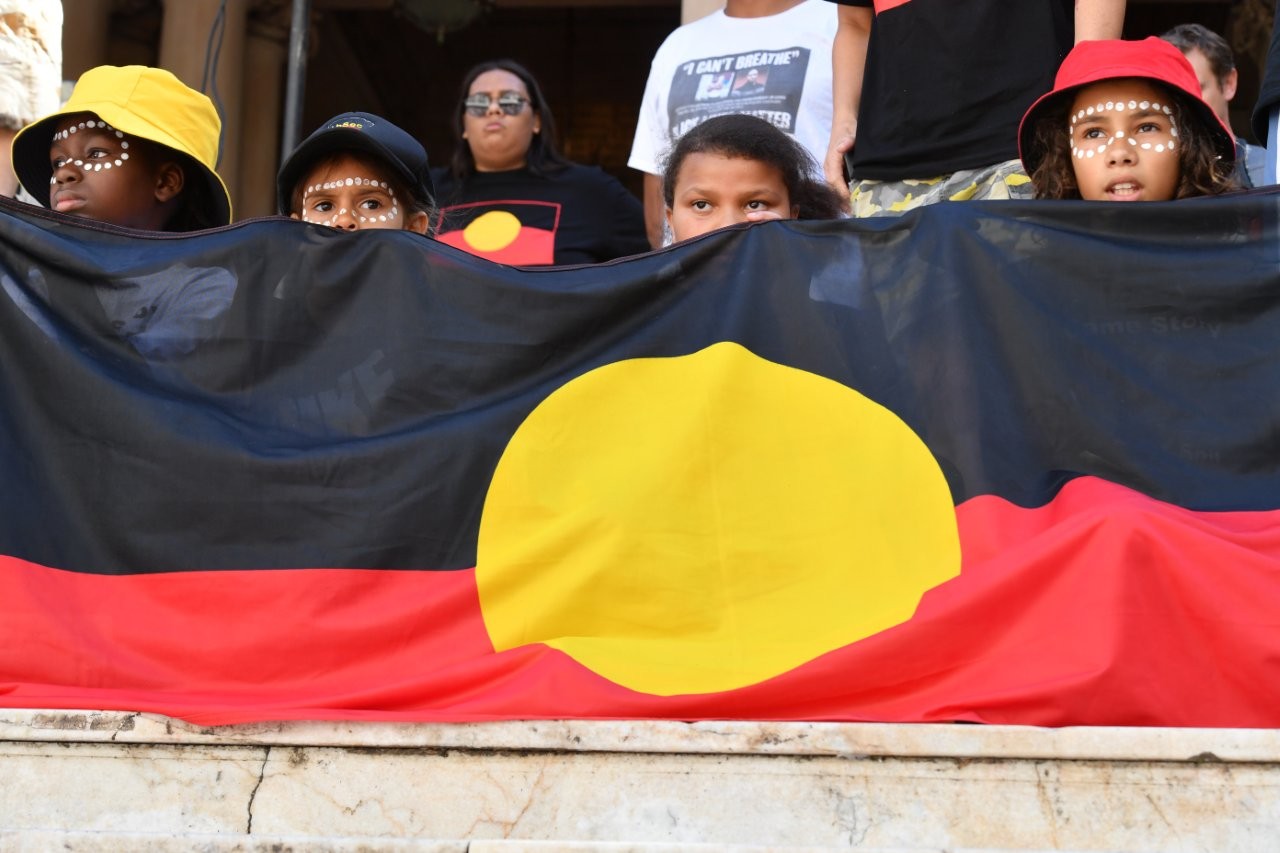
“By embedding Aboriginal languages and ways of learning into education, we can create more inclusive classrooms while supporting the revitalisation of languages that have been marginalised for generations,” Professor Dovchin says.
“The term ‘translingual’ is inspired by a decolonial term ‘trans-languaging’ – which is basically allowing language users to use all available resources they have,” Dovchin shares.
So for example, in an Aboriginal early childhood context, when the children came to the playgroup, they used toys, books and bodily gestures.
“So it’s not only the linguistic part, but also everything that they have that is available for them to learn language,” she says.
“We don’t ask them to just use English only – we ask them to use whatever available linguistic resources and repertoire they need.”
The children bring so many diverse resources from their family and how they speak at home, Dovchin shares, “so it’s about allowing people to speak, to say whatever they want to say, especially in the playgroup or classroom context”.
The trans-languaging is combined with ‘yarning’, which is far more than simply an Indigenous way of storytelling.
Yarning is about the sharing of knowledge and co-constructing meaning, a tradition that has been practised by Australian First Nations people for thousands of years.
“Yarning challenges the colonial, extractive and hierarchical nature of Western knowledge by fostering reciprocal, respectful dialogue, where knowledge is co-created rather than imposed,” the report reads.
“Through its emphasis on trust, community and lived experience, yarning asserts the sovereignty of Indigenous voices and disrupts colonial epistemologies that have historically marginalised them.”
Yarning is directly connected with the Country and Dreaming story. Country holds stories and (laws), such as the physical and spiritual anchor that inform the Dreaming.
The Dreaming is the Aboriginal way of thinking from the ancestral time of creation, when spirit beings shaped the world, its landscape, laws and life.
“The Dreaming is not a story about past events but an ongoing reality,” the report reads.
Dovchin says in the playgroup, the children sit together in the yarning circle and listen to each other deeply, co-learn from each other and co-create the knowledge together.
“When we put children into the yarning circle in an operational way of storytelling, learning, listening to each other, and then when it’s combined with the de-colonial translanguaging practice, we see a really different transformative approach in the playgroup, also in the classroom as well, because we are not only allowing the Aboriginal way of learning, but we are also allowing the children to be who they are.”
The researchers found this flexible, culturally embedded approach helped children participate more actively and confidently in language learning.
“Rather than separating languages or focusing on ‘correct’ forms, we saw children freely using English, Noongar and gesture together to make meaning,” Dovchin says.
“This created a space where children were not just learning words, but connecting language with culture, identity and everyday experience.”
Study co-author, Yalkarang Consulting founder and Noongar language educator Tamara Tucker, says approaches such as TYP are critical to making language learning meaningful and sustainable.
“When children learn language through culture like story, song, movement and connection to Country, it becomes something they feel, not just something they memorise,” Tucker says.
“This kind of learning builds pride, confidence and a stronger connection to identity, which is essential if we want to keep our languages strong for future generations.”
It seems the methods we are using at present are outdated and not fit for purpose.
The research suggests we need to be thinking outside the box and be far more empathetic and more in tune with the wants and the wisdom of First Nations peoples, who can teach us so much, especially about the learning of their many languages and, vitally, the preservation of these ancient dialects.
“Our main aim is to basically introduce TYP into a more practical context, where schools and playgroups and classrooms can experiment with this pedagogy,” Dovchin says.
“Our research has already shown that it has benefits for children, especially Aboriginal children.
“International scholars are in tune with this. We really need to introduce it to schools, classrooms and playgroups in a more practical way.”
Click here to read the study, titled: ‘Translingual yarning pedagogy: reimagining LOTE through Aboriginal language education’.