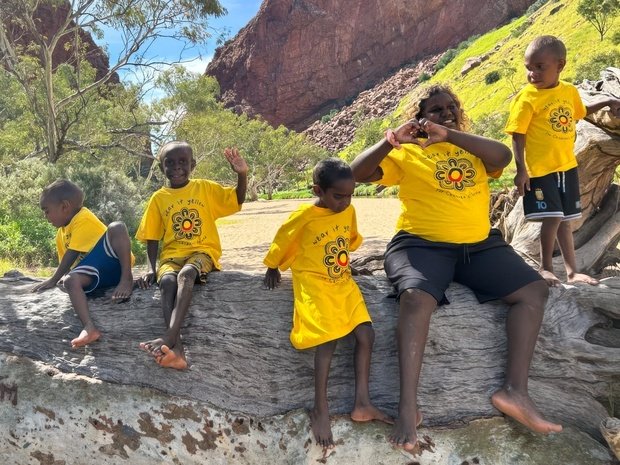
The campaign calls on Australians to move beyond symbolic support and take practical action for reconciliation through learning, respect and fundraising.
Wear it Yellow invites people to add a touch of yellow to their day during National Reconciliation Week, from clothing and accessories to team uniforms and workplace attire, and:
- learn about First Nations cultures, histories and truth telling;
- engage with conversations about justice and reconciliation; and
- raise funds for First Nations led education, health, employment and wellbeing initiatives across Central Australia and the Top End of the Northern Territory
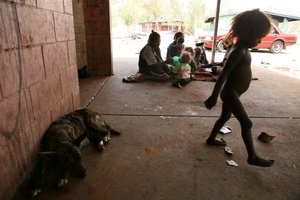
At a time when First Nations children and young people continue to face significant inequity across education, health and justice systems, National Reconciliation Week remains both a celebration of the world’s oldest continuing cultures and an opportunity for truth telling about the realities many communities continue to experience.
From the overrepresentation of First Nations children in youth detention, to ongoing disparities in health, education and employment outcomes, the week is an opportunity for Australians to reflect on the work still required to achieve justice and equity, and the role we can all play in supporting meaningful change.
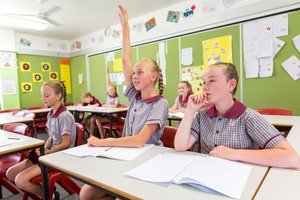
Every year educators use this week to move past symbolic support into active, Aboriginal-led learning.
Common activities include community installations, where schools are engaging students to fill out “I’m All In” cards and building shared visual displays that reflect the school’s commitment to reconciliation.
Many schools each year invite Traditional Owners, Aboriginal Elders, and performers onto campus for Welcome to Country ceremonies, dance performances, or art workshops, and teachers nationwide lead lessons on foundational milestones, specifically the 1967 Referendum and the High Court Mabo decision, which frame the dates of NRW.
Schools participate in a range of music initiatives and choirs across the country come together in song and this year is no different.
Last year, more than 700 choirs raised their Voices for Reconciliation, the initiative’s largest ever turnout.
This year’s song is Beds Are Burning, a timeless call to action to be ‘All In’ for justice and reconciliation, and for all Australians to know our history.
The song was released in 1987 on the band’s Diesel and Dust album, but its legacy has endured over the decades.
Co-composer Peter Garrett said he’s buoyed that the song is being sung by choirs across the country as part of Voices for Reconciliation.
“I always felt that this song was like an “executive summary” of the injustices perpetrated on the First Peoples of this continent,” Garrett said on the Reconciliation Australia website.
“But it is more than that, it is a call for action – ‘It belongs to them, let’s give it back!’
“The song is a call for all Australians to be all in for truth, land rights and reconciliation.
“I encourage all choirs to sing it with power and passion for change.”
A great part of Voices for Reconciliation events is that no experience is necessary, and so it’s highly inclusive.
Community choirs and local sing-along gatherings (often hosted in venues, schools, and community centres) explicitly welcome people of all vocal abilities.
“For many Australians, reconciliation can feel abstract or symbolic. But real reconciliation is built through relationships, truth telling and a willingness to engage with First Nations culture and ideas with openness and respect,” Evelyn Schaber, Arrernte woman and Children’s Ground Co Chair, says.
“Education has a profound role to play in that.
“When children grow up learning the true history of this country and understanding the strength, knowledge and continuity of First Nations cultures, it shapes how they see each other and the kind of future we can create together.
“At the same time, too many First Nations children are still being denied the opportunities and support they deserve.”
Funds raised directly support Children’s Ground’s community led approach, delivered through a 25-year commitment to long term systems change alongside First Nations communities.
“Wear it Yellow is a way for people to stand alongside our communities in practical action, while also helping create space for more understanding, accountability, action and change,” Schaber says.
For a host of National Reconciliation resources for schools, click here.
The Wear it Yellow campaign runs throughout National Reconciliation Week from Wed, May 27 to Wed, June 3, with fundraising continuing until June 30. For more information, click here.