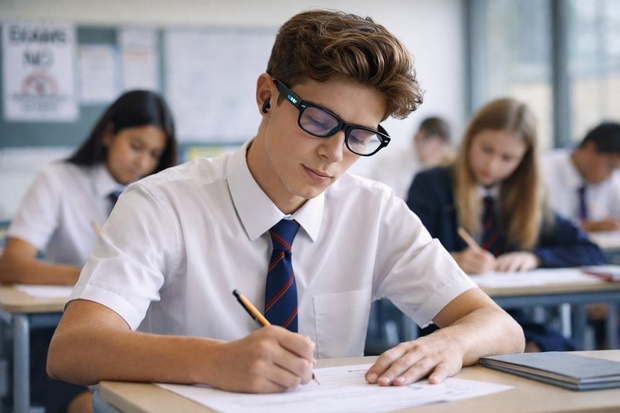
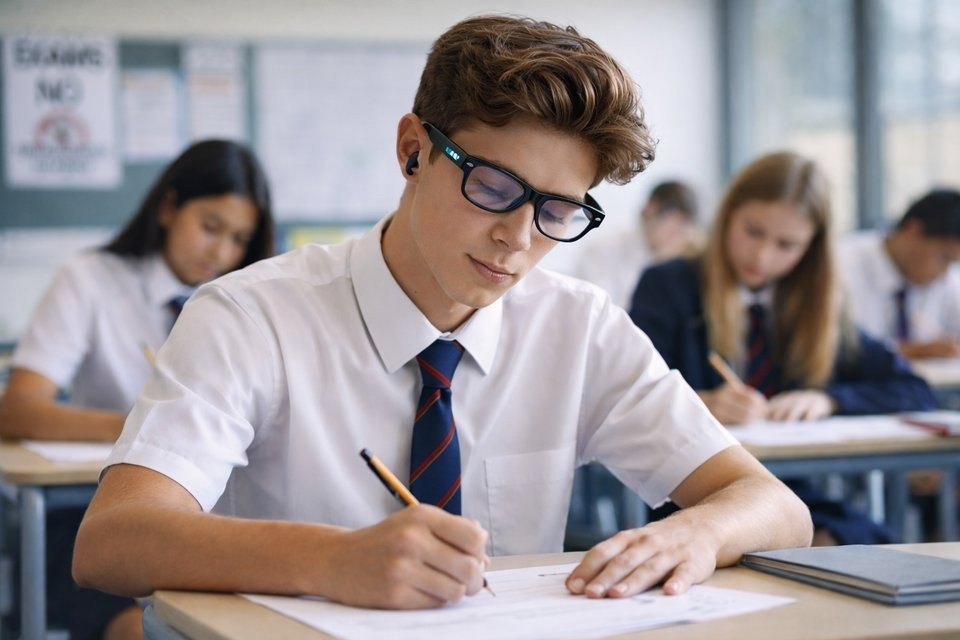
On October 21, 2026, the Victorian Government announced further restrictions on smart glasses and wearable technologies across Victorian schools, commencing at the beginning of the 2027 school year. The announcement concluded with a statement attributed to Deputy Premier and Minister for Education Gabrielle Williams: “Smart glasses have no place in our classrooms or on school grounds.”
No place.
Not a place with appropriate safeguards.
Not a place where they support disability access.
Just no place.
These are extraordinarily absolute words, particularly when the same government announcement acknowledges that smart glasses may be necessary as a reasonable adjustment for people with disability. If the technology has no place in our schools, what does that communicate to students who rely on it to access their education? And what does this language reveal about the way we continue to conceptualise disability inclusion?
Student safety and disability inclusion are not competing priorities
There are legitimate concerns surrounding smart glasses. Their capacity to record discreetly creates risks involving student privacy, harassment, exploitation and potentially criminal conduct has been a glaring omission in policy for a while. Schools have an obligation to respond to these risks. Students should not have their privacy compromised through the inappropriate use of recording technologies.
However, smart glasses are not the only wearable technologies capable of covert recording. Voice recorders incorporated into necklaces, rings and watches can present similar concerns. Some wearable technologies may also support people with non-visible disabilities, assisting with memory, communication, information processing and participation. For some students, smart glasses may provide visual assistance, text recognition, communication support or greater independence in navigating their learning environment. The same technology can be used for fundamentally different purposes.
A technology’s capacity to be misused does not negate its legitimate role as assistive technology. Surely our education system should be capable of distinguishing between harmful conduct and disability access without treating them as mutually exclusive considerations.
Are we still approaching disability through the medical model?
The announcement raises a broader question about how disability continues to be understood within our education system. The medical model of disability traditionally focuses on an individual’s impairment and the interventions or adjustments needed to support their participation within existing environments. The social model shifts our attention towards the barriers created by environments, institutions, policies and attitudes. These distinctions matter because they influence where responsibility for inclusion sits.
Consider the government’s statement: “Exemptions to the ban for smart glasses are only available as a reasonable adjustment for people with disability when no other suitable adjustment can be provided.” The emphasis on “only” and “when no other suitable adjustment can be provided” deserves closer examination. The policy establishes a general prohibition, then identifies circumstances in which people with disability may qualify for an exemption.
This reflects an individual accommodation approach that shares important characteristics with medical-model thinking: the system establishes its rules, and individuals whose needs differ from those rules must seek adjustments. An exemption process is not inherently inconsistent with the social model. Reasonable adjustments remain an essential part of inclusive education. But we should question what happens when accessibility is considered primarily through exemptions rather than incorporated into policy design from the outset.
How can we design a policy that protects student safety and privacy while ensuring that students with disability can continue to access the technologies they need?
Who determines whether another adjustment is suitable? How is the student’s own experience of accessibility considered? Does an alternative provide the same level of independence, dignity and participation? And why should a student potentially have to surrender an effective assistive technology simply because another adjustment is considered available? These questions go beyond whether a school can technically provide an alternative. They concern the quality and equity of the educational experience itself.
Inclusion cannot simply mean making exceptions
For decades, Australian education systems have committed to inclusive education, reasonable adjustments and removing barriers to participation. Yet institutional practices can continue to reflect an assumption that there is a standard way of participating in education, with adjustments made for students who do not fit that expectation. This is precisely what the social model encourages educators to interrogate.
Rather than beginning with the question, Does this student qualify for an exemption?, we might instead ask: How can we design a policy that protects student safety and privacy while ensuring that students with disability can continue to access the technologies they need?
And its not just semantics. One approach begins with compliance and considers accessibility afterwards. The other recognises accessibility as a fundamental consideration in developing the policy itself. Neither approach requires schools to tolerate covert recording, harassment or privacy violations. But the second explicitly acknowledges that students experience the same rules differently, and that inclusive policy must account for those differences.
School leaders must interrogate the language they reproduce
The language used in government announcements does not remain confined to press releases. It influences how principals communicate expectations, how teachers interpret restrictions, how families understand their responsibilities and how students experience the school environment.
When school leaders repeat categorical statements such as “smart glasses have no place”, they risk reinforcing the impression that assistive technologies are inherently inappropriate, even when legitimate exceptions exist. So, when you are communicating this ban to your communities please consider the language used. Consider how differently the same policy could have been communicated:
Smart glasses used as assistive technology have a legitimate place in our schools. Concerns about their potential misuse warrant appropriate restrictions from the start of the 2027 school year. These restrictions must recognise that, for some students, smart glasses are not simply personal electronic devices but important tools for accessing education.
The restrictions remain. The government’s concerns about privacy and safety remain. But disability access is recognised as a legitimate part of school life rather than something that appears to contradict the policy’s central message. This is how we can communicate restrictions in ways that acknowledge the rights, experiences and accessibility needs of the entire school community.
We need to do better than perpetuating medical-model thinking
Inclusive education requires more than providing individual adjustments once institutional rules have been established. It requires examining the assumptions embedded within those rules, recognising whose needs have been considered in their development and identifying where unnecessary barriers may have been created. For school leaders, this means doing more than reproducing government messaging. It means critically examining whether the language we use reflects the inclusive educational environments we claim to be building.
The Victorian Government’s announcement presents an opportunity to have that conversation.
Not because concerns about smart glasses are unjustified, but because legitimate safety concerns should not prevent us from critically examining how restrictions affect disability access. We cannot claim to embrace the social model of disability while continuing to treat accessibility as an exception to the way our schools ordinarily operate. And perhaps that is the question school leaders should be asking whenever a policy tells us that something has “no place” in education: No place for whom?