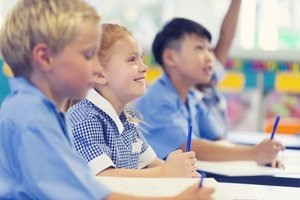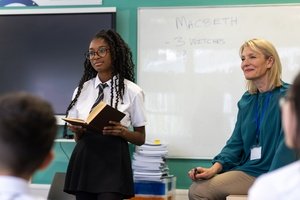


More than 50,000 students filled desks in 584 examination centres across the state at on Tuesday morning, where VCE English and English as an Additional Language written exams formally kicked off a three-week final assessment period.
More than 92,000 students will pass through examination halls at least once until November 18, with 68,000 students eligible to earn their VCE in 2026.
Victorian schools and exam supervisors were this year advised on rules banning smart glasses, mobile phones and other electronic devices during exams, according to the Victorian Curriculum and Assessment Authority, as AI continues to advance.
Authority chief Andrew Smith said there were measures in place to assess all students fairly and equitably.
“Any rule breached by students are reported to the VCAA and will be thoroughly investigated,” he said.
No significant issues have been reported, the authority said.
Other states have scrambled to deal with the impact of AI technology on education, including on testing.
In NSW, authorities have gone as far as proposing bans on take-home assignments to curb a surge in AI cheating.
“AI adds another dimension to an issue that examination systems have always faced – how to ensure students cannot gain an unfair advantage through technology,” La Trobe University education academic Therese Keane said.
“Devices are becoming smaller, smarter and less visible, and examination procedures need to keep pace with that changing technological environment.”
As hundreds of thousands of Year 12 students across Australia face a nervous wait for their final results, a consortium of secondary school teachers is warning of inconsistent approaches to assessment.
A paper published by public policy think tank Page Research Centre on Tuesday called for nationally consistent assessment standards after finding “considerable differences” across Australian states, despite conforming to a national curriculum.
In Victoria and NSW, students must study English through to Year 12 and sit external examinations to receive their ATAR.
Comparatively, in South Australia and the NT, English was optional in the final year of schooling and some English subjects had no formal external written assessment, said the not-for-profit, which is affiliated with the National Party.
“These differences raise fundamental questions about the comparability of educational achievement across Australia, particularly when students compete for university places through a nationally recognised ranking system,” the Neither Better Nor Fairer report stated.
VCE students will receive their ATAR results on December 10.
AAP