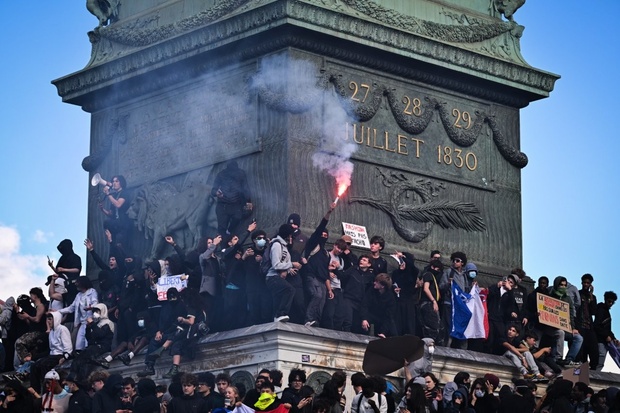

“We are appalled by the level of violence suffered by pupils and students demonstrating across France to demand what is long overdue: a functioning education system, decent material conditions for education, appropriate school and university timetables and territorial and social equality in access to quality education, in particular,” the experts said.
“These demands have long been highlighted by teachers.”
The experts are Farida Shaheed, a Special Rapporteur on the right to education, Gina Romero, a Special Rapporteur on the rights to freedom of peaceful assembly and of association, Leopoldo Maldonado Gutiérrez, a Special Rapporteur on the promotion and protection of the right to freedom of opinion and expression and Pau Pérez-Sales, a Special Rapporteur on torture and other cruel, inhuman or degrading treatment or punishment.
The Special Rapporteurs, Independent Experts and Working Groups are part of what is known as the Special Procedures of the Human Rights Council.
Special Procedures, the largest body of independent experts in the UN Human Rights system, is the general name of the Council’s independent fact-finding and monitoring mechanisms that address either specific country situations or thematic issues in all parts of the world. Special Procedures’ experts are volunteers; they are not UN staff and do not receive a salary for their work. They are independent from any government or organisation and serve in their individual capacity.
Since mid-September 2026, a movement, first among high school students and then also with the participation of university students, has been gaining momentum in France.
Although authorities launched several initiatives to facilitate dialogue and respond to students’ demands in October, the priority given to a primarily security-focused response to the protests has led to the root causes of the mobilisation being sidelined.
“Implementing the right to education is an international obligation, requiring in particular, the mobilising of the maximum available resources,” the experts said.
“The serious and, in some cases, irreversible injuries sustained by underage demonstrators during law enforcement operations are unacceptable and unjustifiable.”
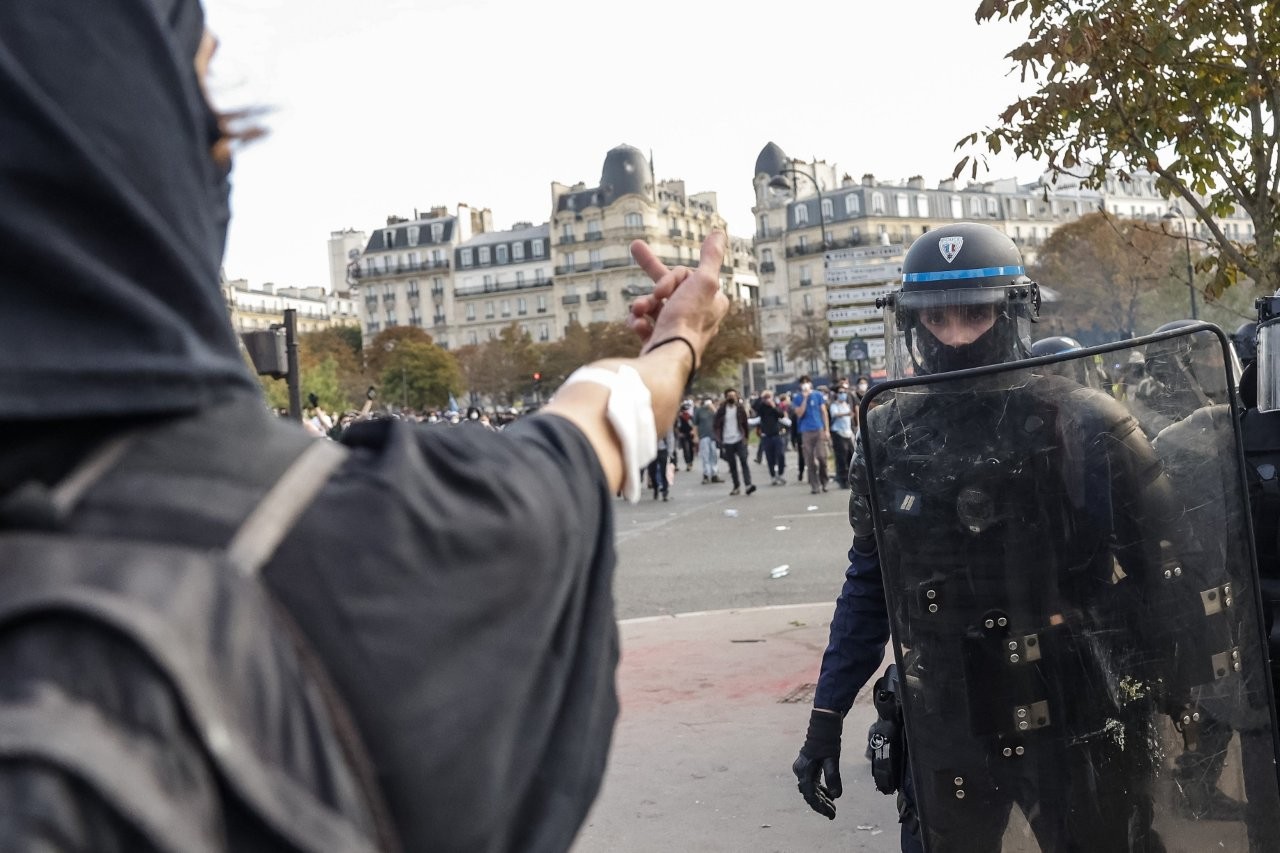
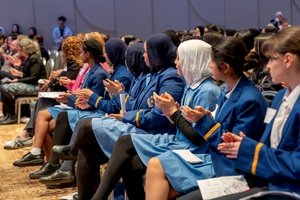
Pupils and students are demanding a functioning education system, decent material conditions for education, appropriate timetables and territorial and social equality in access to quality education the experts say, “demands long highlighted by teachers”. PHOTO: AAP
French President Emmanuel Macron has promised that his Government will announce a package of measures in response to the weeks of street protests over a broad set of grievances, while acknowledging the risk of more unrest ahead.
His Prime Minister Sebastien Lecornu held a news conference after a meeting with unions of high school students who want more resources for the education sector and an overhaul of a university admissions process they say embeds inequalities.
“I have ... asked the government to respond to the legitimate demands that lie at the root of this social movement,” Macron told reporters in Marseille, where he travelled to inspect the damage from earlier protests.
The experts said while investigations, notably those conducted by the General Inspectorate of the National Police, are essential, so too are clear instructions from superiors and a political stance that firmly and unequivocally condemns all police violence.
They recalled past discussions with France, which urged authorities to undertake a comprehensive review of their policing strategies and practices in order to enable demonstrators to express their concerns and to facilitate a peaceful resolution of social conflicts.
“We regret that police officers have been injured, and that numerous buildings have been damaged and shops vandalised. We condemn these acts of violence. Measures are needed to investigate them and bring perpetrators to justice.”
“However, the scale of the arrests and detention, affecting several thousand people, mainly minors, appears disproportionate and deters demonstrators from exercising their freedoms of expression and peaceful assembly,” the experts said.
The protests show little sign of easing after violence almost two weeks ago engulfed dozens of cities, leading to fears the state had lost control of the streets.
In response to the turmoil, the interior ministry deployed 70,000 police for last Saturday’s demonstrations, which unions called to denounce the high cost of living and public services.
The movement has grown far beyond initial student discontent, drawing in trade unions and “yellow vest” activists, known for their high-visibility jackets and mass demonstrations against economic pressures including high fuel costs.
With his presidential mandate due to expire in April and public finances under severe strain, Macron it seems has limited scope to defuse the crisis through the costly concessions that helped quell previous waves of unrest.