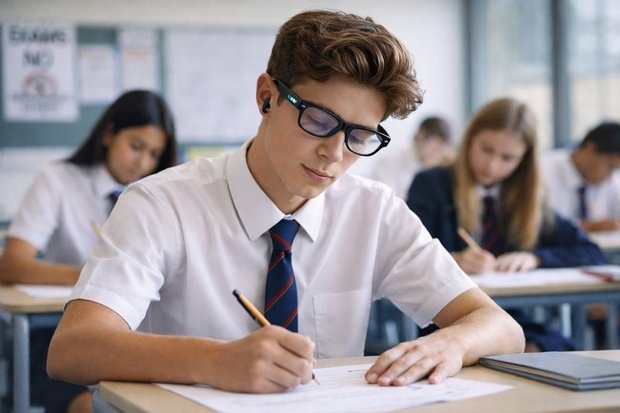
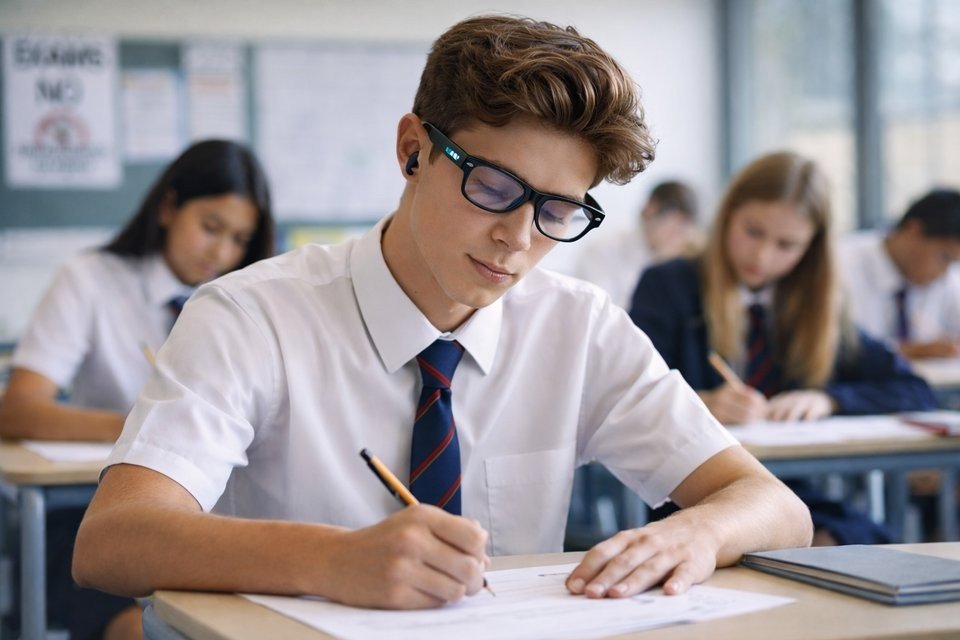
From the start of the 2027 school year, students at all schools will be required to have personal electronic devices, including smart glasses, switched off and stored during school hours and during school activities.
For government schools, the ban will extend to adults such as teachers, parents and volunteers, who will be banned from wearing smart glasses and other covert filming devices on school grounds and during off-site school organised activities, including on camps and excursions at all times - not just during school hours. This will also apply to public school students.
“We’re setting clear rules across every Victorian school – making sure students can focus on learning, and families can feel confident their children are in a respectful and safe school environment,” Deputy Premier and Minister for Education Gabrielle Williams said in a statement.
“Smart glasses have no place in our classrooms or on school grounds.”
Vision Australia however, has voiced concern about the announcement, saying smart glasses have been shown to be an important piece of assistive technology for people who are blind or have low vision, supporting their ability to access information and navigate independently.
“Students who are blind or have low vision have the right to learn and play alongside their peers and governments should not be limiting that by restricting the use of assistive technologies in the classroom,” a release from the organisation said.
“[Williams] has stated that smart glasses will be permitted 'when no other suitable adjustment can be provided'. This does not address the needs of students who are blind or have low vision. It creates unnecessary hurdles for students and their families to navigate, rather than schools working collaboratively with families to find solutions that lead to positive education outcomes for students.”
Vision Australia said it also questions what the ban means for the use of specialist blindness and low vision wearable technologies in classrooms that have been on the market for a significant period and perform similar functions to mainstream smart glasses.
“Vision Australia is extremely disappointed that the Government has made this announcement without consultation with the disability community and thorough consideration of the impact it will have on students with disability,” it said.
Exemptions to the ban for smart glasses are only available as a reasonable adjustment for people with disability when no other suitable adjustment can be provided, the Government said.
It said it will work closely with schools to provide consistency and certainty for families, students and school communities in the rollout of these policies.
Victoria was the first jurisdiction to ban mobile phone use by students in government schools in 2020.
An independent evaluation found the ban helped students focus on class and be more social during breaks.
Schools also reported fewer incidents involving mobile phones.
Earlier this year, the State Government announced that restrictions on mobile phones and other personal electronic devices will extend to students in all Victorian schools from Term 1, 2027.
A spokesperson said a re-elected Carroll Labor Government will extend the adult ban on smart glasses to non-government schools, which will be done through legislation.
“This will completely ban smart glasses for everyone in all schools,” they said.
A growing number of councils across Victoria are moving to ban smart glasses from public facilities, including swimming pools, childcare centres, playgrounds and recreation centres, according to ABC News.
It is believed 16 of the state's 79 local authorities have confirmed that they are actively investigating or implementing measures to prohibit the covert recording devices from community facilities amid privacy concerns from residents.
“We want people using our facilities to feel safe and comfortable, and to know that their privacy is being taken seriously," Frankston City Council mayor Sue Baker told the ABC.