

As a former teacher, researcher and education lecturer Dr Hugh Gundlach from The University of Melbourne has experienced the various trials, tribulations - and many benefits - brought about by staff meetings.
Now having turned his research focus to look at how they might be run more effectively in schools, he's keen to share his greatest points of advice to school leaders looking to imporve their approach to meetings across the board.
The result is a boost in collegiality, morale and collaboration.
SD: Thanks for joining us, Hugh. You have a keen research interest in how meetings are done in schools, what do you find so compelling about this area?
HG: I think being an educator, so being in a school environment as a teacher and then now in a university as a teacher and lecturer as well, meetings are a topic of interest because they sort of feel like they take us away from our real work, which is working with students or preparing the next lesson or marking work or meeting with students.
And so in schools in particular, meetings are slotted into the very little time that teachers have for other duties. So they're often lunchtime meetings, recess meetings, before school briefings, after school meetings or they're meetings that are held in the spare periods when teachers would probably like to be planning their next lesson or marking work or reading emails or, dare I say, having a cup of tea or a bit of a break.
So I think when the meetings are … not seen to be adding value and are not a great use of time, that they become really frustrating.
What are some of the main frustrations that teachers experience with meetings?
There are several. One of them would be that, is there a need for a meeting? Are we having this meeting just because it's in the calendar?
And people get frustrated when a meeting takes exactly as long as the calendar suggests - it feels like you're padding time to use up this spot, and to return the meeting time to the attendees would be sort of be admitting that you didn't really have something to do.
The other frustration is when meetings go over time because they haven't been planned well. And I think, as well, [there’s dissatisfaction] with these ones that are locked in the calendar and it feels more like compliance rather than [an opportunity to] get some amazing information, or it's a great opportunity to generate ideas or to contribute to a decision or to have that social connection.
I would suggest that a lot of these frustrating meetings tend to be large scale, formal ones that are mandatory attendance - but they're not really meetings. I would argue they become an info session or a lecture and they're not a team huddle. They're not something where you're networking or generating ideas. It's this one, single direction flow of information from leadership to staff.

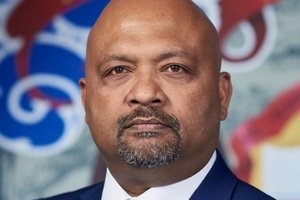
Dr Hugh Gundlach says there's many different types of meetings that remain underutlised in schools.
Would it be fair to say that the majority of meetings in schools are a waste of teachers' time or not?
Not necessarily, because I would say that best practice for meetings, the purpose of a meeting, is to generate ideas, to make a decision, to share information quickly and effectively and efficiently for all the people in attendance.
So the most frustrating meetings are when someone says ‘this could have been an email’ or, ‘this could have been a document’ or ‘why don't you just make an infographic or a sign or a guidebook or something, rather than telling us this in a passive format’.
I wouldn't say that meetings per se are a waste of time. It's more that people feel like they could be more efficient, they could be more effective, they could be in different formats, which would make them less of a waste of time.
And I think as well, being teachers, because we are not being paid by the hour, it's not costed the same. So to have 100 people sitting for an hour, you've lost 100 hours, not one hour, and you have to think of what the hourly rate of a teacher would be if you were charging them out.
But instead what happens is all that work that would have been done in that meeting hour, if someone was answering emails, writing a lesson plan, marking work, that's lost and that gets pushed into when that teacher gets home or they have to stay an extra hour at work.
I think that's where the real frustration is rather than meetings per se, because we're social creatures; meetings are how we share information, and it's very satisfying to spend time with colleagues and share ideas.
It's more the format of these meetings that causes the frustration, I believe.
You’re in the process of writing a new book canvassing meetings in educational settings, what are you looking at specifically?
I've done a scoping review of meetings because there are hundreds of books on meetings already, but they're mostly for business. I draw this difference between meetings in schools and educational institutions versus meetings in corporate environments, because I would argue in corporate environments, managers are way more aware of their budgets and what the time value of their employees is.
They want them working on value-adding activities that are driving revenue or not costing as much. Whereas in schools, it's more this idea that, ‘well, we're paying you a yearly salary, here's your work, however long it takes you, that's up to you, you need to get it done’.
So what I've done is gone and found as many books on meetings as possible and best practice [when it comes to] all sorts of attributes of meetings, [so the book is about] all the different types of meetings that we could have in schools, things like a walking meeting, a round table, an ad hoc meeting, things like a town hall or a question and answer, even conferences.
We look at [all kinds of] meetings, we look at online meetings, the idea of a virtual meeting in, say, a OneNote or a Padlet or a shared document, workshops, training sessions, mentoring - all these alternatives to the formal meeting where one person is talking and everyone else is listening.
Are you suggesting that education has something to learn from the business world here in terms of meetings?
Not necessarily, because I think there would be just as many wasted meetings in business. I certainly take a very a light-hearted but pretty cynical look at meetings and how they can be used in all industries to waste time or delegate work that should have been theirs – or when a meeting is used because it would be more difficult to do something else like mentoring or training or just doing the work.
I think we've all been in meetings where we get the sense that someone is trying to offload work to the team when it could be done by another method or by the manager.
So I don't think that schools necessarily need to learn from business, but what I've done is try to find best practice for all the very different types of meetings you can have and tailor that to the school environment…
Do you have any practical advice for school leaders who might be looking to overhaul or improve their approach to staff meetings?
My best advice for educational leaders would be to think of meetings like they would think of a lesson, because I would argue that a really good meeting runs like a really good lesson: it's been planned very well but allows for things to happen in the moment.
In the same way that you would have a lesson plan, a really good agenda invites contributions. So, you have agenda items that are framed as questions and you genuinely are seeking the input and the collaboration of the people in the meeting.
When you are in the meeting, the leader ideally might not be the chairperson, they might not be the person taking the minutes. They try and speak as little as possible because you're trying to source ideas and decisions from your team. Otherwise, it will just be an info session.
The results of an (effective) meeting is progress, it's change. And so people come away from that motivated and they know what they need to do, much like a student has some new knowledge or a new skill after a lesson. And there's that extension and support [as well].
And you don't have that horrible but common thing where you don't get to what you wanted to get to in the meeting, and so you say, ‘well, we need another meeting’.
So in that way, I think educators are well placed to run meetings. What piqued my interest [with this EducationHQ article on meetings] was that some teachers are saying they feel like they're being treated like students. And it's that surveillance culture rather than a genuine sharing collaborative environment.
What I'm excited about in this book … is that there are so many different types of meetings we can have in schools, and so many of them are underutilised or not used at all.
There can be things like the ‘interrogation meeting’. It doesn't sound very nice, but these are necessary ones that we have in schools. I've seen these done very poorly by deputy principals, heads of year, when they are trying to work out what happened in a critical incident.
We can have a ‘retrospective’ where something went wrong, again, (perhaps) a critical incident, and you're trying to learn from that.
And so the different ways you set up the meetings matter based on the objectives of them. I remember being in different schools where you have all the butcher's paper and post-it notes, and you spend over an hour writing on little bits of paper, and then it doesn't go anywhere.
And you think, what kind of a strategic planning meeting was that?
And you can set [great meetings up] in very different ways: focus groups, inquiries, review panels, rehearsals, crisis meetings. There's so many different types of meetings that we could have in schools.
Something like the ‘Town Hall’ (format), only a few very confident leaders would be comfortable doing that. And yet it would be so valuable at different points in the year to genuinely allow your staff to queue up in the aisles of a lecture theatre and ask these big probing questions.
And sometimes the principal could say, ‘thank you for your question, I'll take that on notice’, and they return to it another time. But you give their voice back to those staff members and to the community, rather than what most meetings become in schools, which is that info session or a lecture.
You’re saying leaders just have to be more intentional with how meetings are done…
Teams are essential for building team cohesiveness. Teaching is a very solitary job, potentially, if you spend most of the time in a classroom on your own. Some teachers don't have the benefit of being in a staff room with a large group of other teachers or necessarily with the teachers they would like to be in a staff room with.
So when we meet as a team, that's a great opportunity to build that cohesiveness. I think most people are familiar with meetings where we're just being allocated tasks and duties or being given information in a way that is efficient for the person giving the information, but not for everyone else - because we have to meet before school when we'd like to be planning a lesson or meet during our break time or after school.
I'm not saying get rid of meetings, but we can have better meetings, different types of meetings, and there are many alternatives to having a meeting in the first place that are equally valuable: mentoring, workshopping and doing the thing rather than meeting up and talking about it.