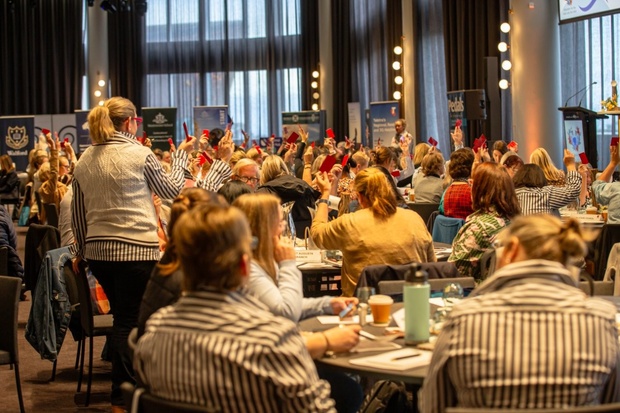
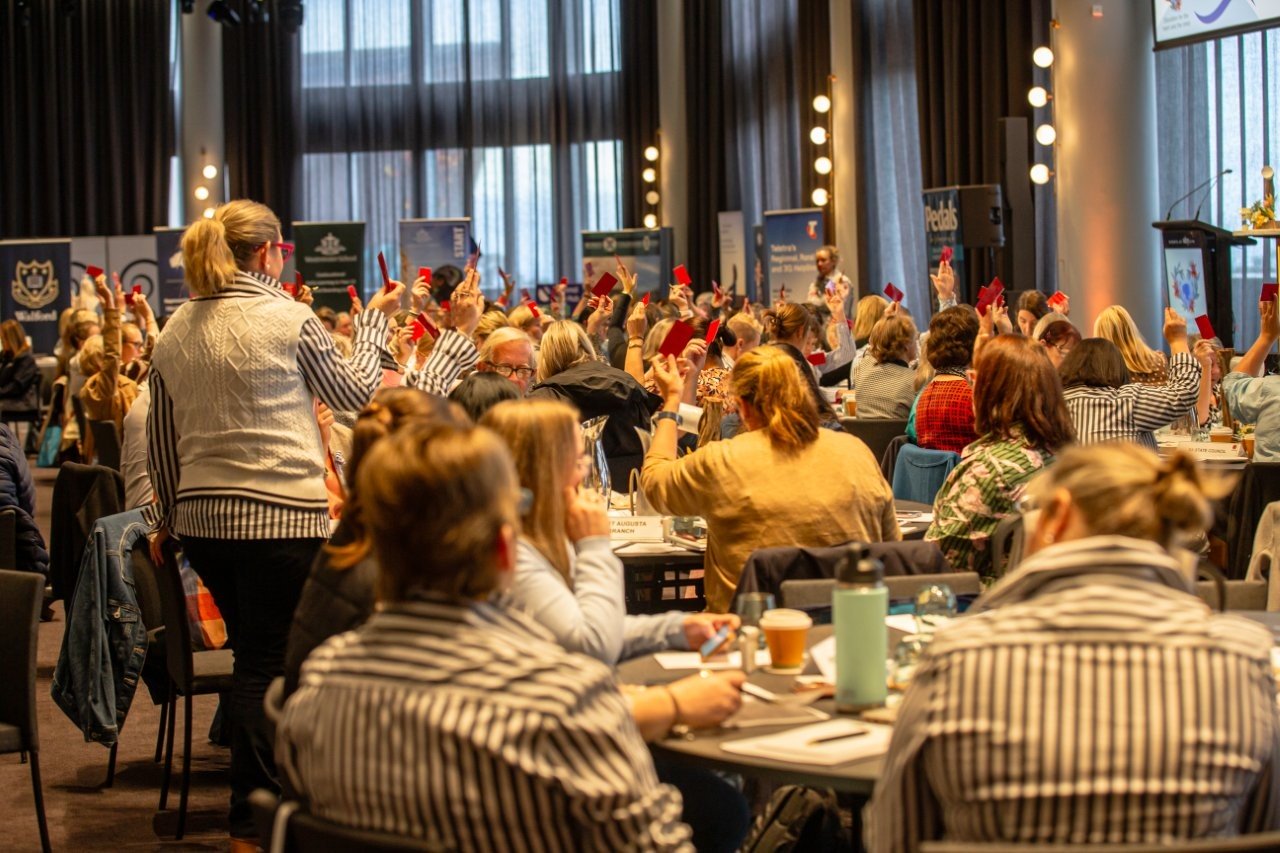
The importance and formal recognition and remuneration for isolated classroom supervisors was high on the agenda at the 55th Annual Federal Conference of the Isolated Children’s Parents’ Association of Australia (ICPA) at St Hilda’s School in Southport recently.
Hosted by the ICPA Queensland State Council and with the coastal-aligned theme of Riding the Waves of Learning, the conference celebrated the achievements and successes of the previous 12 months in advocacy, support and awareness for geographically isolated (GI), rural and remote students.
More than 200 delegates convened to discuss the future education for this cohort of students, including the rising cost involved, boarding and travel expenses, connectivity, distance education, early childhood access and the barriers facing students from preschool through to tertiary education.
ICPA federal president Louise Martin said she was “very happy” with the turnout, which included multiple stakeholders, boarding schools and other organisations who support ICPA’s work.
Martin said it’s important that Isolated Classroom Supervisors (RICS) be adequately paid for the work they do.
“The challenge that we’ve had so far is we can’t get our members to agree on what that looks like,” Martin said.
“We had two roundtables with sessions organised by (Regional Education Commissioner) Fiona Nash, which included stakeholders from the Department of Education in every state and territory and ICPA reps from every state and territory.”
The sessions offered up three possible alternatives.
“One was for it to be an additional allowance within the AIC, which is the Assistance for Isolated Children, the second is a standalone federal allowance for that, and the third one is to be paid a wage, and the wage would ultimately end up being distributed by the states.
“We’ve got people for and against all scenarios, so our next step is for us to say to government: ‘here are our three scenarios, what is going to be the best, what is going to be the easiest one to achieve, and what is going to solve our problems most?’”
When the Federal Assistance for Isolated Children (AIC) Scheme was introduced in 1973, it was intended to cover 55 per cent of the average cost of boarding for geographically isolated students.
Today, however, boarding costs continue to increase while government assistance has failed to keep pace, leaving families to shoulder an increasing share of the cost.
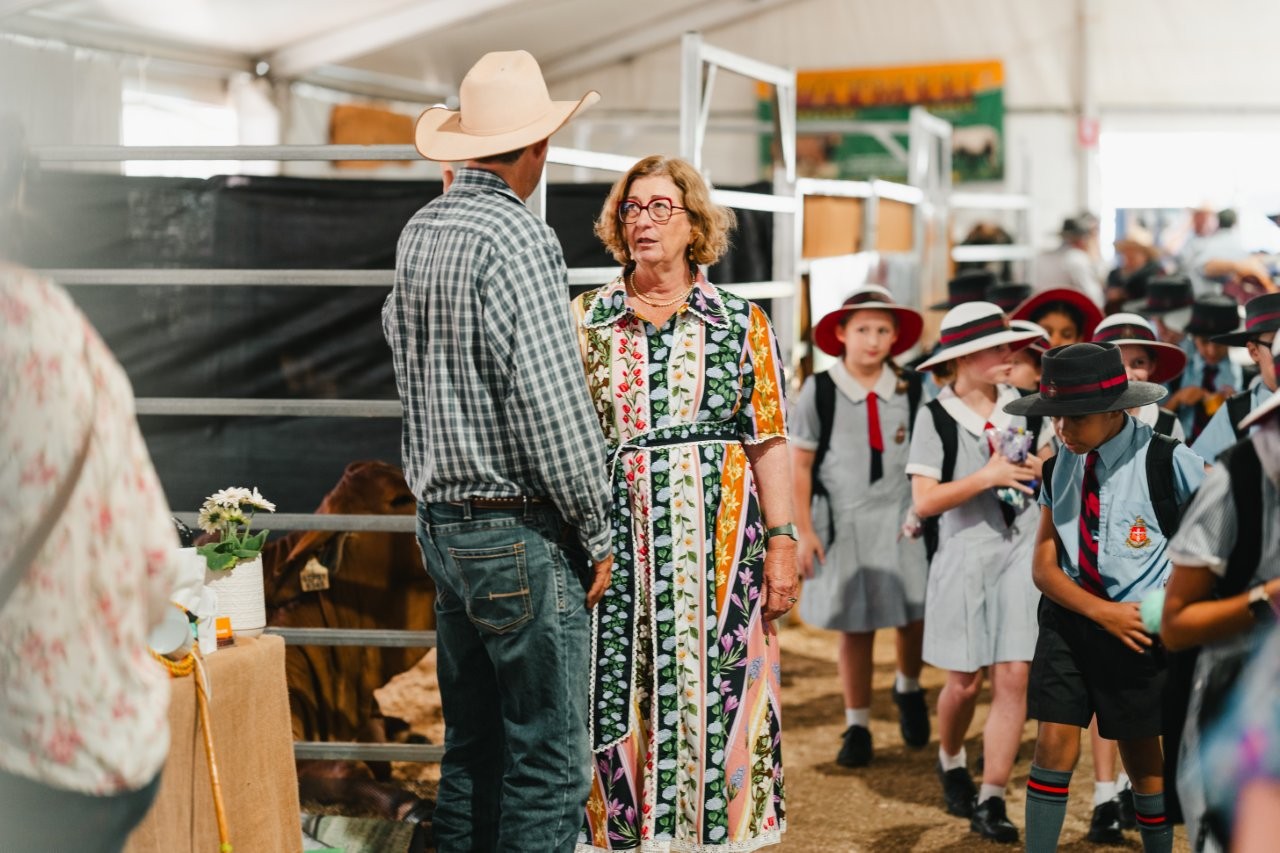
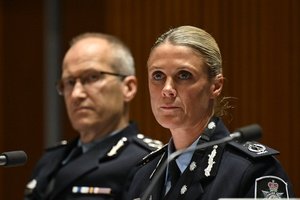
“If we want our nation to be fed by our own people in the future, then incentivise it for these kids to stay in these rural locations, give them a great education and make it appealing for them to stick around and to keep these farms going,” ICPA federal president Louise Martin, above middle, says.
“Of course, the AIC is always at the top of the list. That’s always our key issue, our number one and always will be.
“It’s 10 years since we’ve had a meaningful meeting with the decision makers and the Minister for Social Service. Ten years.”
Conference delegate, Rebecca Pearce from Broken Hill, has children attending Boarding School in Tamworth as well as a son at the University of Queensland in Gatton.
She acknowledged the inequality of support for GI students and would like to see a distance-based loading added to the Assistance for Isolated Children payment.
“We receive the same funding support as someone who currently resides 50km from the boarding school, yet we are over 1100kms from our boarding school. Whilst the system is currently equal, it is not equitable” she noted.
Conference motions also covered isolated student travel accessibility issues such as long travel times and high flight costs for GI students.
The motions will see the ICPA continue to lobby airlines and key stakeholders including Qantas and REX Airways to implement student discount considerations for those travelling to school and compulsory face-to-face learning sessions from their rural and remote communities.
“We’re focusing on airlines needing to offer student airfares. Every other form of public transport in this country has a student airfare except for flights,” Martin said.
Several motions were seeking equity when it comes to access to flights, particularly for those geographically isolated students who live on cattle stations.
“Currently what happens, under Abstudy, is the government collects Indigenous students from their remote location to take them to their secondary school, but that does not extend to any non-Indigenous students who might even just live down the road,” Martin says.
“This is a distance issue … it’s quite sensitive, but they’re both students which are equally disadvantaged by location.”
Delegates discussed the Telecommunications Legislation Amendment (Universal Outdoor Mobile Obligation) Bill 2025 which is set to establish the Universal Outdoor Mobile Obligation (UOMO) in Australia.
It requires major carriers like Telstra, Optus, and TPG Telecom to provide baseline outdoor voice and SMS coverage nationwide, leveraging satellite and direct-to-device technologies.
Telstra led the afternoon session with a panel covering digital access, web safety, online literacy and resources and tools to support online learning, however Martin says while this is a vital piece of the puzzle, there’s a disproportionate emphasis of its importance by the Federal Government.
“I think ICPA is very concerned that the Government thinks that the UOMO bill will solve all our problems and that is not the case,” she said.
“We want to make sure that that is an assistance, but that’s not solving our problems and our connectivity for our students in our classrooms. So that’s a key issue we’ve identified.”
Martin said that while she was buoyed by the sizeable and enthusiastic turnout on the Gold Coast, there will only ever be any action or response to the many issues highlighted if the powers that be are listening.
“There’s some serious burning issues, obviously. I sometimes get frustrated, it’s always disappointing not to have any serious people attend like Minister for Education, Jason Clare,” she said.
“I mean, it would have been terrific if he could at least have even come and opened the conference and listened to a couple of our members’ issues. That doesn’t seem to ever happen.
“We’re very, very well supported by Fiona Nash, she has been a fantastic support.
“At the end of the day, our real challenge is how do you convey what isolation actually means to people who’ve never been isolated or lived and isolated.”
Martin said while education was often considered free in Australia, geography continued to create significant financial and practical barriers for many families.
“For many of our members, boarding school isn’t a choice, it’s the only way their children can access compulsory secondary education,” Martin said.
“Families are making extraordinary financial sacrifices simply because there is no local school available. They shouldn’t be disadvantaged because of where they choose to live, work and raise their families.”