

A ballot vote by the AEU Victorian branch has seen an overwhelming majority (79 per cent) of members vote to accept the offer, which contains changes to working conditions including a reduced number of meetings per week and four professional practice days each year.
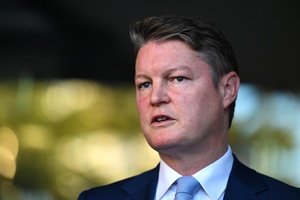
Branch president Justin Mullaly said the outcome was thanks to a powerful campaign carried out by tens of thousands of public school staff.
“Increases like these are why it pays to be a union member.
“This outcome has been won through the direct efforts of AEU members, who demanded pay and conditions that reflect the value and importance of their work in Victorian public schools,” Mullaly said.
In June, Mullaly had encouraged the union membership to accept a previous in-priniciple deal handed down by the Government – which he called ‘a win’ for educators across the state at the time.
But fractures soon emerged after members voted down the deal, with some teachers reporting that a pent up sense of animosity and resentment towards the union leadership fuelled their decision to vote no.
Under the new agreement, an experienced teacher’s pay will increase from the current $118,063 to $151,419 by 2029, including a $15,393 boost this year, taking their earnings ahead of NSW teachers.
Meanwhile, an early career teacher will see a $12,343 pay increase by October, bringing them into line with their NSW counterparts.
Under the agreement, this year all Victorian teachers in public schools will receive a minimum 13.04 per cent increase, with further increases ranging between 4 and 4.9 per cent over the life of the deal.
Principals and assistant principals will receive a 28.3 per cent pay boost over the same period.
Education support staff in schools, including classroom support, business managers, administrative staff, and those supporting students with disability, are set to receive a minimum pay increase of 28.3 per cent over the four years.
Teachers have taken to Reddit to offer their take on the news, with the overall sentiment a positive one.
“Just received the union’s email. Finally! And with 79% voting yes, it shows there is wide acceptance of the deal, making it unlikely for the next step (all employees vote) to not go through.
“Congratulations to all for the upcoming payrises,” one posted.
“I’m glad it’s over, I think if it dragged on we would have got a worse deal from the liberals,” another noted.
“No voter here. But as a union member I will respect this decision. The fact that basically 8 out of 10 people voted yes makes it easier for me to accept this. Good work people,” chimed in another.
The union has flagged that stop-work action scheduled for this Wednesday will not go ahead in light of the yes vote.
The agreement will now proceed to a vote of all employees, as is required under the Fair Work Act.
Following approval under the Act, the pay increases will be backdated to August 10 and the $2000 lump sum payment paid to employees as part of normal pay cycle arrangements.
“We will provide members with updated advice as soon as possible about the timelines for the above steps once they have been confirmed by the department,” a union official advised on Reddit.
“We achieved this together, as a union. Now, let’s keep building our union so that all of us can continue to win even more of the improvements we need to see.”
Under union action that has been in place this term, teachers have been banned from putting in unpaid overtime, implementing new government programs and even responding to Department of Education emails, with limitations on meetings also in the mix. There has also been a ban on state Labor MPs visiting public schools.
One union member called on others via Reddit to rally behind the ballot outcome.
“... I voted no to first offer, yes to 2nd and 3rd as my risk tolerance is not as high as others. I am glad we got this outcome and appreciate the effort (and the stress) we all endured till today.
“We collectively sacrificed wages, time and certainty, and we got here with collective effort regardless of any differences in the thought process or risk tolerance. Congratulations to all.”
But Swinburne education expert Melinda Davis has warned the deal could create another funding challenge across Victoria’s education system.
She points out that the Catholic sector has a long-standing formal commitment to matching the Government’s wage outcome, and the agreement also puts pressure on independent schools to follow.
“The next question is how will those sectors will fund it?
“If the Government does not commit to funding all schools there is a risk that they will be handing the problem to parents through higher school fees.”
“All roads lead back to government funding, in each sector,” Davis said.