So says Flinders University researcher and former teacher Steven Kolber, whose new co-authored research flags that teachers’ social media use may well have reached a critical juncture.
Concerns about performative professionalism, the monetisation of teachers’ expertise, and the use of AI‑generated and algorithmically curated content abound, the paper flags, with teachers grappling with what this all means for their public profile and privacy.
Once a platform where teachers flocked to share best practice, network and interact, Elon Musk’s takeover of Twitter in 2022 “destroyed any trust anyone had in the platform”, Kolber says.
Educators have since quit the platform in droves.
“A lot of people have said it has been swamped by bots and alt-right content.
“Basically, it’s a question of risk, like teachers always want to be online in some respects, but you also want to be a bit circumspect about what and how and when you post – teachers separate their personal professional and political lives in a way.”
Twitter, which Musk re-named X, quickly became a space where teachers’ posts could potentially appear right next to “all sorts of heinous things”, which was seen as a huge risk by many, Kolber explains.
Once the teaching community started fleeing, staying on X just didn’t have the same appeal, he adds.
“You’d post the same thing you posted a month before and instead of (seeing) thousands of interactions or views or comments, you’d get two or three – when the social media becomes not social then it’s just an empty vessel.”
A spread of alternatives, including Bluesky, Telegram and Mastodon just didn’t seem to gain the same traction amongst the teaching community, Kolber observes.
“And so then almost like as a default, people just ended up on LinkedIn, I think, which doesn’t have quite the same energy, or cultural expectations – it’s much more transactional.”
The influx of AI-produced content on the professional networking site is especially obvious, the researcher adds.
LinkedIn also doesn’t appear to cater so well for classroom teachers who don’t have a leadership role, Kolber suggests.
“What we’re seeing mostly is a skew towards leadership, so the people most active, present or online on LinkedIn are mostly your middle or executive level leaders within a school, and so there’s not really much of a place where teachers are talking about that teaching stuff – people have to shift to Substack or Instagram…”
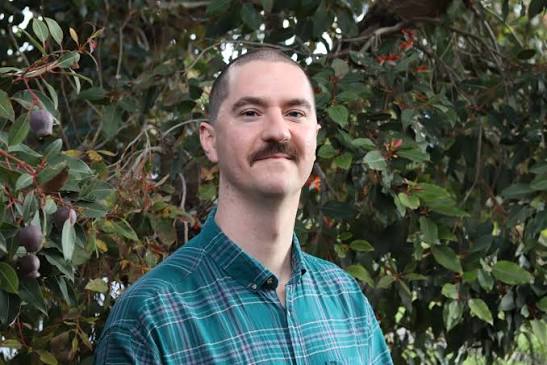
Researcher Steven Kolber says Twitter's demise was an especially humbling experience for educators who had built a significant profile and enjoyed engaging with a sizeable professional network.
Social media alternatives to X, the likes of TikTok and Instagram, don’t allow for the same kind of community forums that Twitter once did either, Kolber says.
“It’s that much more person-centric model [where] you’re following [a given person] in particular, rather than being part of a broader community.”
The demise of Twitter was an especially humbling experience for educators who had built up a strong following and enjoyed engaging with a sizeable professional network on the platform, the researcher suggests.
“It was one of those moments where you realise the things you assume will always be there [may not always be].
“[Some people went] from 10,000-odd followers to starting from scratch with 100 on a new platform. From my experience teachers don’t necessarily want thousands of people, but it does make it easy to have conversations and discussions and things like that.
“So when that falls away … and as we said in the paper, for a lot of people, these platforms are how you counter isolation.”
We don’t yet know exactly where the social media landscape is heading for teachers from here, Kolber says, but there are some interesting signs.
“That’s the central question at the heart (of our research) … what we’re starting to see, especially post-COVID, is a return to face-to-face offline gatherings and kind of a ‘digital business card’ [situation]…”
While once Twitter was used for live chats, with teachers tweeting on the fly from various PD events and professional meet ups, now there’s a prevailing feeling that not everything needs to be shared online, Kolber says.
“What we’re starting to see much more is, when you’re in person, it’s [a view that] ‘we don’t need to take a photo of this event, we don’t need this to be public knowledge, we don’t need to share everything that everyone said’.
“It’s like, if you weren’t there, you weren’t there.”
The escalating monetisation within social media spaces that were once forged around collaboration has brought in new tensions for teachers as well.
The rise of the teacher influencer is a phenomenon to watch closely, the researchers indicate.
“…at least in Australia, (this) wasn’t really much of a thing.
“It was always a thing in the US and kind of developing nations, because they’re not getting paid enough, but we’re seeing that be much more of a common thing.
“That’s also a business model that couldn’t really have worked very well on Twitter, because it was very much ‘share what you know’, and an open source.
“Whereas as we get to Instagram, TikTok [and other popular platforms], it’s much more you’re following that one person: you can comment on their post, but you’re relegated to the bottom third of the screen rather than being an equal participant.”
Two legal experts have previously argued that strict social media policies for teachers are preventing the profession from fully engaging in civic society, infringe on their right to a personal life, and may in fact be unlawful.
Speaking with EducationHQ, they said that employers’ right to control their employees’ behaviour and commentary on social media was largely a grey area in terms of the law and a contested issue in Australia, with employers increasingly seeking to dictate what employees do and say online – even when they are not at work and their activity bears no relation to their job.
“Teachers aren’t paid enough to live the celebrity lifestyle, yet they’ve got to kind of hide away as if they were,” Dr Sarah Hook, now at UTS, said.