
Certainly ACARA will be getting busy shaping what it will look like in practice, but key considerations will have to be ensuring teachers have the time, training and support to teach civics and citizenship, including in pre-service teacher education and through ongoing professional development.
Only 28 per cent of Year 10 students currently meet the proficient standard in the National Assessment Program – Civics and Citizenship. This was the lowest level since testing began in 2004.
University of Sydney’s Professor Murray Print, who has directed many major research projects, including an ARC-funded project on youth participation in democracy, as well as being chief investigator in many other projects in civics and citizenship education, strongly supports making the subject compulsory in schools, and particularly as a dedicated subject rather than something embedded across other areas of the curriculum.
“If we want young people to understand how our democracy works and participate confidently in civic life, civics education needs a clear and consistent place in every student’s learning,” Print says.
“The proposal also has significant implications for education systems, which will need to ensure there is a well-prepared workforce with the knowledge and expertise to teach this subject effectively.”
Rule of Law Education Centre CEO, Sally Layson, said in June: “Effective civics and citizenship education relies on an open classroom climate. This cannot rest on teachers alone.
“Teachers remain strongly committed to their role in developing students’ democratic skills and understanding, but face significant barriers in delivering high quality, relevant civics education. These include concerns about challenging reactions from parents or students and a crowded curriculum.”
“If we want young people to understand how our democracy works and participate confidently in civic life, civics education needs a clear and consistent place in every student’s learning,” Professor Print says.
That’s basically how things stand at present, Print, who in 2010 led the development of the Civics and Citizenship Curriculum within the national curriculum, says.
“New South Wales is a laggard. Our curriculum agency, NESA (New South Wales Education Standards Authority), has been resistant to incorporating more civics in the school curriculum, and probably for those reasons, although they won’t explicate them,” the academic tells EducationHQ.
“Victoria has done a better job, and the other states are quite variable. So the problem is a combination of a lack of political will and the lack of perceived resources.
“Clearly, if you’re going to do something more substantial, you’re going to need properly trained teachers if there’s the curriculum opportunity to start with, and then teachers coming through universities prepared to teach that in the future.”
Print says the proposal has significant implications for education systems, which will need to ensure there is a well-prepared workforce with the knowledge and expertise to teach this subject effectively.
“If you don’t help the existing teachers, they’re going to be resistant, we know that.
“We have for decades studied change in schools, and we know that if teacher resources, encouragement and opportunities are not there, teachers will find ways of getting around it, forgetting about it, and so on.”
Results from a survey earlier this year by the Rule of Law Education Centre suggested that declining social cohesion in the community has impacted teachers’ capacity to facilitate and model respectful debate in the classroom and raised concerns about future democratic engagement.
Almost half of respondents to the survey said that limited space in the curriculum is the most significant factor that discouraged them from facilitating debate-based discussions on contemporary or controversial issues, while 81 per cent said concerns about reactions from parents or students is the first or second most significant factor that stopped them.
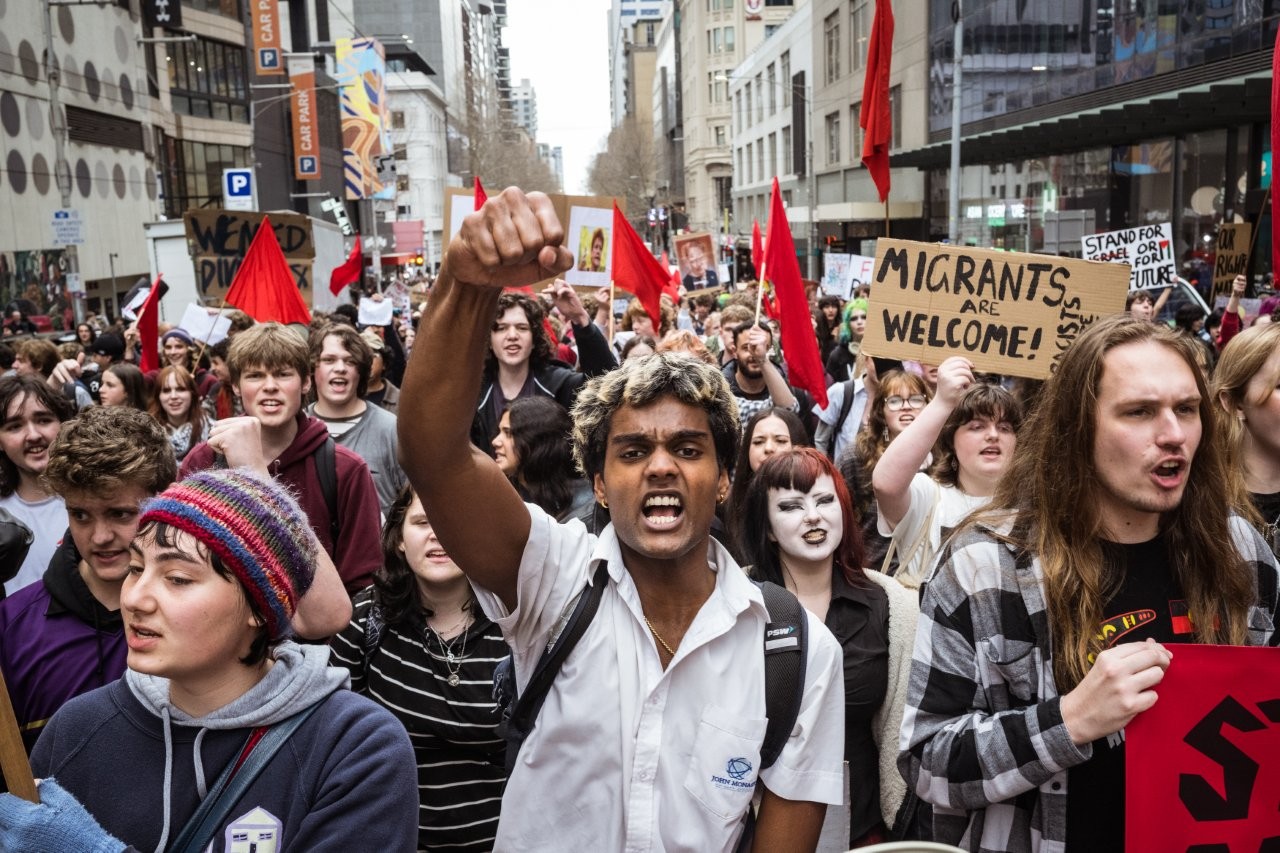
Professor Print says in terms of being politically active, high school students get involved on specific and isolated issues and then it “just dissipates after that”. “What they need to understand is that in a democracy, you've got to be continually involved, continually alert...”
So what then are the implications for teachers who will have to teach civics and citizenry as a new subject area?
At present, the prospect of the mandate is subject to identifying existing content to be removed or streamlined and evaluating the impacts on teacher workload.
Teachers’ first question is going to be, ‘how an earth is this possible given my already overwhelming workload and our impossibly crowded curriculum?’
“That’s the nutty question that the Education Ministers’ meeting has not come up with an answer for yet, but hopefully will come up with an answer in the future,” Print shares.
“Of course, the answer that has to be twofold – basically a little bit of reconstructing of the school curriculum, that’s the first thing. And then secondly, the provision of resources and funding. Basically it’s going to come back to money.”
Democracy Counts director Tom Mooney says now more than ever it is vital young people learn about the Australian Constitution, how laws are made, how parliament and the legal system operate, and the rights and responsibilities of Australian citizens.
“Young people today have more information than ever available to them to shape their view of how the world works, and how decisions are made.
“This can be a good thing, but we need to give them the chance to assess what they read online against a solid foundational knowledge of how Australia’s democracy works,” Mooney says.
If the mandate is rubber stamped, the first step will be teachers clearly knowing what they have to teach.
“It’s got to be very clearly explicated as to what this will actually cover,” Print says.
And that should include things like understanding Australian government, understanding how a democracy works, how the legal system operates and what the law is, how law is made.
“And the one that the government is really concerned about now is, what does it mean to be a citizen, and how do we get along with each other, the social cohesion factor.”
Print has undertaken research in this area for 38 years, and what he’s found is there’s around 10 to 15 per cent of students who would consider themselves politically active.
“There are, however, some times when a specific issue arises – an environmental issue, climate change, something like that – where students get involved on that specific, isolated issue and then it just dissipates after that.
“What they need to understand is that in a democracy, you’ve got to be continually involved, continually alert, especially these days with all the misinformation and disinformation around, the deepfakes, all of those sort of things. We need to be able to educate them all about those things before they leave school.”
Mooney says with today’s teenagers being tomorrow’s voters and leaders, the stakes are incredibly high.
“Equipping them with an understanding of our democracy – delivered in a way that is engaging and meaningful to them – is vital if they are to guard and strengthen Australia’s democracy into the future,” he says.