Developed by the Australasian Science Education Research Association (ASERA), the report proposes a national strategy for science education, spanning policy, practice and research.
Its recommendations seek to address the current challenges facing both Australia and New Zealand, including the rise and influence of AI, climate change, global health crises, biodiversity loss, energy transition, ‘changing perspectives’ on Indigenous knowledges, and the escalation of misinformation about science, particularly on social media.
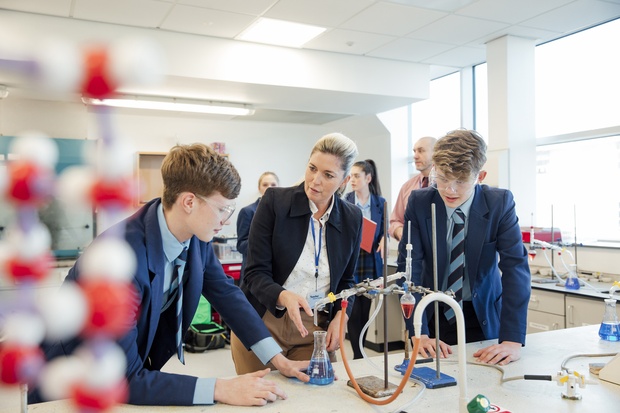
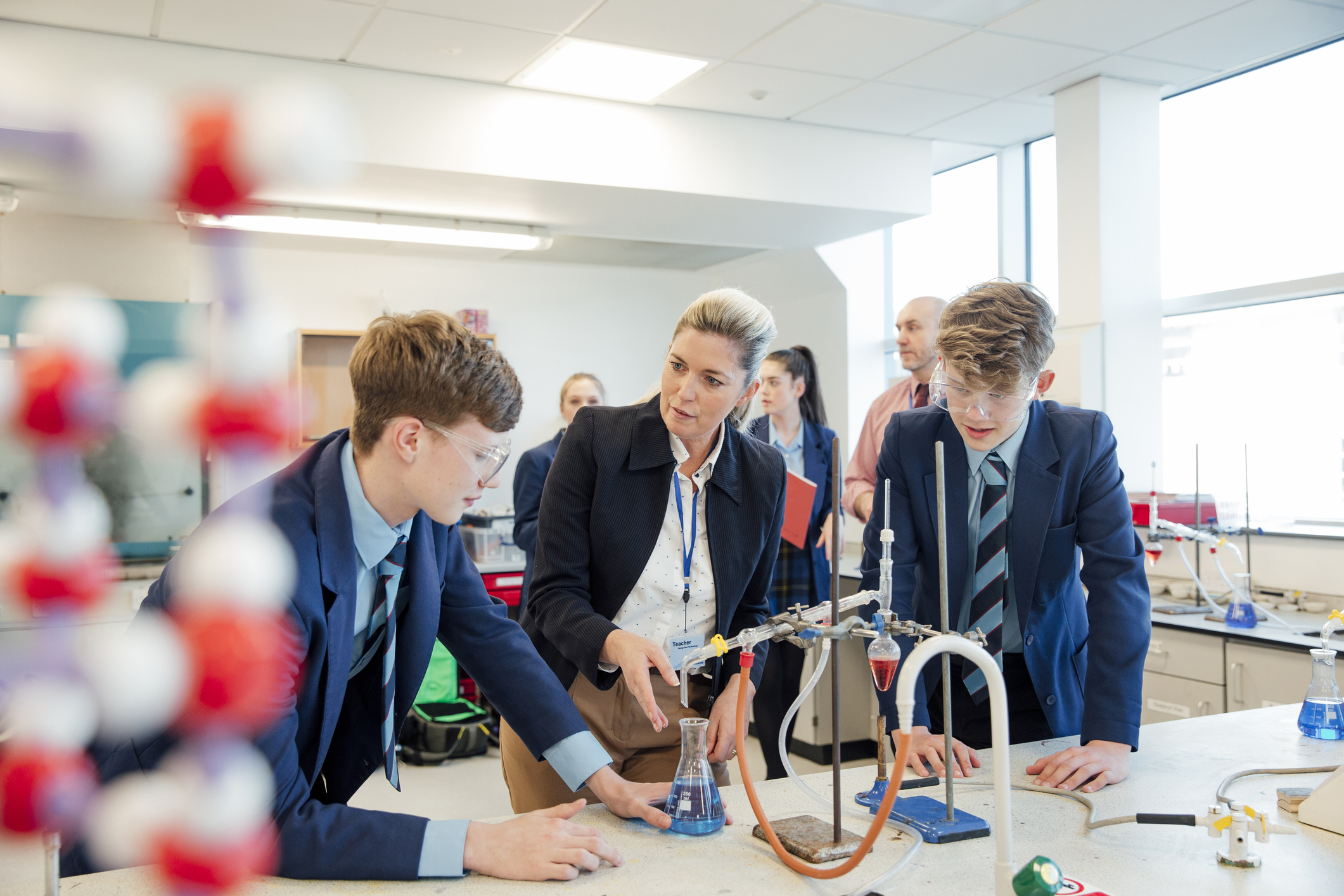
When it comes to teacher pedagogy, the authors push back against schools privileging any one approach in the science classroom.
Instead, they champion a focus on using a variety of strategies that build multiple competencies in students.
These include developing ’conceptual, procedural, and epistemic knowledge, as well as the ability to design, analyse, and interpret scientific investigations, and to seek out, critically analyse, and make decisions drawing on scientific reports’.
Noting the wide-reaching debate about the ‘relative merits’ of explicit teaching and inquiry learning, the report says presenting these as a binary is unhelpful in “understanding the findings of a vast body of research in science education focused on effective pedagogies, which indicate a more complex and nuanced position”.
“ASERA does not recognise any one pedagogy as pre-eminent, but argues that the question of effectiveness is necessarily an interaction between purposes, pedagogy and context.”
This stance stands in contrast to the system-wide shift to explicit teaching playing out across many Australian school systems – an approach that is known to be most strongly backed by a robust evidence base as the most effective instructional strategy.
Instead, ASERA’s report contends that effective teaching strategies in science include:
- Explicitly ‘but flexibly’ framing disciplinary knowledge and practices, involving supporting student-led activity relating to conceptual learning, developing inquiry competencies, and reasoning in socio-scientific contexts.
- A structured approach used to develop student competencies in scientific practices, involving a mix of student-led and teacher-framed inquiry activities.
- Teacher practice that is informed by recent findings from neuro and cognitive science, as well as classroom-based studies that use a variety of methodologies.
Multiple evidence bases should be used to inform a diverse array of approaches to teacher instruction, the experts emphasise.
“This variety is essential if we are to develop a responsible and expert teaching force with a rich understanding of science teaching and learning,” they pose.
The group also highlights the importance of differentiated instruction to align with students’ individual learning needs – a practice that has previously drawn criticism over its impracticality, with research finding time-poor teachers can feel pressure to create inclusive classrooms but may not feel sufficiently prepared to do so.
Victorian school leader and author Dr Greg Ashman has also argued that the evidence for differentiated instruction “just does not stack up”.
Ashman suggests that evidence to support within-class differentiation is lacking, and a better alternative response might be Response to Intervention.
“…why are we pinning so much on differentiation at the policy level when the evidence base is so thin? And why are we teaching trainee teachers that [they] must differentiate? Why is it in our teaching standards?” he questioned in a blog post.
Ashman has suggested a range of alternatives to differentiation, including ability grouping, using explicit teaching to avoid creating understanding gaps within classes, and using extension booklets.

The authors call out a focus on large-scale science assessments, arguing they can “distort what we know about effective teaching and learning in science for diverse outcomes”.
As for the national science curriculum, ASERA warns there are ‘significant omissions’ and calls for AI and critical media literacy teaching to be included, among a raft of other hinted changes.
Damning research from 2023 found our national science curriculum was an outlier on the global stage, lacking the content, depth and breadth needed to enable both students and teachers to succeed.
Led by education research and consulting group Learning First, the study benchmarked the content of the curriculum against that of seven comparable and high-performing systems around the world: England, Hong Kong, Japan, Singapore, the US and Canadian provinces Alberta and Quebec.
The analysis found our “shallow and narrow” curriculum includes much less science content, is poorly sequenced, and lacks specificity of content compared to others, ultimately setting a comparatively low standard for student achievement.
The research found a content gap between Australia and other systems begins to develop at primary school and grows every year.
“By Year 8, the lack of content in the Australian science curriculum is so great that it has only about half of the average content of the other benchmarked curriculums. In terms of the volume of content in its science curriculum, Australia is an outlier,” the report states.
In the first nine years of schooling, the study found our science curriculum covered just 44 topics, compared to an average of 74 topics in other systems.
Meanwhile, just five science topics were found to be covered in depth, compared to an average of 22 in other systems.
Deakin University’s Professor Linda Hobbs, president and managing director of ASERA, says the paper’s recommendations aim to future-proof science education by helping students connect the discipline to their own lives and the wider world.
“We know that prospering nations are those whose citizens understand and value scientific knowledge and can apply it in community decision-making and in pursuing science-related careers,” Hobbs says.
“That’s why we need to address the continued decline in student interest and enrolment in senior secondary science subjects and university science.
“The flow-on effect is a decline in the number of students pursuing careers in science teaching, which in turn affects the overall quality and availability of science education.”
Monash University Chancellor and former Chief Scientist Alan Finkel has backed the paper, flagging AI as a significant disrupter that science education needs to address.
“… no one knows what new jobs for humans will emerge, but we certainly know that to be successful in the AI driven world young people will need to be critical thinkers,” he writes in the report.
“The reality is that you cannot be a critical thinker if you do not have facts and knowledge at your fingertips. No matter how powerful the supporting AI, researchers and industry experts of the future will need to be deeply competent in maths, technology and science so that they can frame the prompts, evaluate the answers and create their own novel solutions to problems…
“In particular, imparting scientific knowledge and critical thinking skills will be even more relevant in the world of AI. We must never resile from this teaching responsibility…” he urges.
Australia’s Chief Scientist Professor Tony Haymet has also welcomed the report, calling it ‘thoughtful’ and ‘evidence-based’.
Key science concepts and practices should also be framed to address our current socio-ecological challenges, including climate change and biodiversity loss, energy transitions, circular economy and misinformation, the paper states.
The authors as well call out a focus on large-scale science assessments, arguing they can “distort what we know about effective teaching and learning in science for diverse outcomes”.
On this front they call for the establishment of new system-wide assessment and reporting practices that take into account a variety of learning outcomes, including critical and creative reasoning, decision making and agency.