

NSW Education Minister Prue Car has ordered a review into AI in schools, with the aim to protect the integrity of the state’s formal examination process, however one AI in education expert says more could be done.
The review will examine AI’s impact on cognitive development and how schools can best assess students’ abilities in the modern age.
Car requested the NSW Education Standards Authority consider a moratorium on unsupervised, take-home assessments in the meantime.
Half of a NSW student’s final HSC result is based on school-based assessment, some of which is completed outside the classroom.
Car says AI had the potential to ‘‘support’’ learning but should not replace thinking, creativity and diligence.
‘‘If students rely on AI to bypass that learning process, we risk undermining both their education and the integrity of the HSC,’’ she says.
‘‘It is better to put sensible safeguards in place while we fully understand AI’s long-term impact on student learning.’’
Professor of Educational Technologies at the University of Sydney’s Division of Teaching and Learning, Danny Liu, agrees that it’s necessary for the HSC to continue to be a reliable reflection of what a student can do.
“With the power of AI as it is now, and even two years ago, I think it is becoming more and more apparent that reliability is not there if we rely on take-home assessments,” he tells EducationHQ.
“It’s a smart move by Minister Car to call for a thinking about this, because the HSC does need to continue to be reliable.”
Liu, however, questions if the current assessment regime has the right markers to fully capture student capability.
“The question that school leaders, principals, teachers, and also NESA need to ask is, are these signals reliable anymore?
“Are we over-assessing right now – and especially are we over-assessing in ways which provide low-signal assessment?”
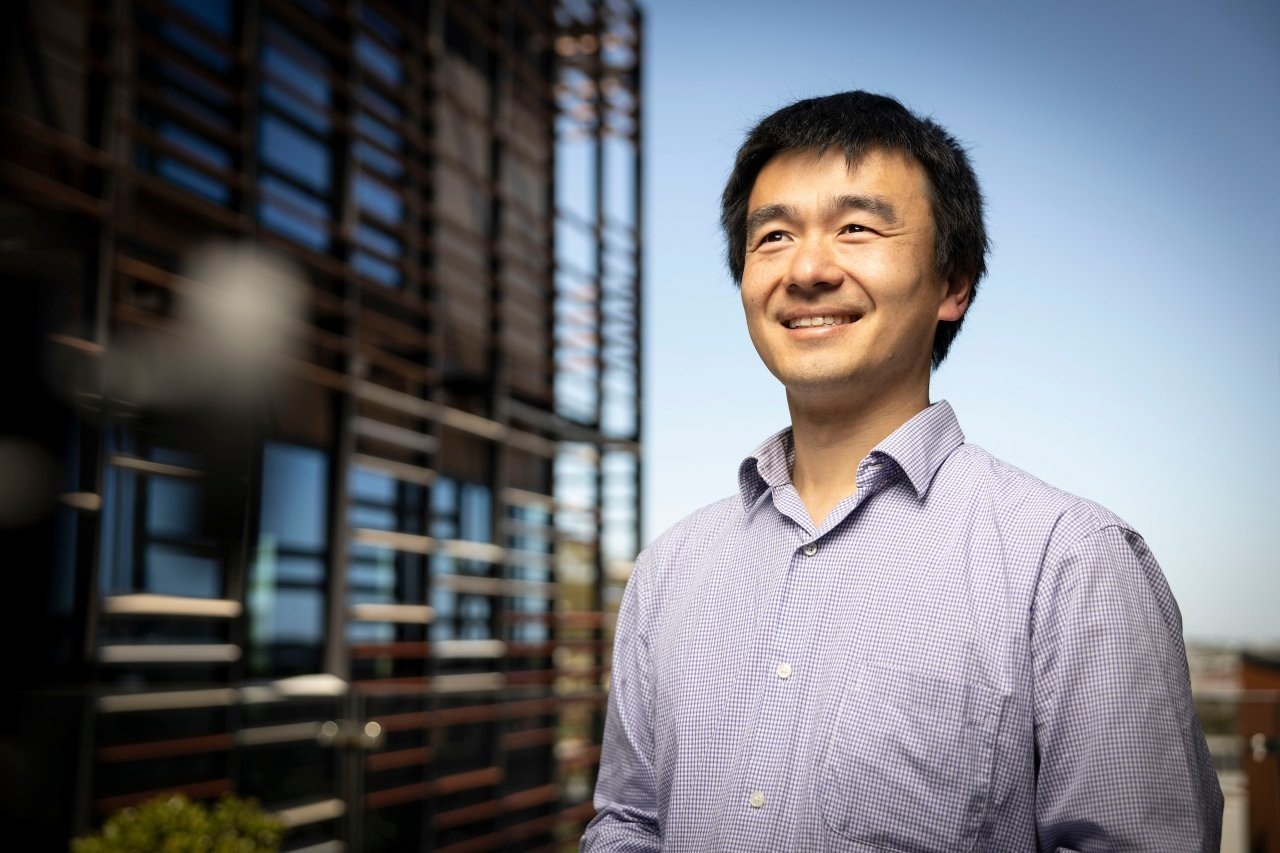
“As AI changes society and work, a lot of other hidden curriculum things like curiosity and adaptability, learning how to learn, are going to be even more important possibly than knowledge and skills,” Professor Danny Liu says.
Some experts are concerned that with take-home assessments absorbed into class time, this has the potential to create huge issues for teachers by taking away precious instructional time.
Liu agrees that it’s a conversation that needs to be considered.
Car has previously floated a return to pen and paper for Australian students in the face of tanking literacy and numeracy data.
The latest national NAPLAN results show around one in three students across all levels did not meet basic benchmarks in the tested domains.
“It’s important that we acknowledge that assessment is difficult,” Liu says.
“A natural reaction will be to go back to pen and paper exams ... but I think we need to explore other forms of live observed assessments which are not exams-based, but still allow us to actually formulate a good view of students’ capabilities.
“These could be classroom questions, question and answer, interactive orals or those kinds of things.”
Teachers and educators recently told an Australian study that AI currently presented more harms than benefits when it came to assessment integrity and cognitive development.
Education consultants Learning First recommended in their May study that educators restrict student use of AI while keeping attuned to potential benefits in the future.
Liu queries whether, in terms of the current assessment regime and what students are going through and thinking about, a lot of what is assessed is actually still necessary.
“Should we reduce a bit of assessment load here and there so we can increase a bit of security in other places?
“And also, are we actually assessing the things that we really want students to develop?”
Liu explains that there is a need for methods of assessment which are going to be much more trustworthy than take-home assessments.
“The other element to think about right now, is what is the curriculum assessing and are those knowledge and skills going to be the ones that are going to serve students into the future.
“Because as AI changes society and work, a lot of other hidden curriculum things like curiosity and adaptability, learning how to learn, those are going to be even more important possibly than the knowledge and skills.
“We need to find a better balance between knowledge, skills, and also the capability students need for the future.”
While it’s tempting to focus just on impact and assessment and teaching students how to use AI, Liu concedes, that’s not going to serve us particularly well even a year or two into the future.
“What schools need to be doing now is thinking about all of those and also about what are the enduring human capabilities that we need to help nurture in our students, and that might actually mean some curriculum adjustment.”
Exams and assessments don’t test the human skills, that will be most essential as AI grows ever more powerful, Liu shares.
“The skills are things like curiosity, like working in the community, having adaptability, having a resilient mindset, being able to learn how to learn, all those things.
“The way to assess them will have to be more process-based as opposed to product-based, because we may have to talk to students and see how they express their curiosity or develop their ability to learn how to learn as they’re doing the process of learning. So that kind of process.
“I hear all the workload implications of this. It’s not going to be easy, but I think it’s really important.”
Liu says avoiding negativity around AI and education is really important because at present trust has taken a huge hit and is a major issue.
“If the system can trust teachers more to think about this and give them the time to do this, and also if teachers can trust their students, give them some more agency over how they use AI, then I think we’ll be better for it.”