In South Australia, fewer than 15 percent of all schools have a qualified teacher librarian, New South Wales, Victoria and Western Australia have very few, and in Tasmania the situation is similarly precarious.
In Queensland a recent survey of 47 state schools revealed that 12 had no budget allocated for new books, and 31 had either one or no librarian on staff.
Indeed many new schools no longer have a library and some existing schools have removed their library all together – and all states report a trend towards removing teacher librarians.
It’s a troubling state of affairs, and hard to fathom given the numerous benefits that school libraries and their staff bring to the education landscape.
“When it comes to principals, they’re having to make very difficult resourcing decisions with very limited budgets,” South Australian teacher librarian and co-ordinator of Students Need School Libraries (SNSL), Hajnalka Molloy, says.
“… but, they also don’t have the full information around what the actual role could and should be.
“Many have never experienced a dual qualified teacher librarian, so they don’t know what the person could bring or they may have experienced somebody who was underperforming and so their impression is negative.”
Molloy says most people don’t understand that as a teacher librarian, you’re a highly qualified specialist trained in information sciences.
“Of course that includes reading and encouraging a love of reading and exposing kids to a diverse range of literature that includes diverse representation, but it also includes the teaching of information literacy, the explicit teaching of media literacy and teaching kids how to find credible sources – and then the skills to go with working out what actually is a credible source.”
For the fifth year, Students Need School Libraries is celebrating Australian School Library Day during Children’s Book Week, this year on August 26.
Molloy's SNSL co-cordinator Elise Ellerman says it’s a special day when school communities pause for a moment and recognise how essential school libraries and teacher librarians are in ensuring that reading is a part of everyday life and that students have access to fabulous books and resources.

Elise Ellerman, above left, and co-ordinator of Students Need School Libraries, Hajnalka Molloy above right, say the obvious and known benefits of school libraries are sadly being overlooked by government and school leaders.
It seems ridiculous, but here we are in 2026 and there’s still a lack of knowledge and understanding of the direct impact a good teacher librarian has on students.
“Qualified teacher librarians have a direct impact on literacy, on information literacy, critical literacy and media literacy and a student’s wellbeing, along with student success and student outcomes,” Ellerman says.
“But also, importantly teacher workload – because you’re supporting teachers with planning, with teaching, with assessment, curation of sources for their units of work, co-planning, co-teaching.”
In an era of instant online content, generative AI, and fake news, students need to be explicitly taught how to evaluate information.
Teacher librarians teach students how to identify trustworthy, peer-reviewed resources, practice ethical information use, and navigate complex digital environments safely.
“It’s not just about the information that you go out and seek now, because when you’re seeking information, I think we’re naturally a little bit predisposed to being a bit critical about it – it’s actually about trying to develop those critical thinking skills in students for the information that comes at them,” Molloy shares.
They are constantly bombarded through various platforms and types of media all the time, she says.
“So it’s about teaching them the information literacy and the critical literacy skills, and particularly the lateral reading skills they need to analyse sources and determine source credibility.”
With our most recent NAPLAN writing and reading results hardly setting the world on fire, school libraries can help play a critical role by fostering a culture of reading for pleasure.
“A really good library collection meets the students needs developmentally and their personal interests,” Molloy advocates.
“In my context, I actually have students help select those books, so students have a strong voice in what gets purchased for the library.
“It’s a matter of helping them find it and getting the right book in the right kid’s hands at the right time,” she says.
It’s also about events and activities like Book Week, promotional activities, the Premier’s Reading Challenge, competitions, book talks, book promotions, and making time to read.
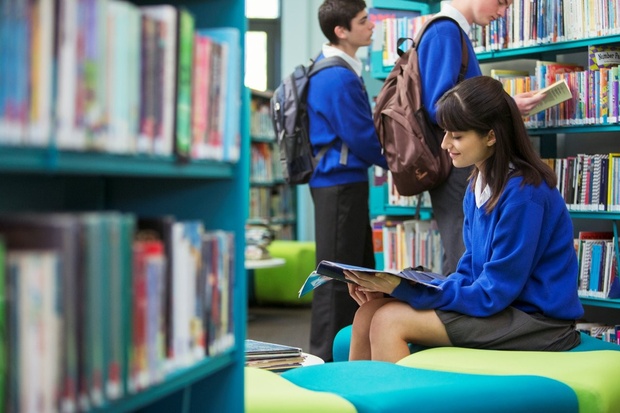
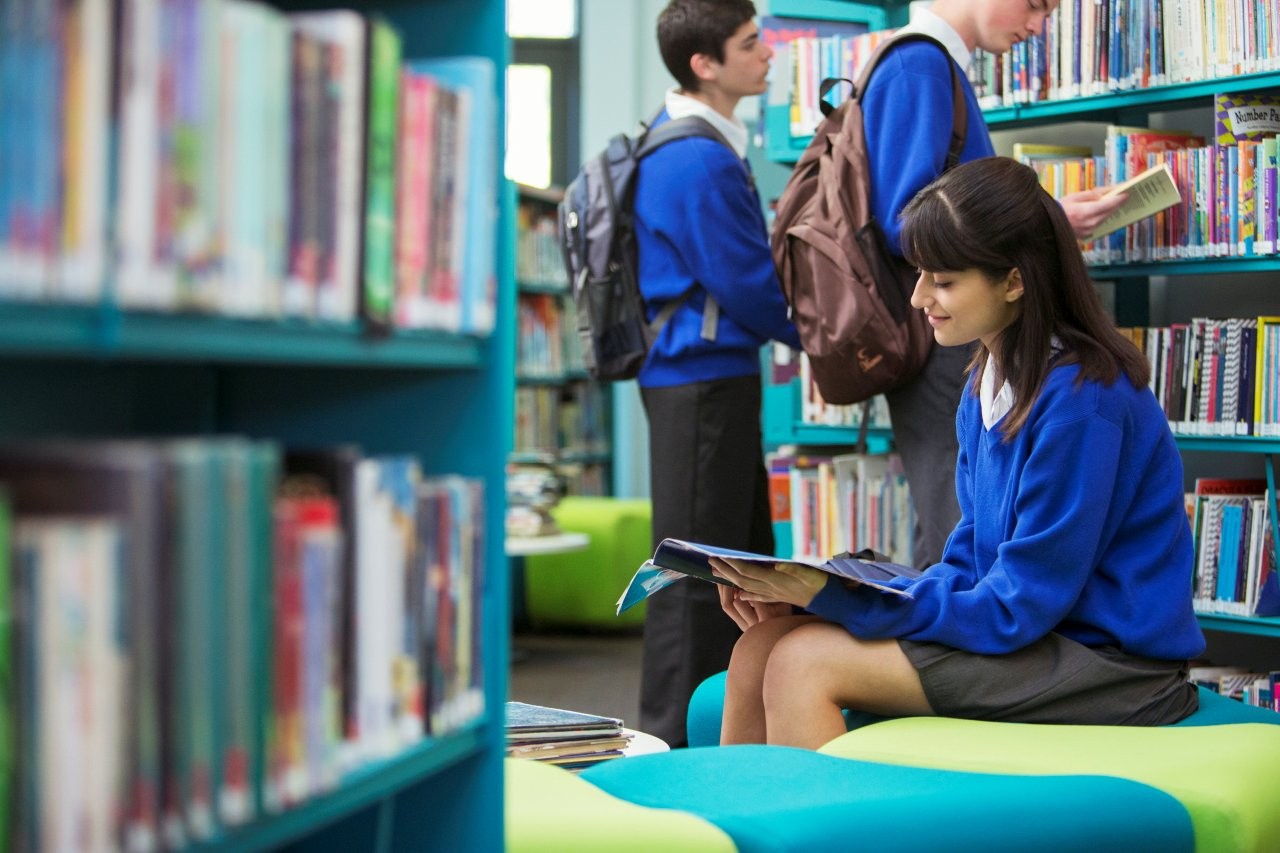
“So it’s encouraging fellow teachers to carve out some time in the curriculum, or for parents to carve out some time at home, to make that time to read; and giving them the spaces, so making the library an inviting space to just come and sit and read.”
The theme for 2026 is School Libraries: The Best Investment, and calls on decision-makers to see that access to well-resourced school libraries with qualified staff is the best value add that can be made for a better and fairer Australian education system that provides all students with the essential skills and resources required for full participation in contemporary society.
Ellerman says a school library is a beautiful space at the heart of a school and that full and fair investment in them with qualified staff and great resources enhances all aspects of teaching and learning, and improves measurable educational outcomes such as learning equity, student attendance, and increased engagement.
Molloy remains buoyant that they have a bright and promising future.
“Too many people see the word ‘library’ as a noun, they see it as a place that stores books rather than a verb, which is a service that meets the needs of the students and teachers in the school.”
Click here for more information about Australian School Library Day and how to get involved.