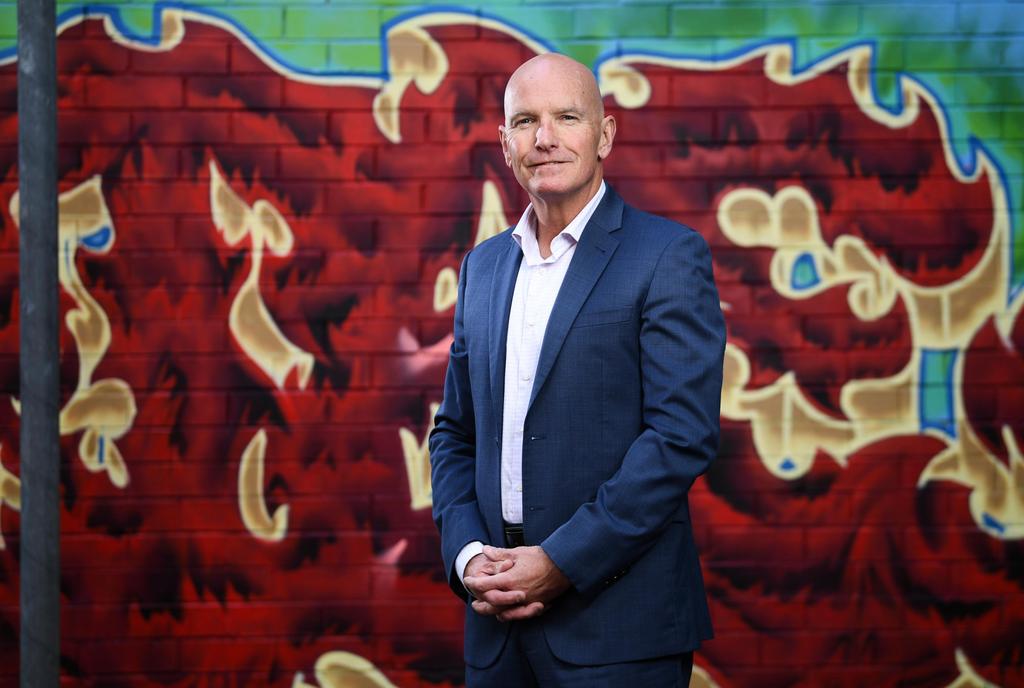
McDonald, a former teacher and CEO of The Y Western Australia, is the facilitator of a new professional learning program due to launch in September, called ‘Classroom Management: The Foundation for Learning’.
The offering will provide primary and secondary teachers and school leaders with a suite of structured approaches, routines and tools that can be implemented immediately, while helping schools get clear on their values to better prevent and respond to disruptive behaviours that might otherwise threaten to derail learning.
Teachers who upskill in McDonald’s CORE framework see a ‘profound’ change in their classrooms, in their own wellbeing, and in their enjoyment of the job, the expert reports.
“I’ve had teachers crying when they’re talking about the difference, because they remember the struggle of what it was like before.
“One teacher quoted to me that they’re now up to week six or seven in their teaching content, whereas last year they would have been at week two or three.
“And this teacher was visibly very upset, but because of the pain they’d gone through previously and now the joy of going back to teaching their subject matter – it was the reason they joined (the profession), but also to have those relationships with students, which you can do when there’s calm and orderly classrooms.
“It’s hard to do that in chaos,” McDonald tells EducationHQ.
Behaviour needs to be taught explicitly just like any other subject, the expert says. There’s a clear equity issue that sits behind this, he flags.
“There are a number of young people that come to school that don’t know how to behave in a school setting. Others come to school who are fortunate from their family or background and they have the capacity to sit on the mat, have the capacity to fold their legs, keep their arms still and look at the teacher or the educator.
“Other students don’t have that skilling, so we need to teach it so that irrespective of background, irrespective of culture and postcode, all students can get engaged in learning … those that don’t have that capacity to sit and listen won’t learn as much and therefore they’ll begin to fall behind those other students.
“We need to teach behaviour because it’s the foundation for learning.”
McDonald is not a fan of restorative approaches used at the whole school level as a means of addressing poor behaviour and building a respectful culture across the board.
“There’s not much evidence that whole-school restorative practices shift culture, nor do they change behaviour,” he argues.
“I think tenets of restoring relationships [and] hopping into the private logic of students is a good understanding (to build) one-on-one that student services can do, that leadership can do with students.
“But as a whole-school approach, it falls a bit flat. It doesn’t have the efficacy that other programs can do – and particularly the CORE framework, which teaches behaviour explicitly and gives students the opportunity to practice [good conduct] in every class…”

“It's tried and tested with teachers, so that excites me because I think it's really practical and we've had some good uptake already," McDonald says of the program.
Restorative approaches also lack clear consequences for misbehaviour which really need to be spelt out and taught to students so everything is transparent, the expert suggests.
A school’s values are at the heart of the framework that McDonald promotes. The first step in overhauling behaviour involves making these explicit and developing a shared understanding about what the school stands for. It all flows from there, he says.
“When students graduate from your school, what characteristics do you hope they will they have with them?” McDonald poses.
“Then from the values [they decide on], what’s ‘normal’ in your school? In other words, what are the norms of behaviour?
“[For example], ‘we want everyone to be independent learners, we want everyone to be engaged in learning, we want everyone to be respectful, for people to be kind to each other’, etc.
“And then if that’s the case, what behaviours do you expect? [Perhaps] people will greet teachers respectfully, they’ll enter the classroom calmly, etc.”
Next enter a set of highly scripted routines that are explicitly taught and reinforced until they become automatic – these are a teacher’s ‘building blocks’ when it comes to behaviour management, McDonald says.
“So, if you’re about calm and safety, how do we enter and exit the classroom, how do we move around in school, how do we respond to each other, how do we answer questions, how do we ask questions?”
The key with routines is ensuring absolute consistency and repetition, McDonald advises.
“I think some of the mistakes I see are that [these aren’t reinforced] in every classroom, every lesson, every day.
“And so there’s variable practice between teachers. There’s nothing holding the school together that ‘this is the reason why we’re doing this’.”
Those schools that see improved student behaviour, engagement in learning, bolstered academic outcomes and a calm culture as a result of this work is because they have “tackled the behaviour systematically in every class, every day”, McDonald emphasises.
“We need to teach it in small chunks because this is how the brain learns. We need to practice the behaviour.
“And once it becomes automatic, then it increases the learning time and the teaching time and then the whole culture of the school changes.”
On Monday the third edition of McDonald’s book Classroom Management: The Foundation for Learning will be launched at Parliament House in Canberra.
Quotes and emails direct from principals, teachers and students feature throughout the book.
“It’s a common trend that [principals report] that by week five after implementing this, there is a noticeable shift in the tone of the school.
“That’s the word the principals use. The tone is much calmer. Students are speaking more respectfully.
“And that’s done from day one where they teach the routines, they teach the values and the high expectations – and then they follow through with every teacher, every class, every day.”
Under the CORE approach, select staff are trained as coaches and go into classrooms to observe their teaching colleagues use the routines and skills before giving feedback.
“And what happens after five weeks is that students are into a routine, they’re calmer, they’re lining up, they’re entering, they’re settling, they’re exiting, they’re moving around the school in a calmer way,” McDonald says.
“It just invites them to hop into learning so much more quickly than previously. But it does take a dedication from the leadership. If the leadership team and the principal aren’t on board, it’s very hard to do it.”
When compared with other education systems around the world, the latest PISA data found Australia’s disciplinary climate was less favourable than in the mathematics classrooms of 20 other countries, including Japan, Korea and Macoa (China), and worse than the OECD average.
A significant proportion of Australian students reported that their teacher had to wait a long time for students to quieten down (30 per cent), that students do not start working for a long time after the lesson starts (29 per cent), and that they cannot work well in the classroom environment (25 per cent).
ACER says the situation has changed little since 2015, when PISA looked at the disciplinary climate in science classrooms.
Everything within McDonald’s professional learning program has come from the classroom and has been given the tick of approval from teachers themselves, the expert notes.
“It’s tried and tested with teachers, so that excites me because I think it’s really practical and we’ve had some good uptake already.”