Financial literacy amongst 15-year-old Australians has in fact declined in the last decade, with most young people doing their learning about money and budgeting at home.
The National Curriculum does not even recommend personal finance as a subject area – it’s considered in an interdisciplinary context.
Consequently, those from non-affluent households face further barriers, adding to the plight of the disadvantaged.
Essential concepts such as savings, loans, credit cards, insurance, investments, and superannuation need to be taught as a matter of urgency, not just as mathematical calculations, but as real life skills.
Teaching financial literacy to Australian high schoolers is essential because it equips them with practical life skills to navigate the workforce, avoid severe debt, and build long-term economic wellbeing.
As a school leader, teacher, education assistant – how much better off would you be now if you’d had even a basic grounding in financial literacy when you were in secondary school?
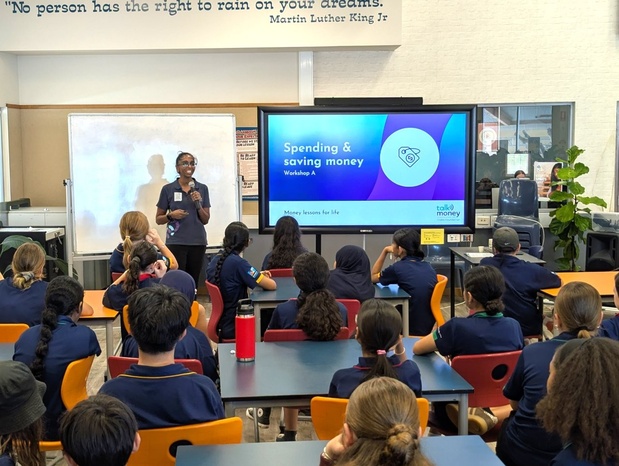
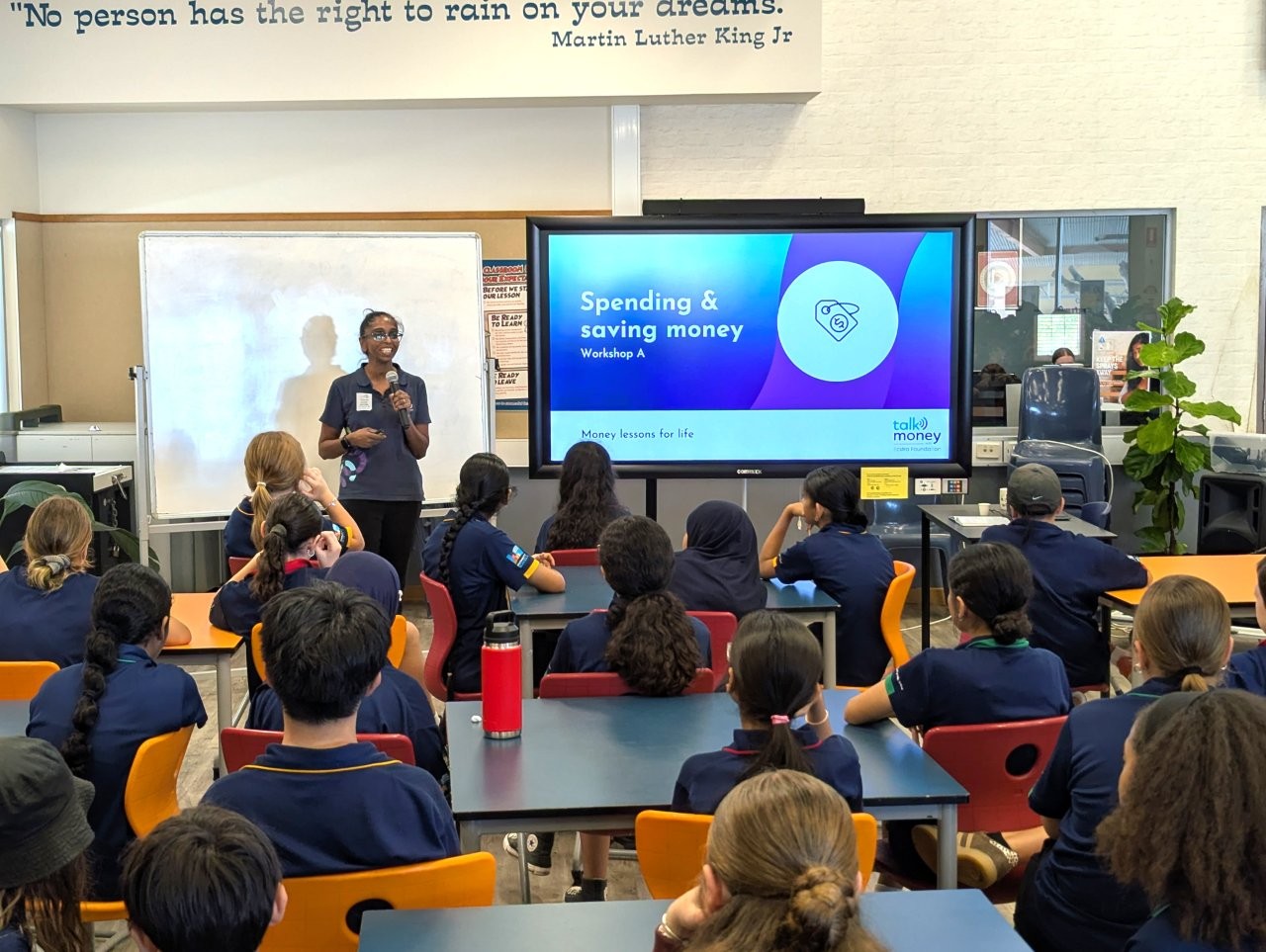
It’s why free initiatives like the Talk Money financial literacy program are so important in helping students learn money lessons for life by supporting them to build confidence in talking about money, guiding them to make informed financial decisions, and improving their overall financial wellbeing.
Since January 2022, some 592,805 students have attended the organisation’s workshops which have been delivered across 1697 schools.
The Talk Money sessions makes financial literacy accessible for students in both metropolitan and regional communities, helping ensure more young Aussies are equipped with the knowledge they need for life beyond the classroom.
In Term 3 and 4 this year, the Roadshow will be setting forth, visiting Canberra, Bathurst, Orange, Townsville, Geelong, Shepparton, Ballarat, the Murray and Mallee regions and Albany in WA.
The range of free and engaging workshops are designed specifically for primary and secondary students of all backgrounds and life stages, teaching practical money lessons for life – at no cost, and delivered face-to-face in your classroom.
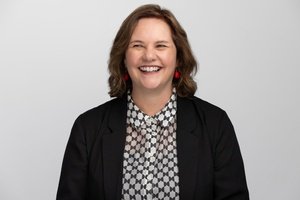
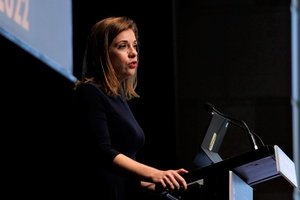
Roset Khair is financial education manager at Ecstra and was a classroom teacher for 14 years and held leadership roles in the public and independent sectors.
She says the company’s research several years ago identified that there wasn't a far-reaching financial literacy program that schools could access anywhere, and so with a range of experts, stakeholders and teachers, developed a resource that is curriculum-aligned and includes everything that students need to know as a minimum for each stage of their school development.
There are four different courses that are offered to schools, each covering off areas specific to year levels.
Talking About Money is aimed at Year 5 and 6 students, and is really about getting students to understand how to have conversations around money, Khair tells EducationHQ.
“So, if they're experiencing pressure from their friends to spend a certain way, that they know how to have a conversation around that and to put barriers around themselves in protecting themselves so that they're not peer pressured.
“Also being able to understand how if you can save a little bit at a time, eventually it turns into a lot ... and also needs versus wants and how we need to be able to recognise each one.”
Spending and Saving Money is aimed at Year 7 and 8 students, and dives into developing a budget and how they work.
“It also talks about commercial influences; so how does marketing affect us and our decisions, so that students are more alert to them, and then also looking at setting financial goals.”
Making Money Work is most often for Year 9 to 10 students, but is aimed at any young people who are starting out in their first job, “so that they can actually think about making their money work, how can they invest better”.
“It's really about mindset and developing that capability,” Khair says.
“We also look at tax and super – so where can we turn for help as well in terms of work rights, like what happens if my workplace is underpaying me or not paying me the right things? How do I access Fair Work and those types of organisations to be able to make sure that I'm protecting myself? Because obviously young people are very vulnerable in the workplace quite often.”
Becoming Scam Savvy is the newest of the Roadshow’s courses and as the name suggests, is really about protecting students from scams.
“Because what we're seeing is that, again, young people are the most vulnerable group when it comes to being scammed, probably because they spend so much time on the internet and also because they have a vulnerability, so they might be more easily influenced.
“So we look at different types of scams and what are the things that scammers do to be able to scam us and how do we protect ourselves from this, but also how do we seek help if we have been?” Khair explains.
Interested schools can access a simple request form and someone from the Roadshow team will contact them to talk about potential dates.
The program’s expert facilitators, most with teaching backgrounds or qualifications, often spend a week in a rural and remote area, developing a range of tailored workshops and delivering several workshops in the same school.
“Financial literacy education is critical to wellbeing,” Khair says.
“If schools genuinely care about this, their young people, it’s imperative that they at least provide the minimum of what they need to be able to think in a financially capable way, so that they're asking the right questions and they're looking in all the right places.
“There’s a lot of misinformation out there, especially in the age of social media, and we provide a very structured, well researched approach to financial literacy education.”