
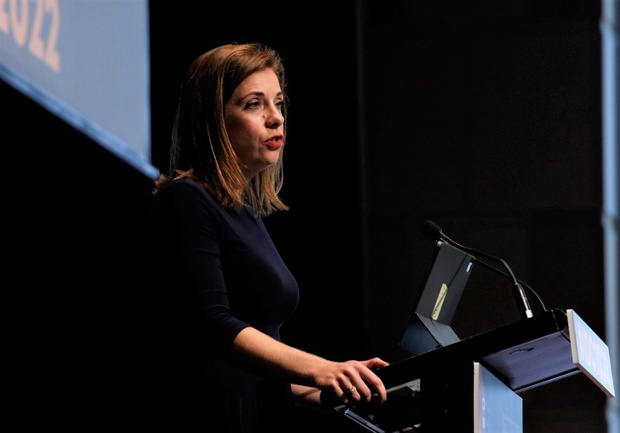

Labor’s digital duty of care bill was introduced to parliament by Communications Minister Anika Wells on Thursday, just hours before an appearance at the National Press Club.
Under the proposal, social media platforms would be forced to protect users under 18 from content that promotes crime or eating disorders, pornography or misogynistic content, as well as posts that cause distress.
Labor has characterised the bill as a way to introduce baseline standards on tech giants and digital platforms, not a way to police individual users or pieces of content.
The Government is keen to get the legislation over the line before the end of 2026 and it likely will, after Wells confirmed she would consider changes proposed by the Greens, such as the ability for individuals to take legal action against social media platforms for harm.
“It is something that we would contemplate because it has been something that has come in through the consultation process ... and that has been something that groups, particularly women’s groups, have asked us to do,” Wells said.
“Our eSafety Commissioner does a marvellous job at enforcement and compliance, but it’s a huge burden, and private right of action allows people to share that burden.”
Greens communications spokeswoman Sarah Hanson-Young said without the measures, the bill would fall short of issuing any real incentive to the social media platforms to comply.
“Australians should have the right to take big tech to court and to seek remedy, that is, compensation for the harm that their online experience has done to them,” Senator Hanson-Young told reporters on Thursday.
“Otherwise, what is the point of this?”
The Alannah & Madeline Foundation is urging Parliament to pass the bill.
Director of Policy & Prevention Ariana Kurzeme said the bill was a major step forward in reshaping Australia’s digital environment to one where technology companies had the legal responsibility to prevent foreseeable harm to those who use their products, but that it could still be strengthened further to ensure children’s safety was prioritised.
“This is a landmark moment for Australia,” Kurzeme said.
“With the world watching, we are on the cusp of holding tech platforms to account and ensuring that children’s safety is considered in design – not as an afterthought.
“We want to see this Bill passed. For too long, tech companies have been left to set their own rules, and children and families have borne the consequences.
Kurzeme said clear legal duty, backed by a regulator with real powers and penalties that matter, finally places responsibility with the companies designing and profiting from these services.
“However, the Bill can still be made stronger,” she said.
“Throughout our consultation with more than 800 children, young people, parents and carers, the message has been clear: responsibility for online safety must sit with the services that create and control the risks.”
Labor had already ditched proposed discretionary powers for the minister to define what could constitute a new harm to win over the Greens and following concerns it could lead to political censorship.
Parliament would still be able to legislate further protections against new social media harms that might emerge, just not as quickly according to the communication minister.
Coalition MPs have largely written themselves out of negotiations to date.
Liberal communications spokeswoman Sarah Henderson has called Labor’s plan a “dog’s breakfast”, “dangerously vague” and “fatally flawed”, pushing for the bill to be scrapped.
It’s an approach Wells said she has been puzzled by.
“(The coalition) know that the Greens are supportive of the principles, want to see it amended, why they would deal themselves out of anything that might improve the bill ... it is on them to explain that,” she said.
The workload of eSafety Commissioner Julie Inman-Grant is anticipated to increase significantly if the digital duty of care bill passes to take effect in late 2027.
When asked if Inman-Grant had the worst job in the world following years of sustained criticism online, Wells sighed and quipped “you poor bugger” before confirming she was considering what the commission could look like in the near future.
Civil society groups including the Human Rights Law Centre have welcomed the bill but called for digital platforms to consider risks to human rights and for improved enforcement mechanisms when breaches occur.
The Federal Government unveiled a draft proposal for the digital duty of care in September, which Prime Minister Anthony Albanese said was the next phase of online protections after the world-first ban on under-16s using social media was introduced in December.
The bill will face the scrutiny of an inquiry due to hand down its final report in late November.
AAP