Secondary maths tutor Alex Blanksby, also the maths curriculum lead for Ochre Education, told EducationHQ that Computer Algebra System (CAS) calculators had long sparked debate in maths education circles, but there is the growing sense that this scene was now “coming to a head”.
According to Blanksby, in Victoria there’s a questionable ‘CAS-first approach to everything’ within General Mathematics, and to a slightly lesser degree within Maths Methods and Specialist Maths as well.
This is problematic on a number of fronts, he says. Firstly, the advanced tools effectively allow students to cognitively outsource the learning process and act as a crutch that might see students bypass the acquisition of key maths knowledge and skills.
When it comes to VCE exams, another layer of issues emerge, Blanksby says.
“Now [CAS calculators] are getting written to the point where it will not only work out the answer for you with just the inputs from the question, so you don't even need to set up the equation yourself – you just tell it ‘the question told me this is this and this’ and it’ll work out the answer – but also provide you all the working that you need to get full marks.
“So, you don’t even necessarily need to understand the content, you’re able to just tell the calculator, ‘okay, do this for me and I'll just write down what you tell me’, which really defeats the purpose of what the questions are trying to do.”
On top of the abilities of a graphics calculator, a computer algebra system can manipulate expressions (for example, simplify, expand and factorise them) and solve equations algebraically and not just numerically.
This is just the tip of the iceberg of the full range of functions and features they offer, and even specialist maths students generally only scratch the surface of their capabilities, the expert notes.

Alex Blanksby says the Vic maths study designs need to get clearer on exactly what is expected to be done using calculators, what is to be done by hand – and to what level – and what should be mastered either way.
Dr Greg Ashman, deputy principal at Ballarat Clarendon College in regional Victoria, argues that when used in exams CAS calculators are “effectively the equivalent of allowing English students to use AI to write paragraphs for them in an English exam”.
Writing in a Substack post, Ashman suggests that Victoria is something of an outlier when it comes to the technology students are permitted to use in their final exams.
He contends that the VCAA, the body that oversee exams and assessments in Victoria, have a “breathless love of technology”.
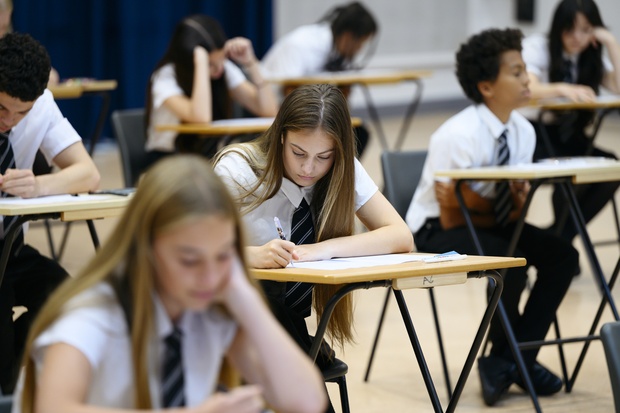
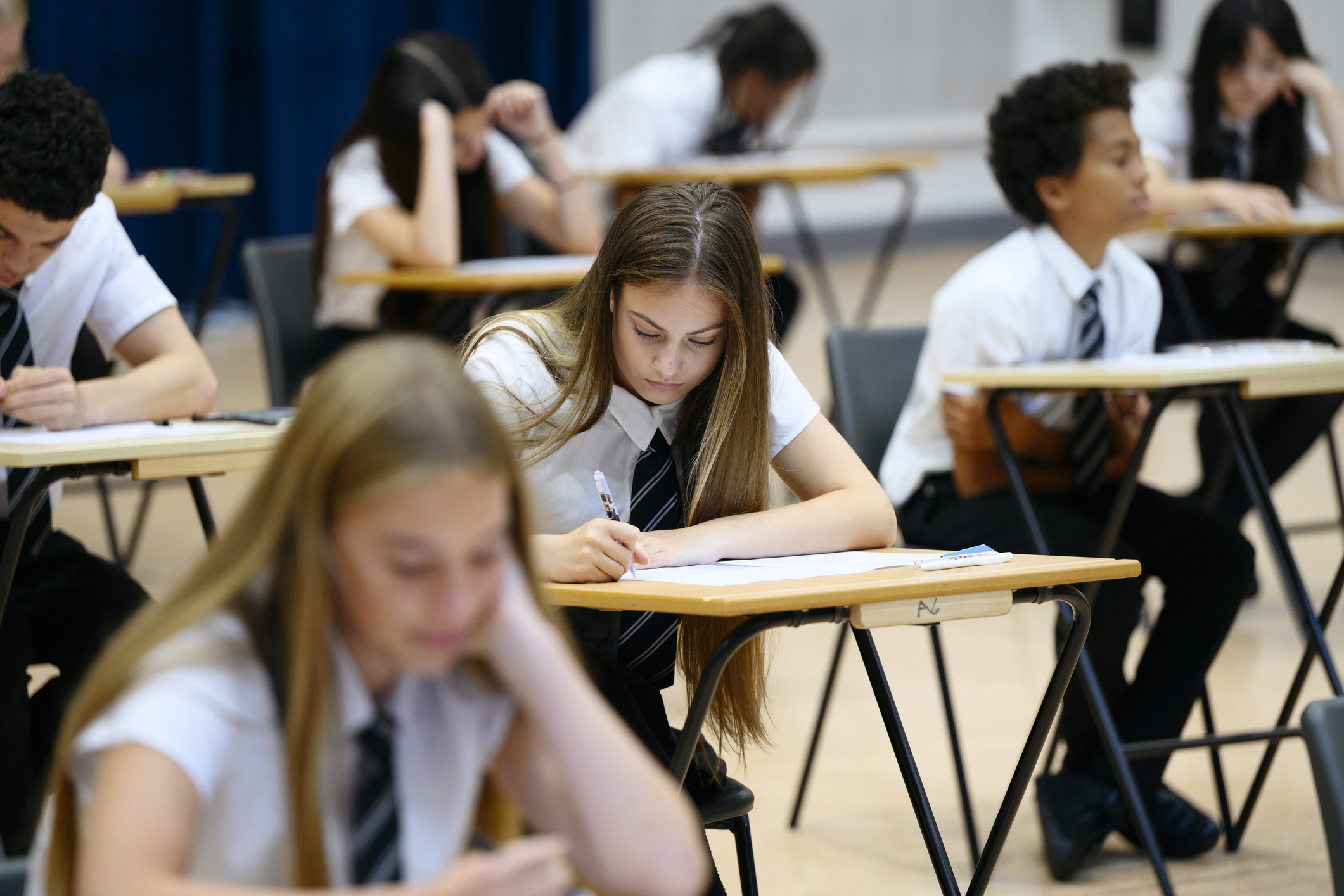
“Students are able to take a CAS calculator and a bound booklet of notes into the two-hour multiple choice and extended response exam and only have to do without it for a one-hour short answer exam.
“It is a nonsense and one that the states of Queensland and New South Wales do not participate in. These states only allow much more restricted calculators.”
The school leader said that if it were up to him, maths exams would be entirely pencil and paper, with students armed with booklets of tables to look up trigonometric ratios or logarithms.
“…but I know that’s a little extreme,” he concedes.
“I could compromise on the limited use of much less flashy scientific calculators.”
The VCAA have been looking more closely at their list of approved technologies for Year 12 exams, last week announcing that User Defined Functions – an advanced shortcut function in CAS calculators – would be restricted from next year.
The authority reports the change follows feedback from more than 800 teachers and students.
Blanksby supports this move, saying teachers are generally keen to actually teach maths and not just how to use a calculator to solve a problem.
“Especially when the calculator doesn’t tend to go on to get used as much beyond Year 12.
“Universities tend to use different software, even if they are using software at all.
“Otherwise, you’re doing it all by hand, so you get quite disadvantaged if you go on to do more maths at uni, because then you’ve got to be very capable and actually learning how to do it the first time …. while also building up the content beyond it,” he adds.
For teachers, the need to teach students how to solve problems via CAS calculators and also by hand can become a real challenge in a fast-paced course, Blanksby points out.
Some students are also placed at a distinct disadvantage with the technology in play, he flags.
“I’ve tutored a number of students [that have been taught how to solve problems by hand, and for good reason] but then they get to look at their calculator and they’re like, ‘I’ve got no idea how to use this’.
“You’re comparing that to the students that are using [the calculators] all the time and can run circles around them.”
Blanksby says he’s not making a case for students needing to do everything by hand. A number of topics and concepts are completely impractical to tackle without a calculator, he explains, such as determining standard deviations, probabilities using a normal distribution, powers of matrices, or solving equations numerically where algebraic methods aren’t possible.
He argues that the study design needs to get clearer on exactly what is expected to be done using technology, what is to be done by hand – and to what level – and what should be mastered either way.
The VCAA are due to notify schools of the approved technology for 2027 maths exams, including CAS calculators, before the end of Term 2.
Blanksby says he has a suspicion that any changes are going to be messy, at least in the first year.
“My concern is it’s going to be too fiddly and too easy to miss something that will advantage a student because they managed to sneak something in when other students weren’t able to.
“I feel like it’s going to be a bit of a hassle for teachers on top of [already existing pressures], they’ll have to check the notes that students are bringing in, meet all the requirements.”
This could just be the start of a string of changes to come for maths teachers and students across the state, Blanksby concludes.
“[The VCAA might say], ‘it’s going to be easier if you can’t use a CAS, you can use maybe a graphics calculator, or whether we go to the New South Wales route of dropping down to the scientific calculator (only)…”