Currently the state has four fully-selective public secondary schools – Nossal High School in Berwick, Suzanne Cory High School in Werribee, the MacRobertson Girls’ High School in Melbourne and Melbourne High School located in South Yarra.
There’s also John Monash Science School in Clayton, which operates according to its own entrance exam and has separate entry criteria.
Today the Victorian division of the Liberal Party noted that New South Wales has 21 fully-selective and 26 partially-selective high schools, and argued that its plan will “give more Victorian students the opportunity to excel within the government school system, regardless of their postcode”.
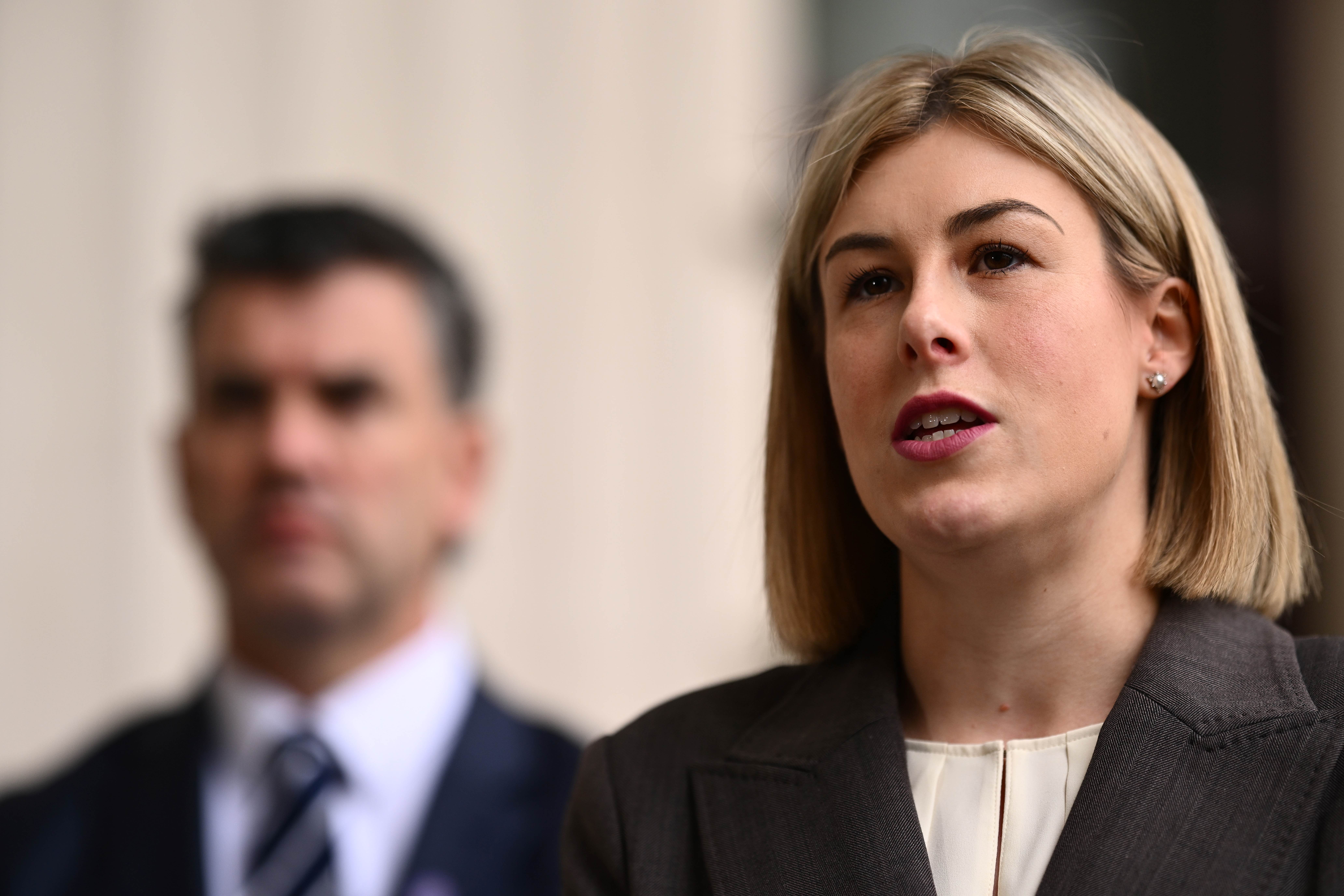
Leader of the Opposition, Jess Wilson said every Victorian student “deserves the opportunity to reach for their full potential, no matter where they live”.
”Thousands of students sit the select-entry school exam every year and too many of them are missing out because there are not enough places.
“A government I lead will expand opportunities for students and parents from across Victoria to access select-entry schools.”
The three new schools will be built in areas of “high and currently unmet demand”, with the aim to open before 2030.
The process of locating sites and acquiring land will start immediately in Melton, Caroline Springs, Sydenham, Craigieburn, Roxburgh Park, Langwarrin and Cranbourne South and surrounding suburbs.
The six existing schools chosen to become fully select or partially select will be determined by consultation with local communities and “informed by relevant data, with a focus on expanding access across Victoria”.
Shadow Minister for Education, Brad Rowswell said selection to these schools must be accessible and not based on postcode.
“The entry system for these schools will be a level playing field, offering the opportunity to more students than ever before.
“The establishment of these schools will help to strengthen Victoria’s state education system, giving students more opportunities to achieve their full potential and offering parents greater school choice,” Rowswell added.
Yet last year an expert warned that NSW’s selective schooling system had ‘distorted’ public education in the state, with highly coveted schools only accessible to the advantaged.
“These are public schools, but they’re so inaccessible,” UTS’s Associate Professor Christina Ho said at the time.
“…they’re very much dominated by students from very advantaged backgrounds, which does not fit with their design as public schools.
“They’re supposed to be available to really anyone, regardless of your family background.”
Ho said the scene had increasingly “gone awry” over the past few decades, with NSW now an outlier on the national stage when it comes to segregation within public schooling.
She suggested that selective schools are driving inequity across the state.
“I think it’s just a culture that has evolved, probably not intentionally, but because these selective schools have got such a reputation for being high achievers and … at the end of every year [there’s the] league tables and comparing of rankings.
“And it’s so obvious that these selective schools are really very dominant and outperforming (some) really top elite private schools. So, the competition to get into them now is so extreme that people have to invest a lot of resources into preparing their children for the test,” Ho flagged.
Many don’t have the means to play this game, the expert adds.
“It’s really locked out a lot of families that can’t afford the sometimes tens of thousands of dollars that people are spending on private tutoring.
“And just the time and the energy and the planning – only certain kinds of families can afford that.”
A 2024 study found the post-graduation benefits offered by Australia’s selective schools were not solid enough to justify their expansion, with the lead researcher calling for a full and overdue review of their operation.
Led by Dr Melissa Tham from Victoria University, the study drew on life satisfaction, employment and education measures to explore whether children at academically selective schools fare better than their counterparts in the long run.
No major benefits for selective school alumni were identified.
“The only significant result that we got ... was around general life satisfaction – and that result was small…” Tham told EducationHQ at the time.
The issue of selective schooling, at least in NSW, has remained a highly polarising issue.
Some commentators have previously described being approached by ‘enraged’ principals of comprehensive public schools who had seen a ‘significant extraction’ of their student body, with one leader describing the system as ’intellectual apartheid’.
But the NSW Government maintain selective high schools “are specifically designed to provide optimal learning conditions to support talent development of high potential and gifted students”.
“When learning alongside other high potential and gifted classmates, students benefit both academically and socially,” an information page for parents notes.
“Students tell us that they love learning with other students who also enjoy asking questions, delving deep into topics and being challenged academically.”
Ho, for one, was concerned about where selective schooling was heading and said other education systems around the world are no way near as segregated.
“New South Wales has really gone down that path to an extreme extent. It doesn’t have to be that way.”
The Victorian Liberal Party maintain that entry to the new schools will not be based on wealth or postcode, but rather “a combination of academic performance, aptitude and socio-economic circumstance”.
“Equality of opportunity to attend these schools is a non-negotiable, with entry weighted against all criteria equally; unlocking educational excellence for otherwise disadvantaged students.”