


It’s an area of fascination and great interest for Australian writer Clare Hallifax, whose new book, A House Divided, set against the dismissal of the Australian Labor Government in 1975, has seen her shortlisted in the children and young adult section of the 2026 ARA Historical Novel Prize.
The story is told through Juliet, a Grade 6 student, whose father works for the Deputy Prime Minister and offers a front-row seat to a turbulent period in Australian history through the eyes of a curious and perceptive pre-teen at the centre of the action.
The dismissal of Prime Minister Gough Whitlam is considered the most significant constitutional and political crisis in Australian history.
On November 11, 1975, then Governor-General Sir John Kerr used uncodified “reserve powers” to sack a democratically elected government, despite the PM maintaining a majority in the House of Representatives.
While it remains forever etched into the memories of those of us who lived through that time, it has kept a strong and enduring hold on the imagination and curiosity of every generation since.
Hallifax has worked as a writer, editor and publisher for over 30 years, with many years spent in children’s publishing.
She has edited and published many award-winning titles, from picture books to YA and historical fiction, and for the book, drew on her time working as part of the Canberra Parliamentary Press Gallery along with her own earlier experience growing up in Canberra in the ’70s.
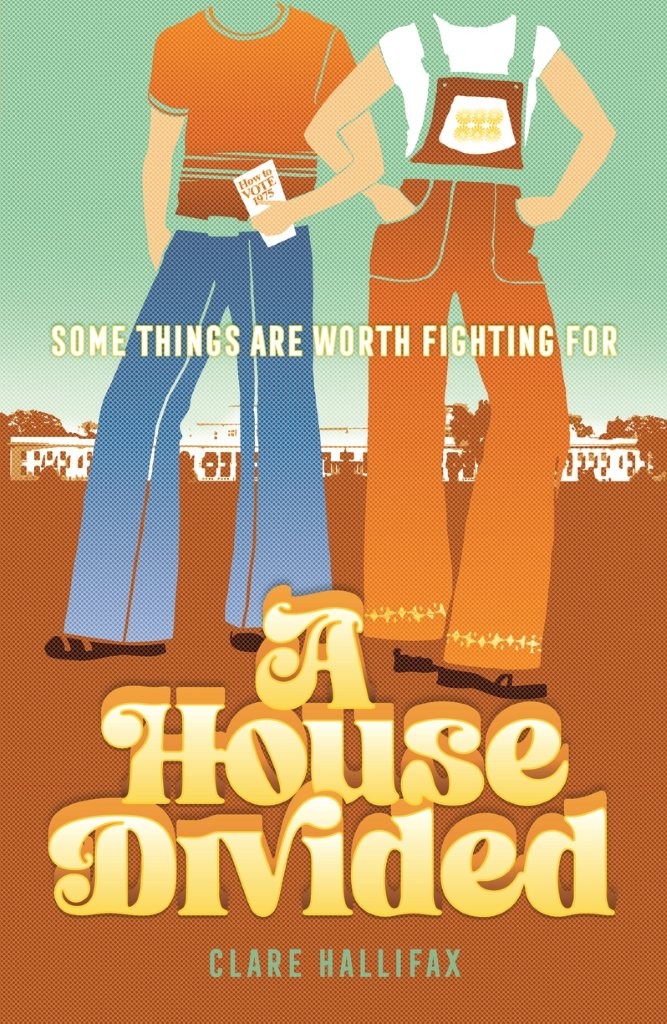
Suitable for readers aged 8+, the story offers a front-row seat to a turbulent period in Australian history through the eyes of a curious and perceptive pre-teen at the centre of the action.
“I was always interested in political journalism because we had a family friend, Peter Bowers, who was the political correspondent for Fairfax for many, many years,” Hallifax tells EducationHQ.
“He was a great family friend – we went on holidays with their family. He was just really inspiring and he encouraged me to do that.
“My uncle was also the principal private secretary to Lance Barnard (Whitlam’s deputy and whose resignation from parliament triggered the chain of events that led to The Dismissal), and so the people that populate my book populated my life.”
Hallifax says all of this helped in terms of the feel and the colour of the time, as did research with her uncle, who told her “all sorts of fantastic stories” from behind the scenes.
“Most didn’t make it to the book because they weren’t either appropriate or just appropriate to the actual storyline, but some of them were hilarious,” she says.
“I also used as many primary sources as I could. I had a lot of books that I’d already edited myself on my shelves about political history and various themes, and Gough’s own book that he signed for me.”
Having been a publisher at Scholastic Australia and Walker Books, the novelist has an insider understanding of exactly what’s required for her discerning audience.
Knowing that kids study parliament and democracy around Year 6, it can be a pretty dry subject, she says.
“But 1975 was a cool time, and hopefully this brings it alive – and I think it does because something’s at stake.
“That narrative is really useful to understanding not just the dry facts about the parliamentary system, but the narrative doesn’t make sense either unless you understand how our democracy works, because you don’t understand why a prime minister can be sacked if you don’t understand how the system works, or how it can be manipulated.
“So it was very much twofold – I needed to make this understandable in a curriculum sense, so this is going to relate to things that they’re learning about, perhaps the Westminster system, or who sits where in parliament and what their jobs are – versus how does that actually happen in the real world, but actually at a time when something really big is at stake?
“And then the really big thing at stake is what we believe democracy to be, is that it’s the people who decide who governs us.”
History as a subject area seems to be lower on the priority list for many principals these days, squeezed out for subjects considered more advantageous for future careers.
History, however, is an essential pillar of an excellent education because it builds active citizenship, sharpens critical thinking, and helps students navigate a complex national and global identity.
Hallifax, not surprisingly, feels schools should be valuing history higher.
“History is context for everything,” she says.
“Science is informed by history and vice versa. It’s like, why do we want to develop things?
“In terms of politics, everything is step by step by step by step, there’s nothing new, we’re constantly repeating things.
“The dismissal was a repetition in some ways of the dismissal of the New South Wales Government in the 1930s. These aren’t new things because they’re possible. And it just depends who and why people want to pull the levers, and it’s the same as the study of psychology, they’re all intermingled.”
The novel is the second book in a middle-grade historical fiction series and serves as a compelling entry point for students to learn about the evolution of Canberra, the workings of a democratic government, and the role of media in political life, all while being grounded in a relatable and engaging family narrative.