Widely regarded as a beacon of best practice, educators from across the state routinely flock to the Victorian school to see its teaching teams in action.
Over the last two years, more than 60 per cent of ‘Tempy Heights’ students have shown high growth in their NAPLAN maths results between Years 3 and 5, with the school sitting well above the state average and similar schools in this domain.
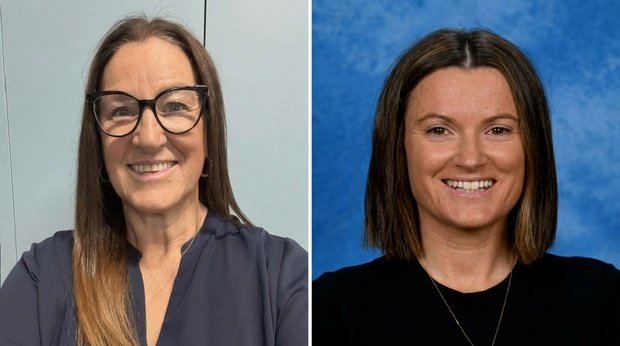
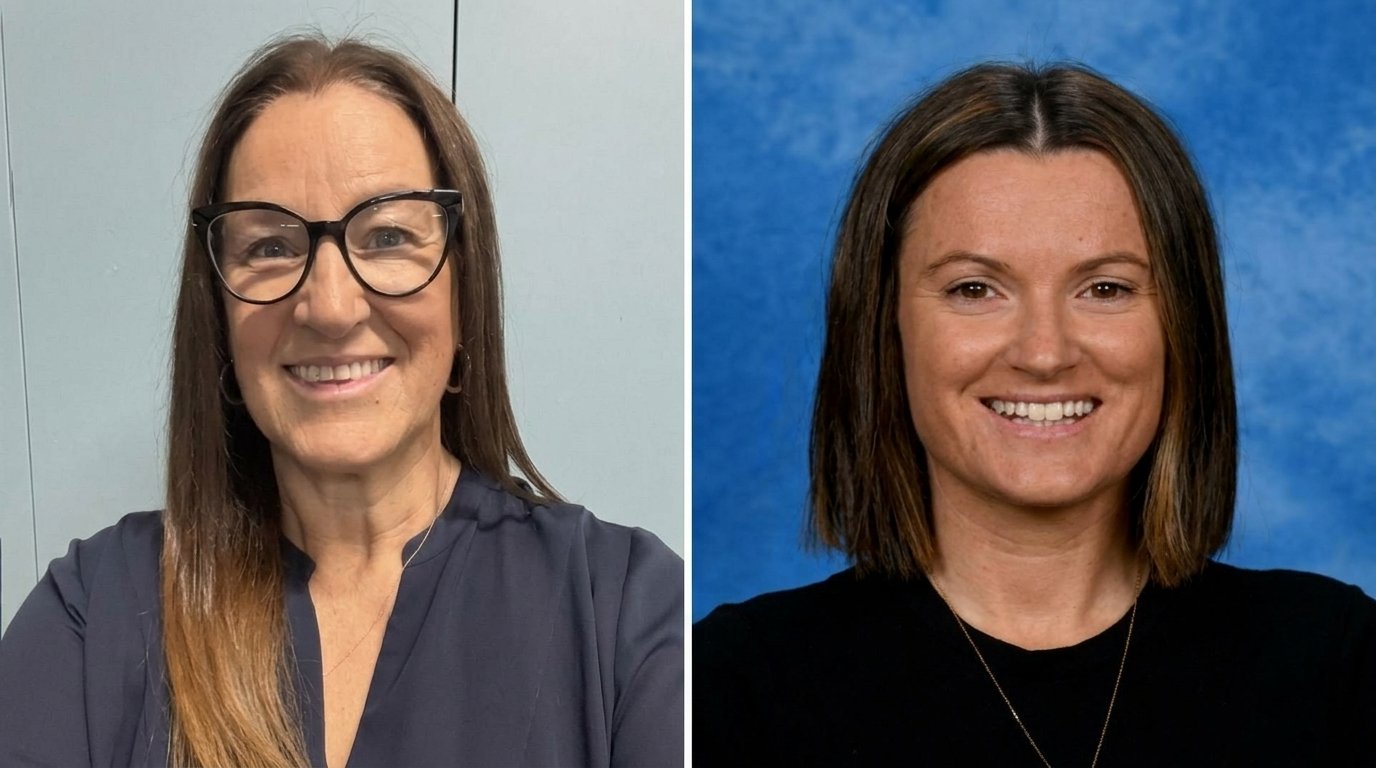
Year 3 team leader Renee Rooimans and Year 4 team leader Karen Woods say evidence underpins every one of the instructional choices that are made by teachers, with explicit teaching the backbone of everything.
“We don’t do anything in the classroom that isn’t supported by evidence, and it’s also very child-centred,” Woods tells EducationHQ.
“And so when it comes to maths, we do it the same way that we do everything else – we teach all of our maths techniques explicitly.
“Each lesson we’ll go through possibly multiple cycles where we’ll instruct the students in how to do something, so there’ll be the ‘I do’ section, and then we’ll work through some problems with them, and then we get them to do some independently on their own – [only then will we] come back in and we’ll look at another element…” she explains.
Children’s confidence in maths is built by this kind of fine-grained teacher-led instruction, the pair say, with novice learners never left to guess how they might go about solving a problem.
“We teach the concept first,” Woods adds.
“We take the approach that the most experienced person in the room needs to give them the instruction that they need to be able to solve the problems that are in front of them.
“It’s not okay to have novice learners and give them a problem and say, ‘hey, see how you go figuring this out,’ because that can just embed misconceptions and end up making them more confused – and it also creates that moment where kids are just going, ‘I just don’t know how to do this’.”
Experiencing success in maths is the real motivator for students, Rooimans says.
“We have a really rigorous review process, too – we don’t do blocks of learning, so we’re not going to do multiplication for two weeks and then division for two weeks.
“Everything is interleaved, and we come back to it all the time. The reviews, at the start of each lesson, will cover all areas of mathematics. They’re really short, sharp, quick practice for the students (often using mini whiteboards) and that’s all based on cognitive science, so how the brain learns and retains information and transfers information from our short-term memory to our long-term memory.”
Here teachers are guided by a ‘very organised’ learning scope and sequence that has been developed by the school’s learning specialists.
Woods says for each new content area there are 12-13 review areas that are systematically revisited multiple times with students after they are first introduced.
“And what we found was that the students were growing so quickly with what they could do, because everything was so broken down and recursive. Everyone was making so much growth we had to shift the goal posts,” Rooimans adds.
“That’s something that happens quite often in our school – we have a very ambitious curriculum but then we still need to shift it because the growth is [so significant].”
The teachers say their school leadership team work hard to ensure the right conditions and support structures are around staff to enable a focus on their own intellectual preparation and sharpening of their practice.
“It makes me sad when I hear teachers say they hate their jobs and that the children don’t behave and they can’t get things done, because we’ve got very good structures around us,” Woods reflects.
“The thing that our leadership wants is to not waste our time, so they take a lot of trivial things off our plate.
“But also, we have a very firm behaviour curriculum – we have high expectations of our students, and you can honestly walk into our classrooms and the kids are sitting, and they’re quiet, and they’re looking forward to the teacher.”
This calm and focused learning environment is exactly what visitors remark upon when they drop into lessons, the teachers say.
“[One person] said on day two (of Term 1) that our students were behaving better than what they would have expected by the end of Term 1.
“They were like, ‘we can’t believe they were all just sitting there and they were quiet and they’re ready to learn.’
“But that’s what we expect.”
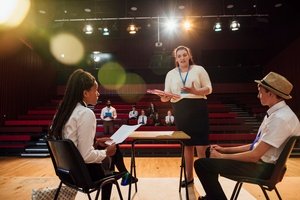
 Teachers across the school are ‘constantly checking for understanding’, Woods says. “Mini whiteboards are brilliant, because we can have a look around the room and go, ‘yep, 100 per cent of the students got that’, or ‘everyone except one or two got that’, so we can then judge where to go to next with the lesson.” PHOTO: iStock
The pair recently presented at the 2026 VATL mathematics symposium where they shared the impactful way in which Tempy Heights teachers are using PowerPoint slides in maths.
Slides in the classroom have got a bad rap, they say, with the ‘death by PowerPoint’ mantra looming large in people’s minds.
It’s a misconception they are keen to clear up.
“People get very hung up on the idea of slides ... and what we’re saying is, it’s just a resource – it’s a tool. Whether you give [students] a textbook, whether you print your own booklets off, whether you use a document camera or whiteboard to demonstrate [something], it doesn’t matter,” Woods says.
“The point we wanted to make is it’s the teaching that still matters, and it’s the intellectual preparation that the teacher does beforehand that matters – you can’t get up there and teach Year 6 maths if you haven’t looked through the slides and worked a couple of the examples and thought about the things that will possibly trip the students up, the misconceptions that you might need to clarify…”
For Rooimans, using slides in maths lessons has freed up more 1:1 time with students outside of whole class instruction. Slides also act as a handy visual scaffold, she says, helping to ensure that critical practices like checks for understanding aren’t skipped over in the heat of the moment.
“You’re released from drawing the diagrams and trying to figure out ‘where am I up to in the lesson, what’s the next thing I need to show them?’
“All of those things that can overwhelm you in the actual moment.”
The school’s improvement journey with explicit instruction really kicked into gear six years ago during the COVID school closures in Melbourne, Rooimans and Woods note. This was two years before they joined the staff team.
“[Teachers] started doing explicit instruction during lockdown … and slides became a really useful way to get that content across in that environment … they were like, ‘this actually is working really well’.”
The key to the school’s success has been the gradual implementation of new evidence-aligned approaches and initiatives since, the educators say.
“The big thing here is our leadership team, they are constantly looking not to change things all the time, but looking at practice and saying, ‘how can we do this better? What does the research say? How can we present the information in a way that students are going to get the most out of it, in a way that makes the learning most likely to stick?’”