It defines “human” as “having the qualities, faults and feelings that people have, as opposed to gods, animals or machines”.
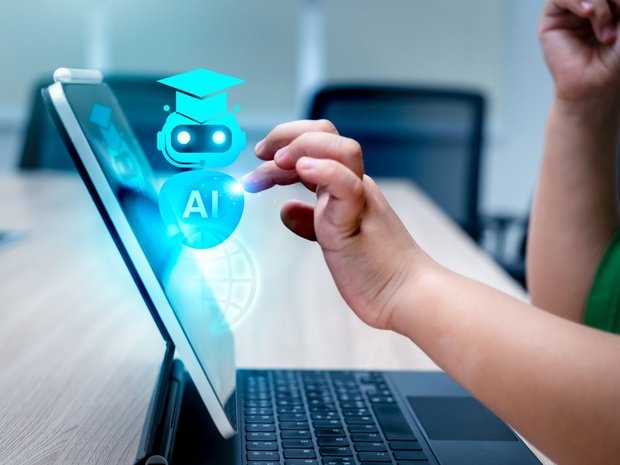
Lexicographer Colin McIntosh, of the Cambridge Dictionary, said: “AI is changing how we talk about being human”.
“Fears about what humans may lose when we outsource our thinking has made us reconsider the extent to which we rely on AI: from top mathematicians to teachers of young children,” he said.
“The definition of ‘human’ has traditionally distinguished us from gods, animals and, latterly, from machines.
“A recent increase in compounds such as ‘human-made’ highlight how the word has come to distinguish works or qualities of people as distinct from AI.
“It’s this renewed interest in the idea of being human that captured the zeitgeist and made ‘human’ the Cambridge Dictionary word of the year.”
Microsoft co-founder Bill Gates, commented on the selection, saying “AI is making us think harder about what it means to be human”.
“It could help us cure diseases, improve education and give people more time to spend on the things that matter most,” he said.
“But we need to make deliberate choices about how it fits into our lives, including where we want people to remain at the centre.
“The measure of AI’s success should be how much it improves human lives.”
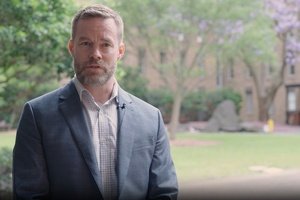
Tom McClelland, a philosopher of science at Cambridge University, said ‘human’ was “a really interesting choice”.
“Because right now our understanding of humanity is changing,” he said.
“We’re trying to understand the difference between a human mind and an artificial mind, between living beings like us and artificial beings that we’re creating,” he said.
“What sets us apart, is it consciousness, creativity or compassion?
“All the rhetoric around AI is about what’s inevitably going to happen.
“Nothing is inevitable. What happens in the future of AI is up to us. It’s up to you.”
AAP