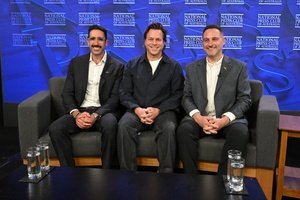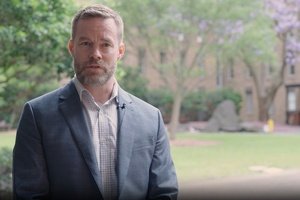
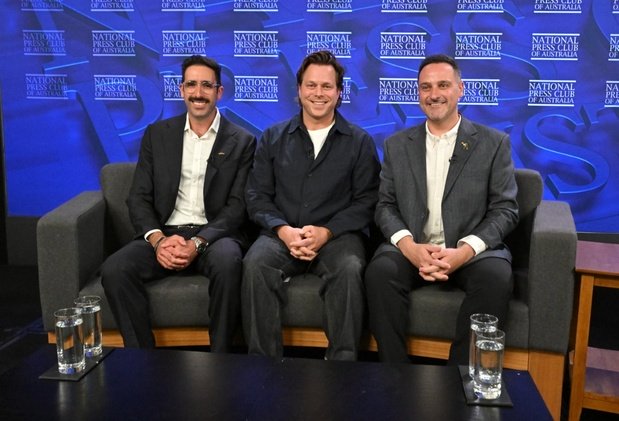
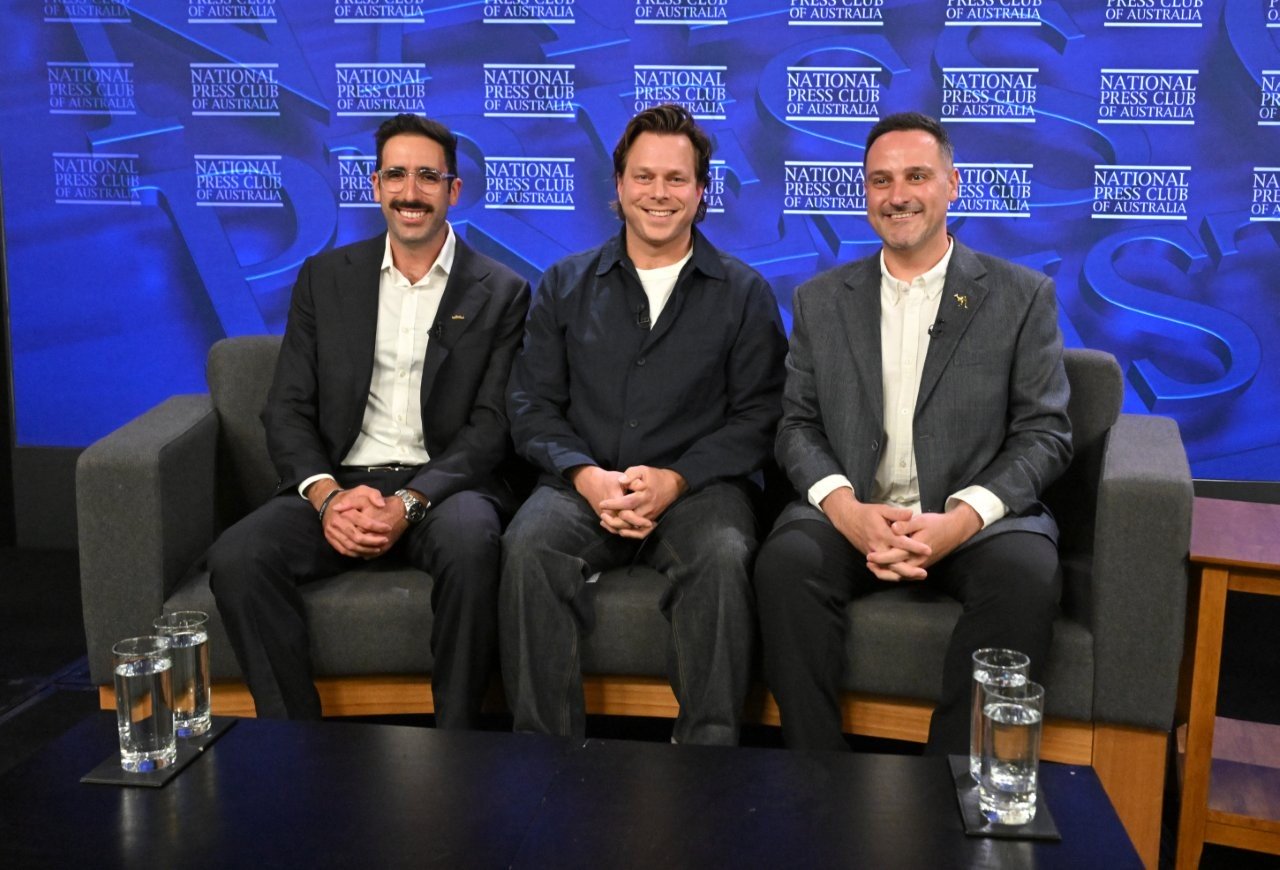
That’s what is happening to young Australian men, Ben Vasiliou, chief executive of preventative mental health and emotional intelligence charity for teenage boys and young men, The Man Cave, told the National Press Club yesterday.
And it’s having a significant toll on wellbeing.
“Today’s boys are growing up in a different way to many of us,” he said.
“There’s a device in almost every single teenage boy’s pocket, offering access to porn, gambling, drugs, misinformation and a never-ending stream of people telling him who he should be.”
With around 75 per cent of all suicides in Australia being men and the vast majority of violence against men, women and children being perpetrated by men, we as a nation must ask difficult questions about how boys grow up, what they’re taught and what we can do differently, Vasilou explained.
“Boys aren’t going online looking for something harmful, they’re going online looking for answers – how do I get fit? How do I make money? How do I ask a girl out? These are normal questions,” he shared.
“But a boy looking for fitness advice can be sold an impossible body, a boy looking for relationship advice can be led towards misogyny, and a boy looking for belonging can find himself in communities built on resentment and extremism. We’re seeing this in the rise of looks-maxxing, extreme dieting, dangerous dieting and peptides.”
Across the nation as part of a new campaign titled ‘He’s learning it from me’, The Man Cave is inviting public figures, community leaders and everyday people to make a simple commitment – to be a positive role model for the next generation of boys.
Vasiliou said society has built a world where harmful influences can reach boys 24-7, whereas a positive role model might only reach him for an hour.
“We cannot leave their education to an algorithm designed to maximise profit,” he said.
“Of course boys have agency, they make choices – and we expect them to make good choices but we must understand that judgement is learnt, discernment is learnt, good choices are a learnt behaviour. Digital literacy is learnt.”
Vasiliou said there are many good things about positive masculinity – including courage strength, loyalty, responsibility, being a provider, being a protector – however, “when strength means never showing weakness, when protection becomes control, and when courage means talking risks without regard for others, those same qualities become harmful”.
It’s vital that schools expand what’s possible, to build on those positive elements of healthy masculinity, and add in compassion, empathy, respect, healthy boundaries and accountability, the author and social entrepreneur explained.
Vasiliou emphasised that every boy regardless of their circumstances in this country deserves quality education about emotions, relationships, consent, boundaries and healthy masculinity.
Not a one-off assembly, he said, and not a conversation after something has gone terribly wrong – but a sustained developmental experience reinforced throughout his adolescence.
“We don’t teach a child maths once and expect them to understand algebra, skills require practice,” he offered.
“Schools are telling us they need help, and so we are calling for a nationally coordinated, properly funded and rigorously evaluated approach to masculinity education, one accessible to every single boy, regardless of his postcode.”
Vasiliou said research suggests that boys are spending up to four to five hours online each day, however his experience and firsthand accounts relayed to him suggest it’s more likely almost double that.
“We need a national digital healthy masculinity strategy, we’re calling for investment from the federal and state governments to support, partner and work with responsible online content creators so we can influence the influencers who already have boys’ trust and are showing up in their feeds.”
The program would help already-at-capacity teachers and parents to engage with boys in ongoing conversations about mental health and how they treat those around them.
The program would need to be accompanied by work from adult men in the boys’ lives, who were willing to talk about their experiences of masculinity that can not be taught in lessons.
Overwhelmingly, boys still look to real role models in their own lives as their guide, despite how overloaded the manosphere and online influencers are.
Vasiliou said it was crucial that men showed their boys what it looked like to grow up with vulnerability, and to be able to say they are sorry or that they love someone.
To coincide with today being International Mens’ Day, The Man Cave has just launched a national role modelling campaign called ‘He’s learning it from me’.
“Across the nation the organisation is inviting public figures, community leaders and everyday people to make a simple commitment – to be a positive role model for the next gen of boys,” Vasiliou said.
“Prevention – particularly seeing the whole young man, the whole teenage boy from a very early age and building character, building resilience, building an understanding of how to ask for help and seek help – is just as important as learning literacy and numeracy.”
(with AAP)
Lifeline 13 11 14
beyondblue 1300 22 4636