

Dr Haili Hughes, an Associate Professor at La Trobe University, says in too many schools she’s seen teachers who are forced to sacrifice their professional curiosity and who are denied the chance to engage in the intellectual and relational work of teaching because they must rattle through a set of prescribed techniques for every lesson.
This is essentially dumbing down teaching, Hughes argues, and ultimately driving people from the profession.
“Can I be absolutely crystal clear: my position is heavily ‘science of learning’,” Hughes clarifies.
“I'm quite a traditional teacher; I believe in routines, I believe in codification of techniques. What I don't believe in is mandated techniques where people go into a lesson and literally do a bingo card…
“I’m all about teachers being equipped with the knowledge of the science of learning, of how students’ learn, being given support to practice and perfect a range of techniques – but then for me, it’s up to the agency of the teacher of deploying those techniques at the right time for the right reasons.
“That’s my clear position.”
Hughes is new to the role at La Trobe, having just arrived from the UK where she was leading the development of a teaching and learning model for a multi-academy trust made up of 11 schools, in addition to her role as professor of teacher coaching and mentoring at Academica University of Applied Sciences.
She suggests her views on the de-intellectualisation of teaching do not reflect those of an ideologically-bound academic who might be completely divorced from the reality of running a classroom.
“I’m not your typical associate professor who hasn’t been in the profession for donkeys and donkeys of years…
“[And] I’m increasingly seeing top-down, rigid, mandated approaches to teaching, which inhibit teachers’ professional decision-making powers.”
Hughes argues that problems ensue when teachers are told they have to run through a prescribed checklist of techniques.
In a given lesson, this might mean teachers are always starting with retrieval practice before showing a model and circulating the room, before they move into performing a check for understanding, bringing in a cold call, giving feedback and then using an exit ticket to close out the lesson – and all without much thought, the expert says.
Hughes questions where the space is in this approach for teachers to impart their deep subject knowledge, to anticipate misconception, respond to emotion, build culture, sustain students’ attention, or to make ethical decisions and adapt in real time as the lesson unfolds.
The techniques themselves are not the problem, she says, but rather the lack of judgement that’s demanded about when and how to deploy them.
“(This is) done badly when you split a lesson into distinct phases – and we’ve been through this in England – whereby the first 10 minutes is a retrieval task that’s mandated.
“We then don’t really do anything with the data that we receive from that retrieval task because the next part is an ‘I do’ model. The second part is a ‘we do’ and then ‘you do’.”
This amounts to a ‘lethal mutation’ of Rosenshine’s Principles of Instruction, Hughes adds.
“There’s been instances in England in the last 10 years, and this is still going on in some Trusts, where you have senior leaders walking around the corridors, looking at what point or phase of the lesson teachers are on, and if they’re not in the same phase of the lesson as everybody else, they can be called in and told off for it.
“When actually that is anti-adaptive teaching, so it goes against all of the research of the science of learning.”
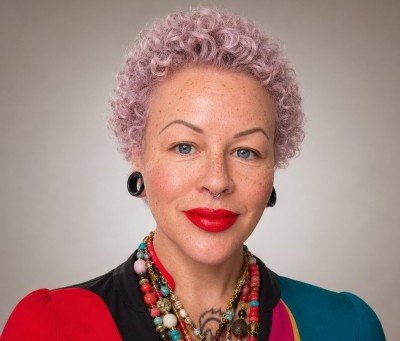
“I’m increasingly seeing top-down, rigid, mandated approaches to teaching, which inhibit teachers' professional decision-making powers,” Dr Haili Hughes tells EducationHQ.
As a former school leader, Hughes says she does not want to point the finger at those heading up schools.
Many are well-meaning in their efforts to standardise and mandate teachers’ practice and are likely scared to lose their jobs, she notes.
“School leaders in England are under immense pressure because of accountability. So there’s like league tables, it’s marketised education completely.
“They’re under immense pressure from Ofsted which is our inspectorate … and it’s all linked to finance and everything else.
“So in a quest to have consistency, they will sometimes misread the research to provide this kind of ‘support’, if you like, which then can turn into compliance.
“And I am not anti-consistency, I’m the consistency queen.”
The thinking behind leaders’ agenda here is obvious, Hughes maintains.
“If you think about it, with that word ‘consistency’, essentially what they’re thinking is, ‘if I can mandate what everybody’s doing, if I can have a really clear overview of that, then less things go wrong’.
“But what I think we end up doing then is pushing out great teachers, because we’re always sort of punching down (teacher practice) for lowest common denominator…”
Critics of the recent widespread shift to explicit instruction and scripted lessons that align with the science of learning across Australian schools have for years argued that this is stifling teachers’ professional autonomy and judgement.
Hughes says her argument is quite different.
“In all honestly, we’re a lot further down the road with this work in England than Australia is at the moment.
“And actually, we’ve come through this whole mandated [scene]. We did this probably seven or eight, nine years ago, and have now shifted more towards developing the decision-making powers of teachers, and that’s where the agency comes in.
“So, nobody’s saying teachers shouldn’t be professionalised, shouldn’t have knowledge about the science of learning, shouldn’t know how to deploy techniques and what those techniques look like…”
Rather, teacher agency is to be found in how and when they draw from their toolkit of evidence-based practices to suit their classroom context, Hughes suggests.
“It doesn’t have to be binary, and I think that’s a problem in education: a lot of the time, you never get anywhere because things are so binary.
“Two things can actually be true at the same time.”
Hughes has fleshed out her take on the situation via a Substack post – an article she says has been widely well-received but probably prompted an uncomfortable reckoning of sorts for some school leaders in the UK.
Sharing the piece on LinkedIn, language and literacy expert Emina McLean called Hughes “one of the best writers in education”.
“[Her] piece illustrates why surface level ‘interventions’ by system and school leaders are fraught.
“[There is a collective responsibility to critique inflexible, uncompromising, decontextualised, generic curriculum and teaching approaches that are being promoted,” McLean posted.