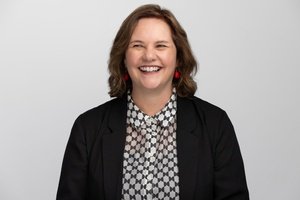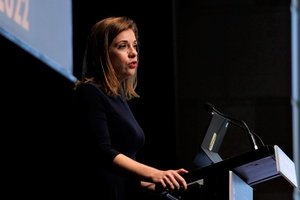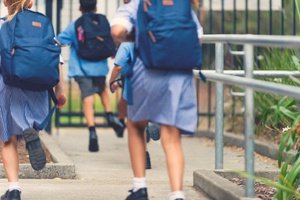
In a scathing new essay laced with policy analysis and personal reflection for Australia Institute Press, the Walkley-winning columnist, author, novelist and social commentator spells out in frank terms how this country has ended up with one of the most inequitable schooling systems in the OECD – and one that she warns is fast approaching breaking point.
“I think that we have almost deliberately hobbled social mobility,” Caro tells EducationHQ.
“…over the last 25 years, Australia's made quite a lot of progress in terms of women's rights and in terms of combating racism, even perhaps ableism - but we still have no progress in terms of wealth and power and social class.
“We Australians like to disown the idea that we have a class system, but we have, and we really build and maintain it via our education system.”
While most countries around the world use their educational funding to at least mitigate the effects of social class, here we “use it to make it a whole lot worse”, Caro argues.
“We've basically maintained the idea that people who are born into poorer families should stick to their class.
“You know, they should remain poorer. We're going to put them in poorer schools. We're going to give them less chances than we give to children who were luckier in the lottery of birth.”
Caro says she feels deeply the basic injustice of this, and the utter foolishness.
“We need to be equitably educating all our available talent. Our greatest and most important resource is not what we can dig out of the ground.
“It's actually our children.”
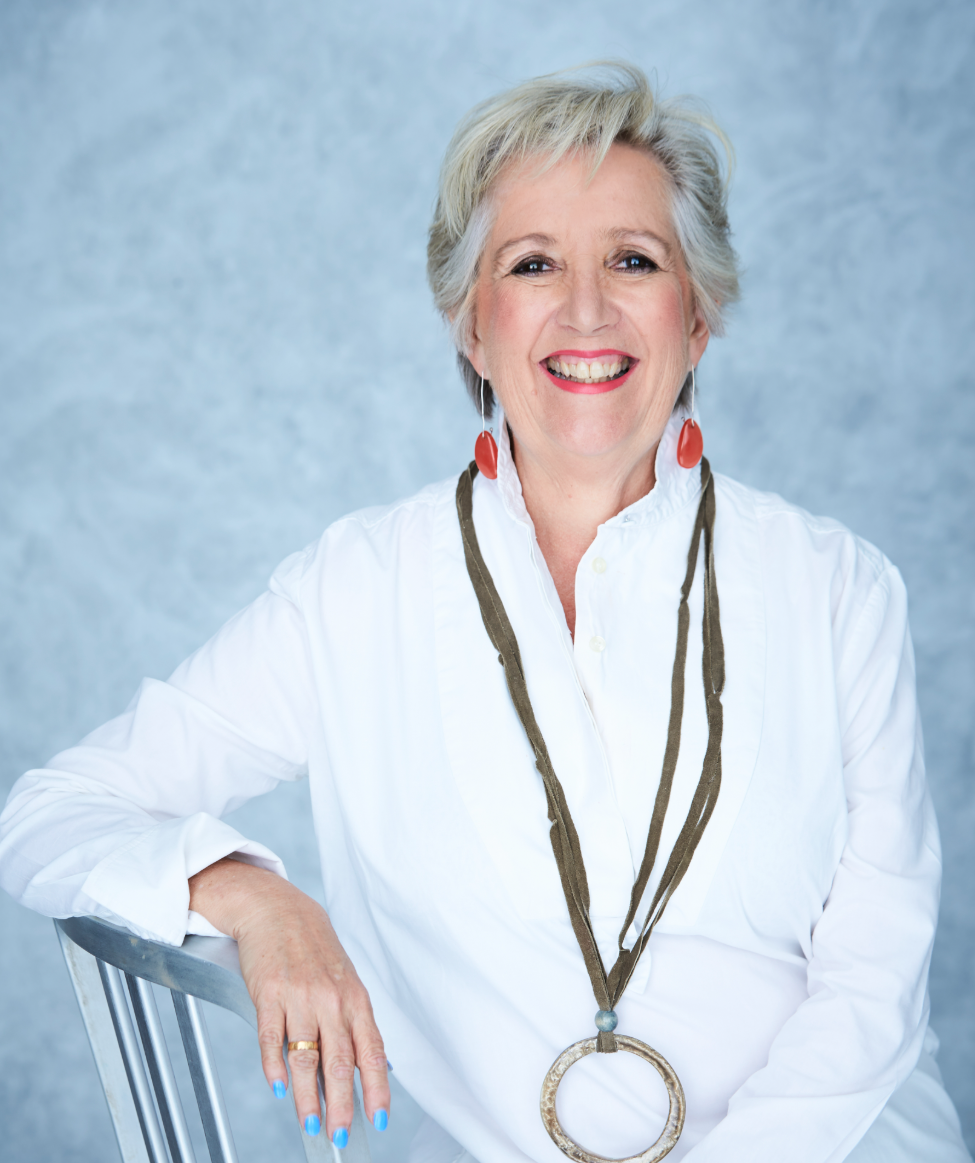
Jane Caro says public schools have not failed, but rather the Australian public have failed them.
Caro, who is on the board of The Public Education Foundation (and, like most young Australians in the 60s and 70, attended her local public primary and 'bog standard' secondary school) says decades of poor policy decisions have shattered the once strong trust in our public schools, with literally devastating consequences for many.
“Families literally beggar themselves to get their kids into private schools, with high school fees now one of the top five reasons for bankruptcy,” she writes in the essay.
Given 20,000 words to work with, Caro says she relished the chance to explain right from the beginning where Australia’s ‘cockamamie’ school funding system went wrong and exactly how it has been “exploited by various people with various political points of view, none of whom really were ever thinking about education or opportunities for children”.
“[Successive governments] were thinking more about their philosophy of anti-socialism, which a lot of the right seem to associate with public education, which is very weird - or kind of a punitive view which comes out of neoliberalism, that the fortunate deserve to be fortunate, and the unfortunate deserve to be unfortunate.
“Even children, apparently,” she adds.
In Caro’s opinion, both sides of politics “drank from the neoliberal Kool-Aid”, resulting in the “appalling” scene we face now where private schools are busy installing equestrian centres and ice baths, while public schools battle just to keep their doors open and classes running.
She contends that “so-called elite” schools now work in the same way that haute couture works for European fashion houses.
“Few can afford the clothes Dior, Yves Saint Laurent, Dolce & Gabbana, Louis Vuitton or Balenciaga send down the runway. High fashion’s unattainability is, in fact, the point. How can anything be exclusive if it does not exclude most people?”
She questions why taxpayer funding should be used to facilitate schooling ‘choice’ for a select few who can afford to have it.
“It's pure marketing,” Caro says.
“It's basic manipulation of human desire for status and to be among the few and not the many. And that might be fine when it comes to selling an airline ticket.
“It might even be fine if you were selling schools that were not publicly subsidised. But it is not fine when you are using all taxpayers’ money to subsidise the exclusion of most taxpayers' children.
“That is not okay. It's a reverse Robin Hood. It's taking from the poor to give to the rich. So, it's perverse and it's just morally wrong…”
For teachers in public schools who read the essay, Caro says she wants them to take heart – and to get angry.
“I want all of us to get angry,” she says.
“I want us to feel that we've been conned, really. Parents who can ill afford it have been conned into believing that they have to pay, well, the most expensive fees in the OECD for particularly high school education – it’s four times the OECD average.”
Governments have effectively tricked us into allowing the cost of education to fall upon parents and not the state, Caro maintains.
“And this has been to the detriment of all our families. I mean, we have a situation where even families where there are two reasonably good incomes, even two high incomes, are running fast but slipping backwards no matter what, because of the impost on them.
“And then we add private school fees on top of that, and a sense that you're a bad parent if you don't pay them. And they're among the top five reasons for bankruptcy in this country.
“I mean, this is a massive government con perpetrated on the public.”
And yet Caro is positive about the future of Australian education, largely because the current arrangement will not be able to sustain itself, she suggests.
“I remain hopeful that our eyes are beginning to open.
“And I think there is a growing sense of unease about the very segregated nature of our education system, and a great sense that this hasn't led to anything particularly positive, rather the opposite.
“... the other thing to remember is that private schools can't actually survive as private schools without a public system to take the kids they don't want.
“So either we end up subsidising the private schools so completely that they become the public system, or we're going to say 'only children with parents with money can get an education'.
“Do we really think we're going to go to that place? I'm not sure what else happens if we keep going the way we're going now.
“So I guess my hope is something's got to give, and it's got to give soon.”
Upon reflection, Caro says, there's one sad truth that stings above all else.
“One of the things that really does upset me when sometimes, is I think about how much money we've spent on segregating our kids from one another, both public and private money.
“I just imagine what all that money could have achieved if only it had been spent in doing the opposite thing, in trying to close the gaps between our children - we could have had one of the best education systems in the world, but we took a fatal wrong turn.”
Rich Kid Poor Kid: the battle for public education, published by The Australia Institute Press as part of their Vantage Point longform essay series, is available from May 5.