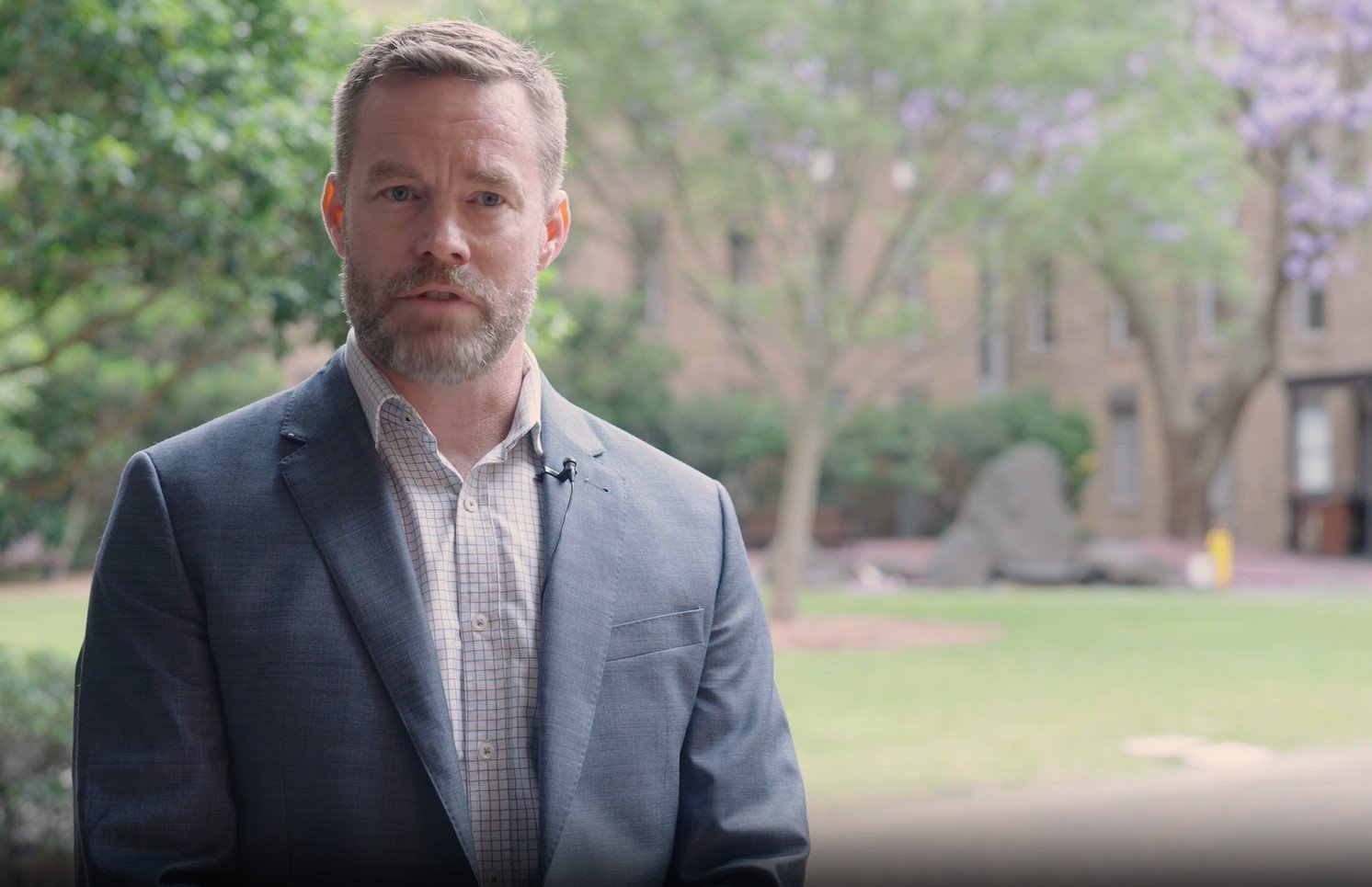
“Children are being subjected to sexual solicitation online as social media, messaging apps and gaming platforms give abusers access,” Professor Michael Salter, Director of the Childlight East Asia and Pacific Hub at UNSW Sydney, says.
The estimate comes from a research synthesis and highlights the scale of child sexual exploitation and abuse, as well as the challenges facing governments as offenders adapt to changing technology.
The approaches include pressured sexual interactions that can lead to exchanges of sexual messages, images or videos.
The findings are part of the Into the Light index, a major international analysis of child sexual abuse and exploitation across East Asia and the Pacific, North America, Latin America and the Caribbean, launched today at the Global Ministerial Conference on Ending Violence Against Children in Manila.
Salter, a criminologist and Chair of the Grace Tame Foundation, warns Australia’s social media restrictions for under-16s could see offenders shift their activities to gaming platforms and encrypted messaging services.
He says Australia has failed to give child sexual abuse sufficient political priority, both at home and in its digital development investments across the Pacific.
Salter explains that major gaps remain in measuring child sexual abuse, particularly among very young children who cannot verbally disclose their experiences.
“We need to take the hidden burden of child sexual abuse really seriously.
“We often see complex cases of child sexual abuse being handled by frontline services, who are working hard, but in a vacuum without adequate policy frameworks and inter-agency agreements to coordinate the response.

Across Pacific Island countries, Dr Amy Young says, the challenges extend beyond technology, with Australian labour mobility schemes and climate-related displacement adding to children’s vulnerability. PHOTO: from video by Aleks Wynne
“We need to get better at identifying and measuring the harm children face – and use that knowledge to prevent it.”
The findings arrive as Australia studies the impact over 12 months of social media restrictions for children under 16 and considers further obligations of technology companies to prevent online harm.
“I don’t think there’s any question that the frequency and severity of online child sexual abuse has increased,” Salter says.
“We need to wait and see whether the age restrictions reduce these figures.
“The question remains of how offenders seek contact with children if they can’t get access to them through social media?”
He says gaming platforms and messaging apps are potential alternative avenues.
“We’ve got huge concerns about WhatsApp, huge concerns about Telegram, huge concerns about Signal – all of the encrypted social media apps.”
Salter says these technologies were developed without sufficient consideration of child safety.
“And they’ve done so without any democratic oversight or concern for community safety.”
The index also draws on 21 Australian studies of offline child sexual violence – both contact (rape and sexual assault) and non-contact sexual violence (sexual harassment and taking sexual images).
Australia’s comparatively strong research base contrasts sharply with the limited evidence available across other parts of the Oceania region, according to Salter.
He and UNSW researcher Dr Amy Young warn of a developing child protection crisis in Pacific Island countries, where expanding internet connectivity is intersecting with limited child protection resources, inadequate data, labour migration and climate-related displacement.
Young, a UNSW researcher working on Childlight’s East Asia and Pacific research, says the lack of reliable child sexual abuse data across the Pacific makes it difficult to develop evidence-based responses.
“It makes it really difficult to say anything conclusive apart from we really need to fund this area,” she says.
In countries such as Papua New Guinea, where internet access remains limited, further digital expansion could expose children to new risks.
“As these countries come online, the risks grow exponentially, especially around things like exploitation,” Young explains.
Salter says expanding connectivity, combined with inadequate child protection systems, is creating new opportunities for exploitation.
“There’s a perfect storm that’s brewing in the Pacific,” he says.
The pair argue Australia has a responsibility to ensure its investment in Pacific digital infrastructure is accompanied by stronger child protection measures.