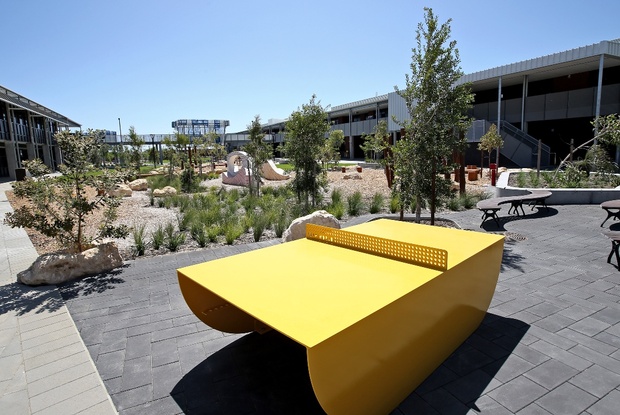
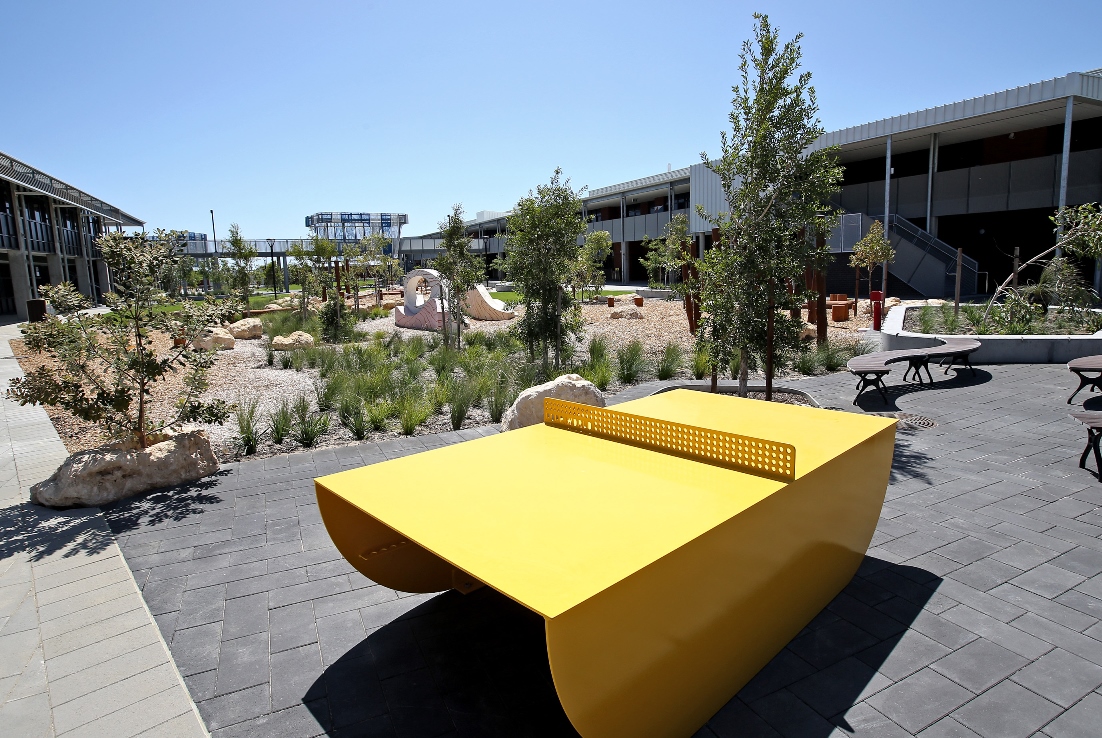
Across 22 months of study, researchers from the University of Canberra have finally addressed this gap with what’s called the “Schoolyard Greenprint”.
A comprehensive set of findings and guidelines for best practice in schoolyard design, articulating how to meet the very specific needs of high schoolers, the Greenprint provides evidence-based practical guidelines to help schools move away from their most-often outdated design.
From designing safe spaces to minimise bullying, to sensory areas to help neurodivergent students or age-appropriate places to take risks and play that aren’t the usual formal sports facilities, the Schoolyard Greenprint has brought together current design standards with health and wellbeing frameworks to cater to a huge range of student cohorts.
“It’s really for principals and educators who want to do something in their schoolyards but are not sure where to start,” lead researcher Dr Gweneth Leigh tells EducationHQ.
A landscape architect and research fellow in the Mental Health Policy Unit at UC’s Health Research Institute (HRI), Leigh says as a nation we are plagued by ageing infrastructure in our schools.
Over the past three decades, she explains, school buildings have evolved to reflect advances in environmental awareness, technology, and teaching practice – but the same can’t be said for schoolyards, the template for which hasn’t changed – despite the fact these spaces can make or break the student experience.
“Each day, over four million Australian students attend school. It’s a place where they spend thousands of hours. While adults can choose to leave a space that doesn’t meet their needs – be it a lack of shade or too much noise or uncomfortable seats – school students don’t have that choice, so good design is crucial.
“Some of the newer builds have great designs, but there’s a large proportion of our schools that need retrofits,” she says.
Principals have a lot on their plate, Leigh acknowledges, and as educators, designing landscapes might not necessarily be on the bucket list of things you’re managing.
“So the design guides are here to help to facilitate that process,” she says.

“Over the past three decades, school buildings have evolved to reflect advances in environmental awareness, technology, and teaching practice,” Dr Gweneth Leigh says. “The same can’t be said for schoolyards…”
The team at UC used an aerial inventory to map out the layout of schools around Australia, in an attempt to understand what we have.
“So assessing where buildings are placed, how the courtyards relate to the infrastructure, how much turf, how many playgrounds, and we came up with nine types,” Leigh explains.
From those nine types, schools can determine which most closely resembles their school.
“Each type is accompanied by pages detailing the opportunities and challenges of that type and what are some ways to address student wellbeing needs through some potential interventions.”
The typologies document gets them started and then the design guide looks into specific solutions and is organised around the wellbeing needs of students.
“Students don’t necessarily know much beyond what they’ve experienced, right? They might not know anything different to what they have, so it’s about tools that explore how those spaces make them feel, what they do in those spaces, which can then inform the kind of design response that’s needed.”
Leigh says in the past for high schools it has been awkward in terms of working out how to best utilise some outdoor spaces outside the PE curriculum.
“We’ve come a long way in our understanding of the opportunity of them, particularly for primary school kids. Nature play, great work is being done in that space.
“Along with even the design standards and guidelines, there’s greater recognition that these spaces play an important role. And they’ve often been framed through the lens of environmental impact, too, and sustainability, which is really important.
“But I guess for us, looking at the wellbeing needs of students made us think, well, how can we better reframe it on the students? Because there are these great national wellbeing frameworks that are available to guide schools through the wellbeing needs of students.”
But the environment and the physical outdoor space is only a piece of that, the academic shares.
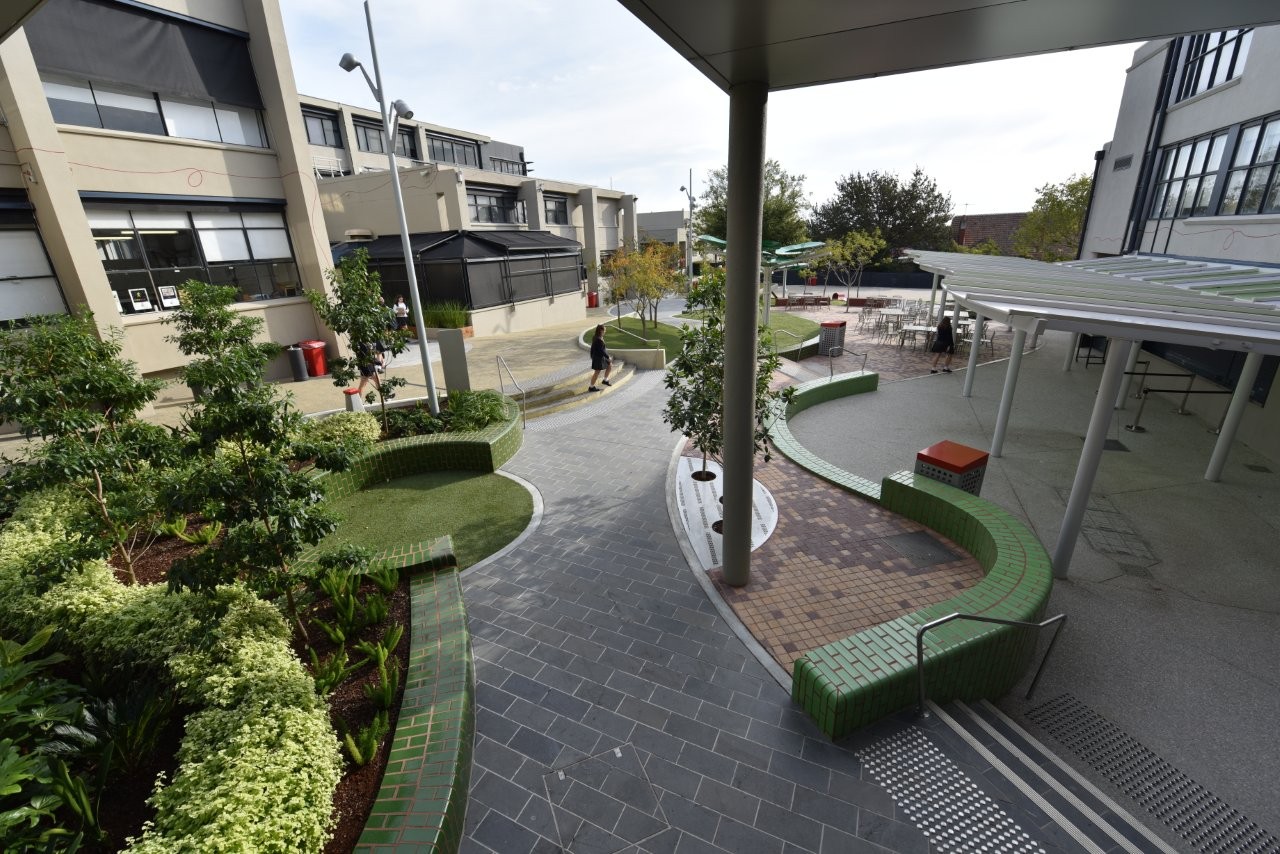
St Columba’s College in Victoria had a dark, uninviting and institutional feel to their school canteen. They solved it by redesigning the canteen, above middle right, to a cafe with diverse and moveable furniture. PHOTO: Rush Wright
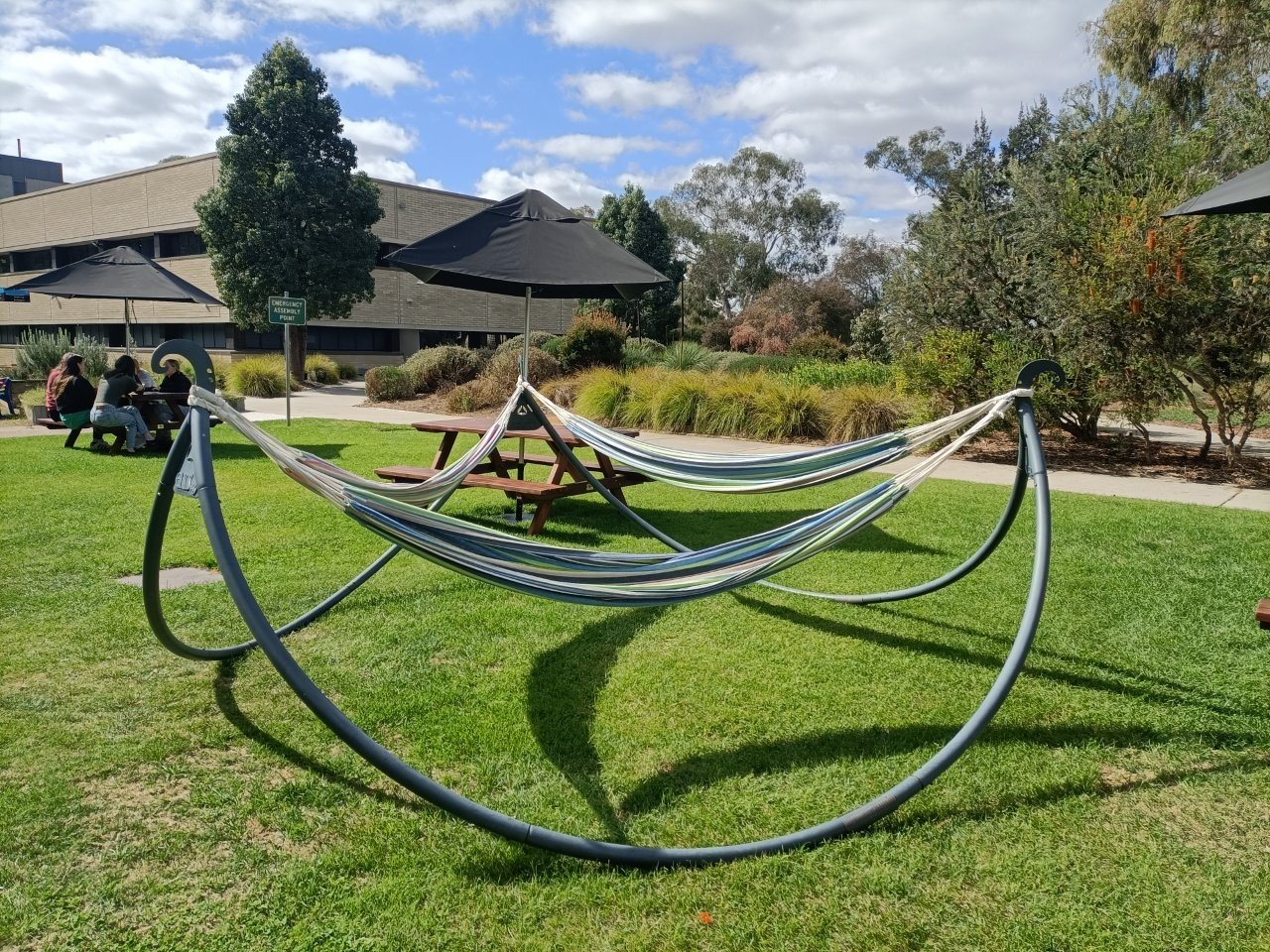
Schools should offer a range of social spaces, from high-intensity interaction to passive observation so students can choose to watch others, hang out with friends, or actively socialise. PHOTO: Hannah Richardson
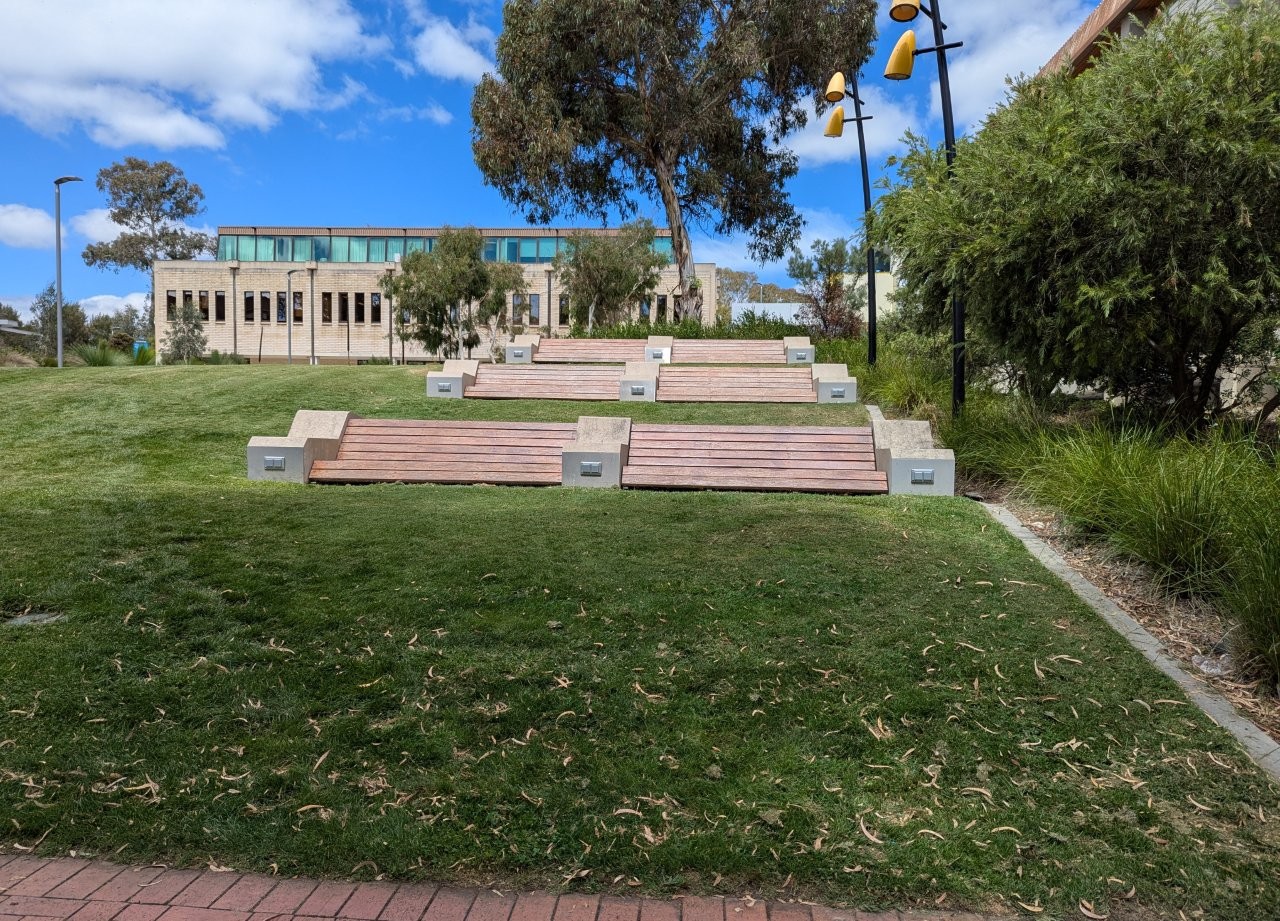
Hillside seats with power access encourage students to lounge, people watch and recharge. PHOTO: Hannah Richardson
“And I guess this was seen then as a bridge; how can we, I guess, incorporate guidance from those wellbeing frameworks into those design standards? And that was the beginning of the journey for us, and that’s what this product is meant to do.”
With teen mental health in crisis globally, by rethinking our schoolyards, we can create spaces that help young people to connect, recharge and learn, Leigh says, and consulting them was a critical part of the preparation of the Schoolyard Greenprint.
In conjunction with a Youth Voices reference group, they held workshops with more than 500 students to identify the needs of different cohorts of students, including LGBTQ, First Nations and female and gender diverse students.
With a stakeholder working group and reference group, they then co-designed better ways to utilise outdoor spaces.
The result is a set of resources to help schools understand what different students need from their outdoor spaces, and guide school communities on the changes – big and small – that could improve their schoolyards.
And it’s not only students who will benefit from better schoolyard design.
“One of the things that we learned in talking with schools is the need for wellbeing spaces for teachers as well,” Leigh shares.
“That is critical. In the same way that students may feel depleted, teachers need places to refill their own buckets in the school campus.”
There are so many demands being put on teachers and school leaders, the researcher says, and it’s hugely important that we recognise that they also need some spaces where they can downregulate after a stressful class.
“It could even be something as simple as having a wellbeing walk where they can have access and get a bit of breathing space before re-engaging back in the classroom.”