That’s according to the creators of The Whole Health Classroom, an education platform from The Live Life Whole Project (LLW), which is bringing female-specific, evidence-informed health education into Australian schools and sporting clubs.
Designed alongside qualified women’s health professionals and expert educators, The Whole Health Classroom is a curriculum-mapped, developmentally appropriate digital health education framework designed to help girls build knowledge, confidence and the skills to make informed decisions about their health.
The aim is to close Australia’s female health literacy gap by giving girls the knowledge, confidence and tools to understand their health, starting early and lasting a lifetime.
The Whole Health Classroom is designed to create tangible, real change, already shown in LLW’s 2026 internal impact data, with 81 per cent of participants committed to positive behaviour change, while 90 per cent reported improved health and confidence.
Adolescence is a critical opportunity to influence lifelong health, yet many young people are still not receiving practical, female-specific health education at school.
Research cited by LLW shows only 40 per cent of young people report learning about the practical management of menstrual health through school education.
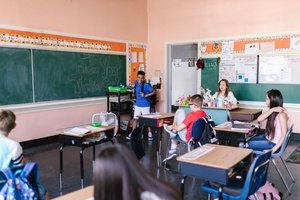
For co-founders Megan Dickinson and Sarah Roughead, the answer is to start earlier, and start where girls already are: in the classroom.
“Female health literacy is preventative healthcare. Education is the first treatment,” Dickinson says.
“We don’t just teach girls about health – we change how they live it.”
The Whole Health Classroom brings together Body, Mind and Self, covering areas including nutrition, sleep, movement, the menstrual cycle, stress, emotional wellbeing, self-worth and body image.
Designed for students from Grade 3 through to Year 10, it is built to become part of a school’s existing education environment rather than a one-off health session.
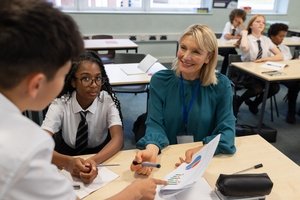
“Teachers shouldn’t have to become women’s health experts to give girls better health education,” Roughead says.
“They need access to credible, evidence-informed resources that can be embedded into the environments where young people already learn.”
The Whole Health Classroom has already reached more than 27,458 women and girls, with more than 50 per cent of its reach in regional and under-resourced communities. It is also endorsed by Monash University’s HER Centre Australia.
Dickinson and Roughead believe female health literacy should become as fundamental in Australian schools as reading, writing and maths.
“The future of women’s health won’t be built only in hospitals or consulting rooms. It will be built in classrooms,” they say.