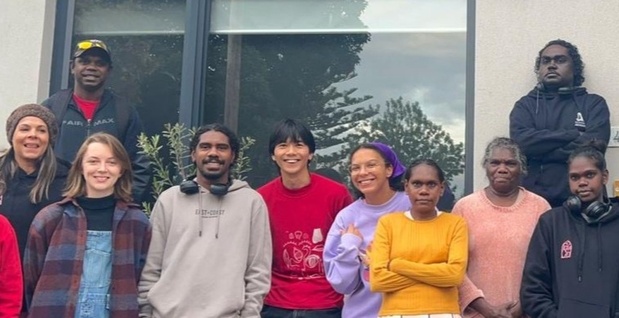
Our communities – the Faculty of Education at University of Melbourne and the Yambirrpa Schools of Yirrkala and Laynhapuy Homelands in Northeast Arnhem Land – have walked a shared path for more than 15 years.
We came together with a simple idea: that teacher candidates from Melbourne could learn on Yolŋu Country through placements in bilingual classrooms.
University of Melbourne students arrived expecting to teach. Instead, they discovered a Yolŋu education system grounded in gurruṯu (kinship), deep cultural authority and bilingual pedagogy.
They were welcomed, taught, supported and challenged.
Many returned after graduation to take up a teaching position, with many staying for longer than three years, some as long as ten. These students-turned-teachers now help guide the next generation, creating a continuous circle of learning.
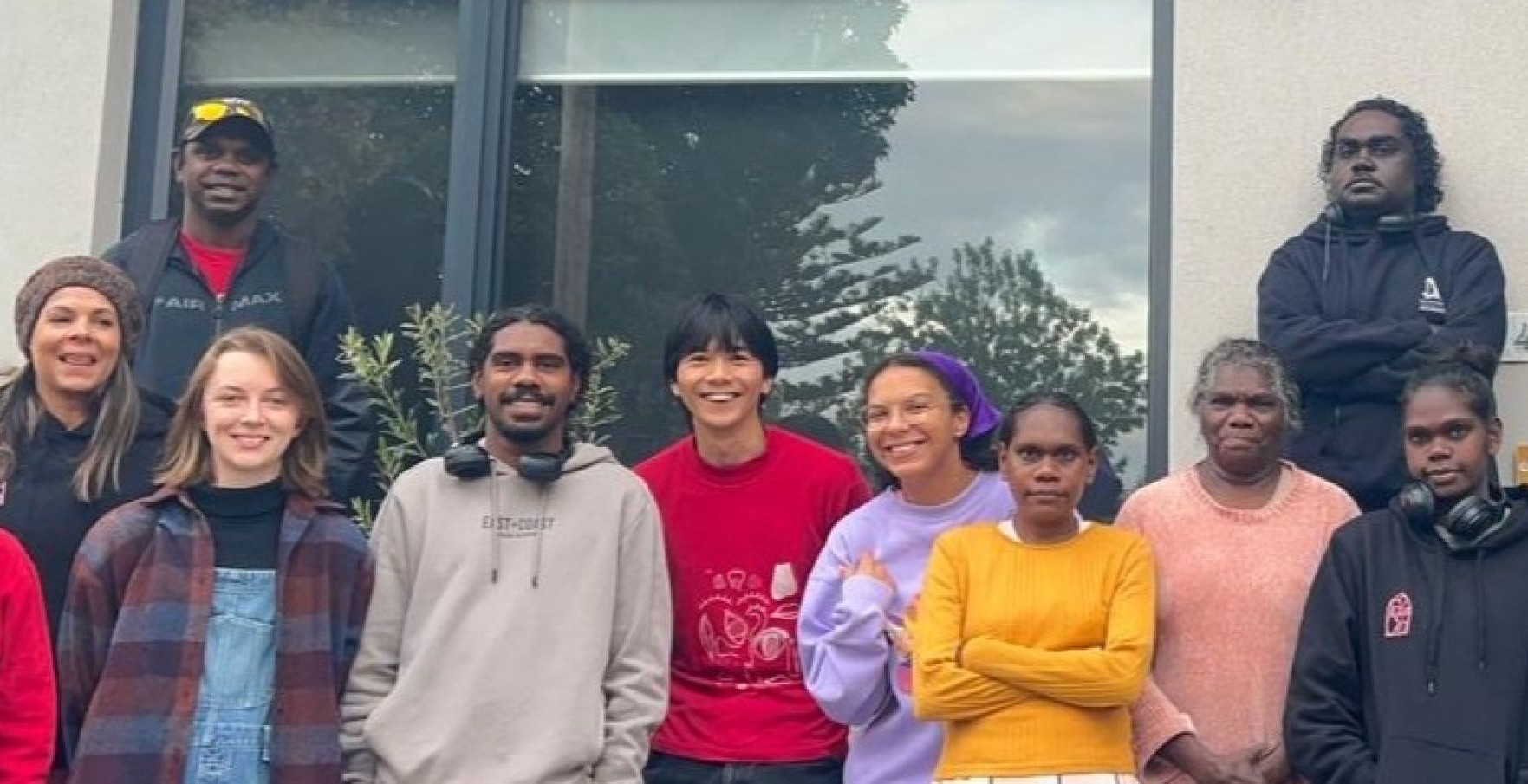
Yolŋu educators joined staff and students at Sydney Road Community School in Brunswick. Left to right, they are: Djiman Yunupiŋu, Lyv Knee, Romiritj Bromot, Charlotte Tinker (SRCS student), Bianca Sargeant (SRCS Educator), Bamuruŋgu Munuŋgurr and Gathapura Munuŋgurr. PHOTO: Supplied
This is what Yolŋu call Ba la ga lili – to give and take.
Creating Djambatj Dhukarr
Three years ago, a new chapter, Djambatj Dhukarr – the Road to Excellence, was launched.
A Yolŋu-led professional learning pathway created by Professor Yalmay Yunupiŋu, senior educators, the Yambirppa school principals and the Yirrkala and Homelands communities.
Each year, Yolŋu educators from the schools who study through the Community-Based Aboriginal Teacher Education (C-BATE) program travel to Melbourne to experience Melbourne schools.
This includes Newlands Primary – a Spanish bilingual school and the Sydney Road Community School in Brunswick, a secondary school.
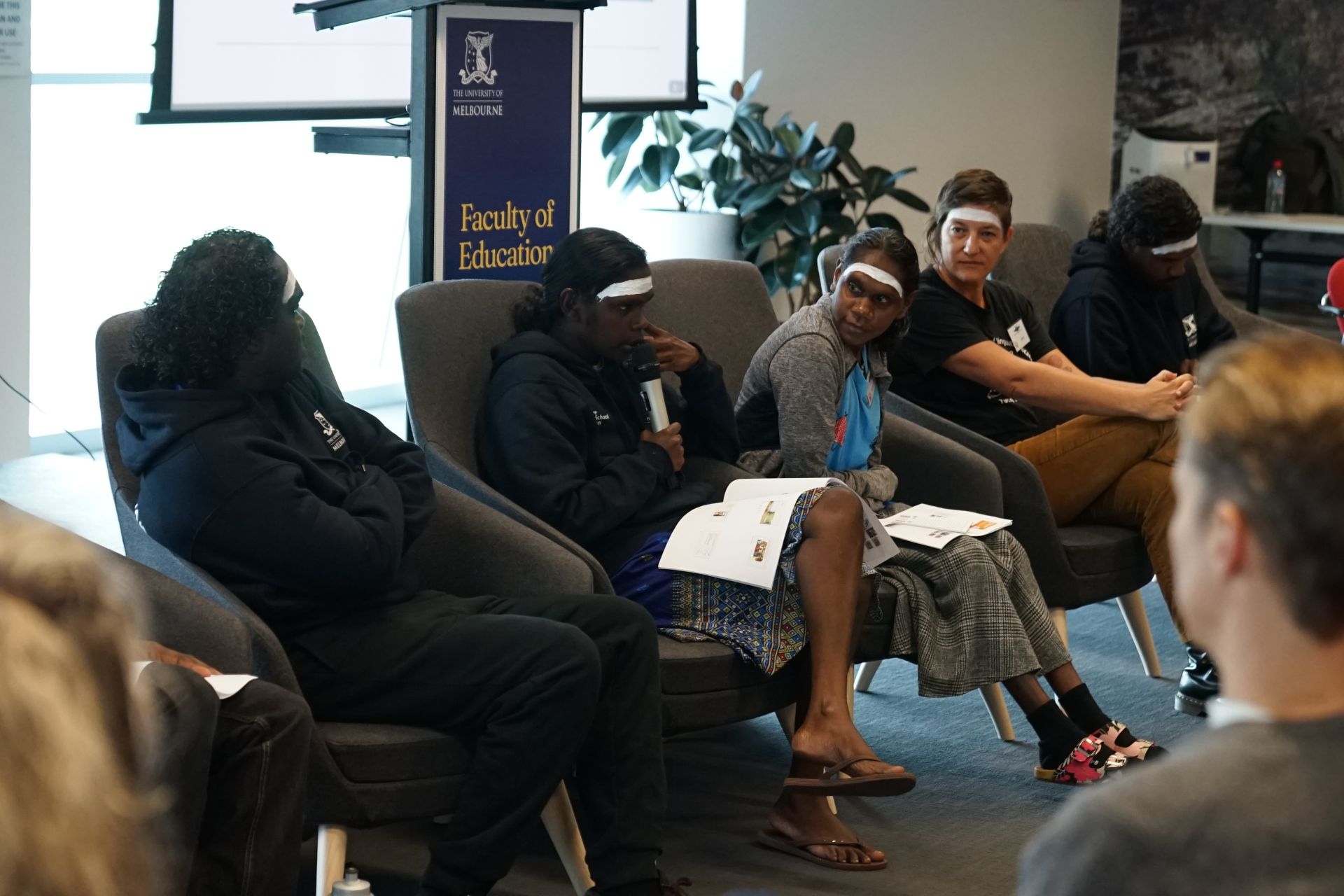
Yolŋu educators share knowledge at a panel event in Melbourne. From left to right, they are Djiman Yunupiŋu, Mulmulpa Munuŋgurr, Bamuruŋgu Munuŋgurr and Rebecca Arbon. PHOTO: Supplied
Spending a week in the schools allows the team teachers to observe other wellbeing practices and share information about their own cultures and community life.
They also presented a panel at the university to share their own knowledge and expertise in an educational context.
Our teachers travel to look, listen, question and then come home stronger for their families and school communities.
This strength is more than skill-building; it is about identity, belonging and the authority that comes from walking confidently between Yolŋu and Western worlds.
Djambatj Dhukarr is not about leaving Country to learn – it's about carrying Country with you.
What real reciprocal learning looks like
During last year’s program, one Yolŋu educator observed and participated in a wellbeing activity at Newlands Primary. Weeks later, she brought it into her planning meetings back in Yirrkala.
It was not a symbolic gesture; it was practical, grounded and completely aligned with Yolŋu priorities.
“Seeing bilingual teaching and wellbeing approaches in Spanish helps Yolŋu educators see new possibilities,” C-BATE coordinator Rebecca Arbon said.
“It was wonderful to see Yolŋu teachers sharing their rich cultural knowledge and learning new ideas from their placement,” C-BATE teacher Lyv Knee said.
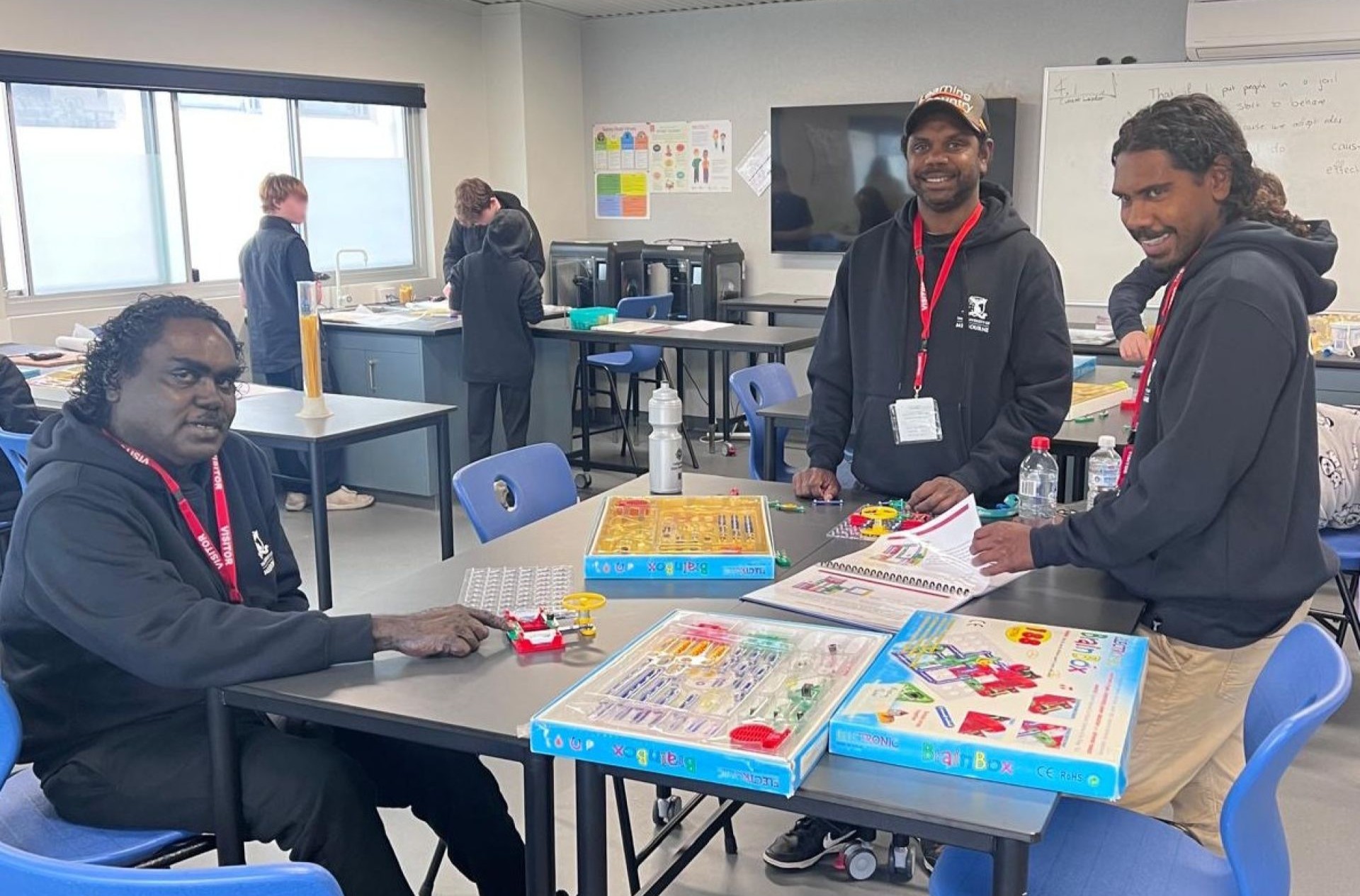
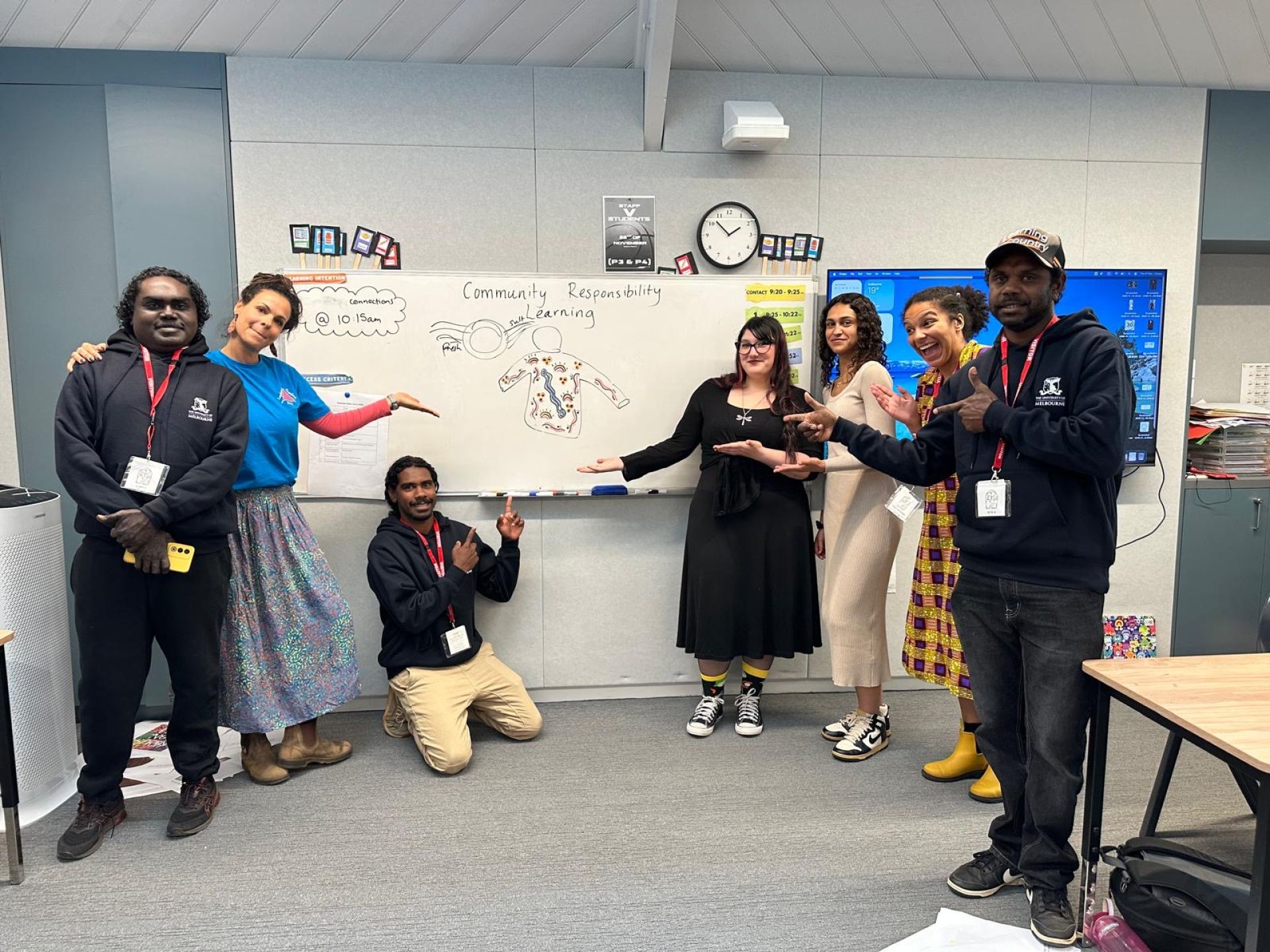
Yolŋu educators Djiman Yunupiŋu, Gathapura Munuŋgurr and Romiritj Bromot join a Sydney Road Community School classroom. PHOTO: Supplied
Yolŋu team teachers expressed similar insights: Gathapura Munuŋgurr, a team teacher at the Makarraṯa School, was at the Sydney Road school and was interested in engagement strategies.
“I want to bring back ideas for supporting disengaged students, but in ways that keep their identity strong,” he commented:
Similarly, Mulmulpa Munuŋgurr, a team teacher at Yirrkala School, said: “I noticed how the teachers gave every child a voice. That reminded me of gurruṯu [kinship system] and showed me new ideas to work with children.”
This is two-way learning in action, knowledge flowing back and forth, strengthening everyone involved.
A long history of shared work
Djambatj Dhukarr exists within a much longer relationship.
Since 2010, the partnership has supported extended pre-service teachers’ practicum placements, collaborative bilingual curriculum work and the digitisation and archiving of the Literature Production Centre (LPC) at the Yirrkala School, including 50 years of bilingual teaching materials and other artefacts.
This project is managed by Associate Professor Kristen Smith and the Indigenous Studies Unit.
Across all of this, Yolŋu priorities have shaped the work because, as Professor Yalmay Yunupiŋu says: “It is our knowledge, our children, our Country. The university walks beside us, and we build relationships based on reciprocity and trust."
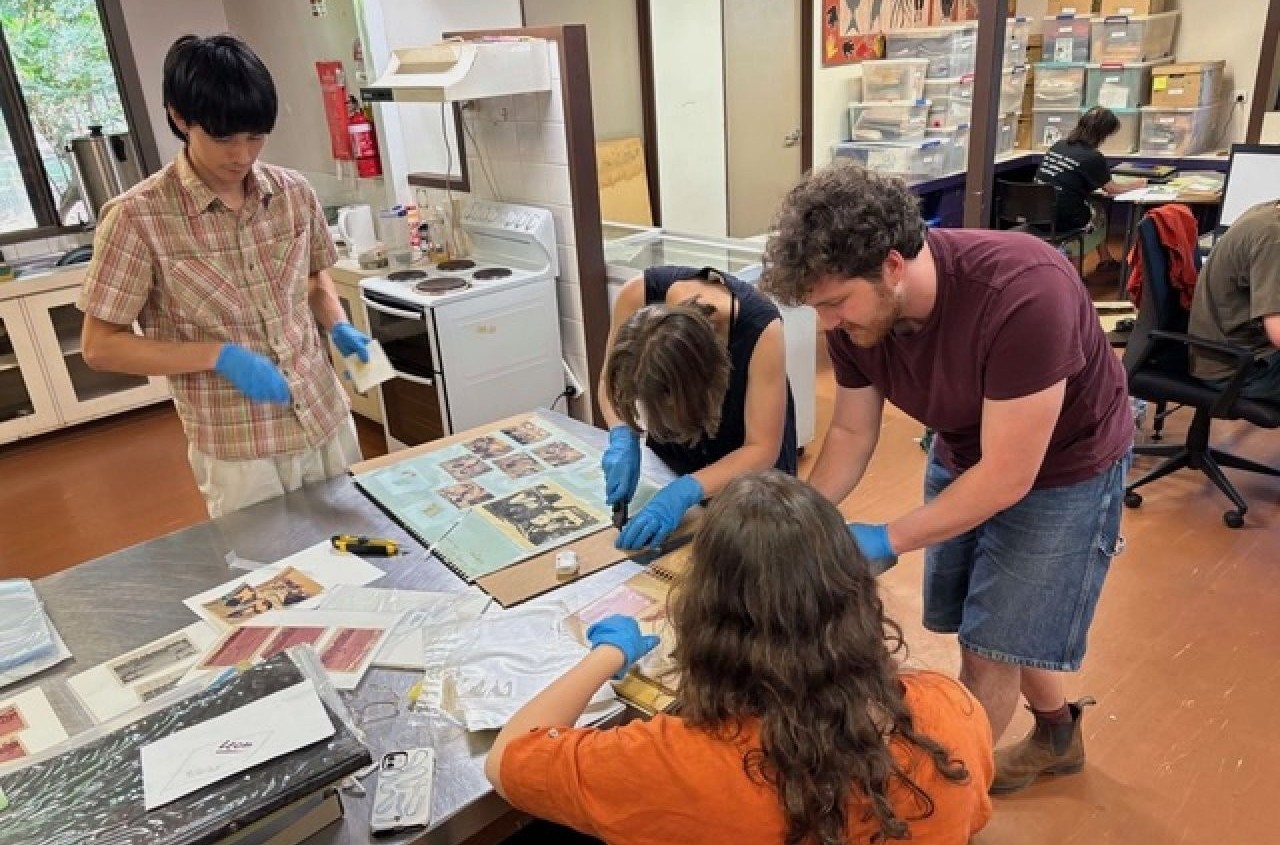
Digitisation and preservation of a nationally significant archive housed at the Yirrkala School’s Literature Production Centre (LPC). PHOTO: Supplied
Why this pathway matters now
Professor Marek Tesar, Dean of the Faculty of Education, reflected on this year’s gathering:
“Djambatj Dhukarr is a pathway, not a destination. It asks us to walk with humility and courage. Education becomes something different when knowledge moves in both directions.”
For future teachers, Djambatj Dhukarr opens a door into Yolŋu education as a sophisticated, relational and place-based system, not a 'perspective' to be added to a Western curriculum, but a world of knowledge in its own right.
Yolŋu educators’ authority is affirmed, and their leadership on Country is strengthened, where many must remain due to family, cultural and community responsibilities.
For education here in Australia, the program models what respectful collaboration between universities and Indigenous communities can look like.
Djambatj Dhukarr is a living pathway, walked together
Fifteen years into this journey, we know that everything we have achieved has been guided by Yolŋu educators and leaders who have shaped programs and people.
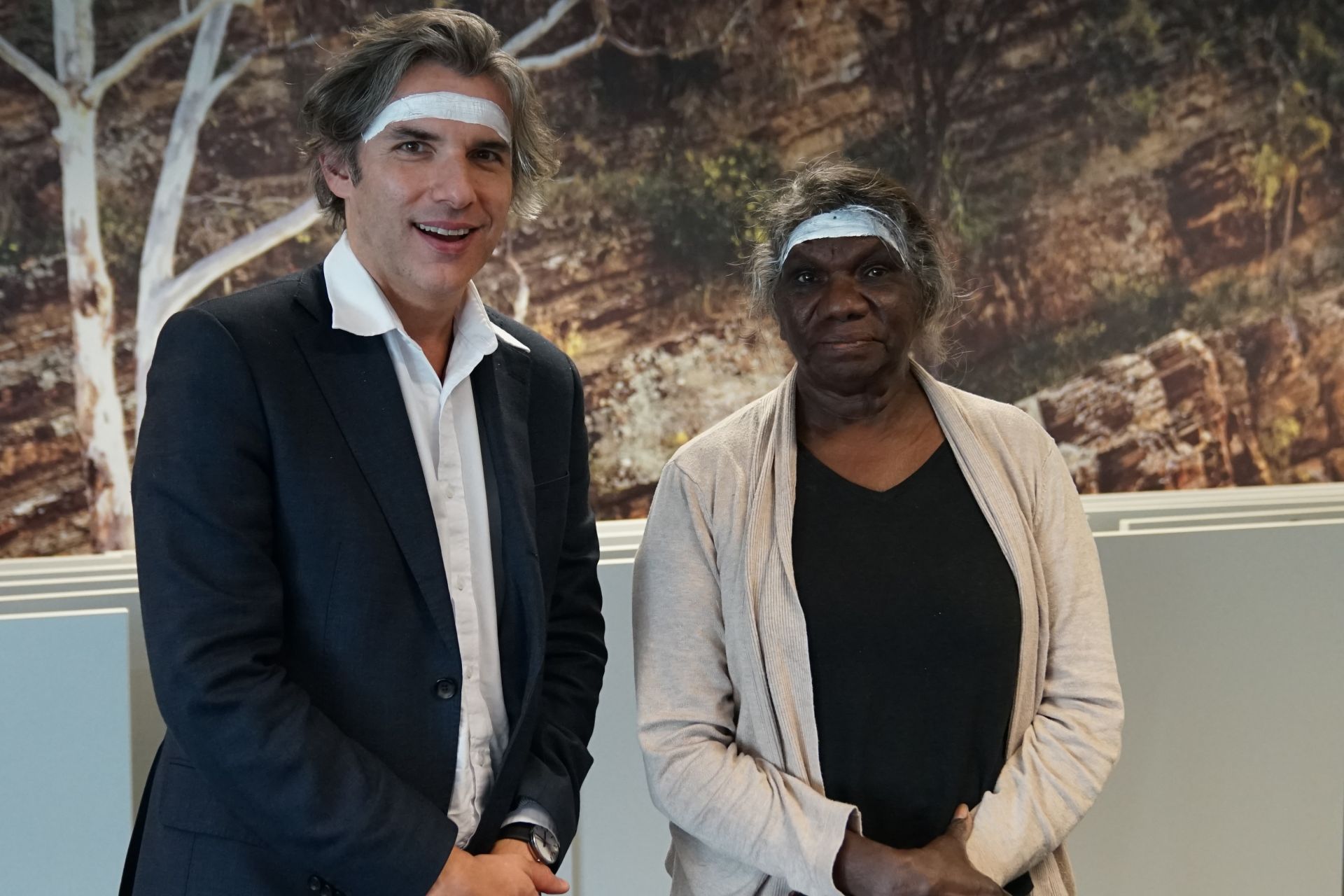
Professor Marek Tesar and Professor Yalmay Yunupiŋu at the panel event in Melbourne. PHOTO: Supplied
This road belongs to our young teachers, our elders, our families and to those who choose to walk with us. Djambatj Dhukarr is about walking with strength in both worlds.
Together, we will continue to walk this road, carrying knowledge, strengthening leadership, supporting Country and shaping the next generation of teachers in both Arnhem Land and Melbourne.