Bolstered compliance and cuts to ‘safeguard’ funding for students with disability, for starters.
Currently teachers use their professional judgment to determine adjustments that help students with disabilities access education, but the Government is clamping down on what it calls ‘inaccurate’ claiming, saying it will work to close policy and regulatory loopholes and reign in funding.
In 2026, of the estimated $33.3 billion provided in federal recurrent school funding, Student with Disability loading makes up an estimated $5.1 billion – funding designed to help schools meet the needs of students who require ‘extensive, substantial and supplementary levels of adjustment due to disability’.
The Budget allocates $40.4 million towards measures to prevent the ‘inappropriate’ allocation of disability funding to schools.
This ‘integrity work’ will be done in consultation with state and territory governments, and is set to involve:
- Improving school compliance activities to identify where funding may be over-allocated or accumulated.
- Improving the data collected through the Nationally Consistent Collection of Data on School Students with Disability (NCCD).
- Clarifying the NCCD guidelines to ensure adjustments are targeted, effective and meet obligations under the Disability Standards for Education, as well as funding requirements.
The Government says these measures will save $463 million in misappropriated student disability funding over four years and will “provide greater transparency for funding for the non-government schools”.
“This budget focuses on core priorities that build on the Government’s agenda of reforms to ensure no one is held back and no one is left behind, and recognises the need for responsible fiscal management to ensure sustainable supports,” the document states.
AEU Federal President Correna Haythorpe has expressed concern over the cuts to school disability funding.
“There are more than 200,000 students in the public school system who have been assessed as having a disability, yet receive no disability loadings.
“At the same time we have seen disability funding to private schools grow by $1.4 billion from 2020 to 2024,” she said.
“A recent AEU survey of public school principals found they were re-allocating $147,000 per school to support students with disability from other areas of the school budget because of unmet need.
“Public schools educate the overwhelming majority of students with disability, yet too many schools are being forced to stretch already limited budgets to meet growing need…”
The union leader argued that any budget savings in the disability sector had the potential to increase budgetary and workload pressures in public schools, and that the AEU will be seeking further details about these measures.
Independent Schools Australia CEO Graham Catt has also flagged concern over the changes.
“The independent sector supports some of the most vulnerable students in Australia with complex needs, including through more than 100 Special Assistance Schools,” he said.
“We support accountability and proper oversight of public funding, but it is important that any compliance measures are carefully designed and do not create unintended consequences for students genuinely requiring additional support.”
Strengthening STEM initiatives in schools is another key focus of the Budget for education.
Some $5.9 million will go towards extending STEM initiatives to support better learning outcomes, including $1.5 million to Let’s Count, $1.2 million to CSIRO STEM Professionals in Schools, 1.8 million to Australian Academy of Science for the delivery of school maths and science programs, and $0.7 million to Little Scientists and the Curious Minds Program.
While the drive to engage students in STEM has been highly publicised and absorbed a huge focus both in recent policy initiatives and within schools, the arts has been deprioritised and essentially left to wither away, two researchers recently warned.
Declaring a ‘polycrisis’ is bearing down on our arts and creative education, recent research by Professor Sandra Gattenhof from Queensland University of Technology and Dr John Nicholas Saunders from Australian Catholic University have sounded the alarm.
Flagging the significant year-on-year decline in the number of Year 11 and 12 students opting to pursue arts subjects, the pair have argued that Australia is very much at risk of becoming an artless country.
Investment in school arts education does not feature in the Budget.
A total of $113 million will go towards a range of First Nations education programs which aim to help Indigenous students thrive academically and culturally.
This includes $55.5 million to the Clontarf Foundation to support up to 12,500 First Nations boys and young men to continue their schooling and complete Year 12.
Some 23.8 million will extend Indigenous Boarding Provider Grants over the 2027 calendar year, helping up to 50 boarding providers take in 2,500 First Nations students from remote and very remote communities.
Catt said Indigenous boarding schools would be relieved to see the extension of grants, following concerns about funding uncertainty and strong advocacy for continued support.
“Tonight’s announcement is a good first step, but it is challenging for schools to plan effectively when they are constantly facing funding cliffs and short-term extensions.
“These communities deserve a sustainable long-term funding model that allows schools to plan, invest in staff and continue supporting students with confidence,” Catt said.
Meanwhile, the Budget commits $5.6 million to establish a new Teaching and Learning Commission, bringing ACARA, AERO, ESA and AITSL together under the one roof to “reduce duplication” and “improve coordination”.
“This would allow for greater co-ordination between curriculum, teaching, assessment, research, and reporting, with the whole being greater than the sum of its parts,” the Government reasons.
Any decision on the new Commission requires the agreement of state and territory education ministers.
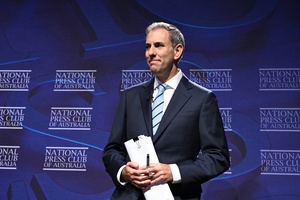
Treasurer Jim Chalmers has admitted changes to negative gearing and the capital gains tax will be contentious among voters, as Labor begins its sell of tax reform from the budget.
While Chalmers says 75,000 young Australians will be able to buy their first home as a result of changes, it could take up to a decade for negative gearing rates to come down.
The Government has also promised a $250 tax offset for all Australians earning a wage as a sweetener for the tax changes, but this won't hit workers’ pockets until July 2028.
“These changes are contentious. There's no use pretending otherwise, but it's the right thing to do," Chalmers told ABC Radio today.
Shadow treasurer Tim Wilson said young Australians were being “kneecapped” by the tax changes.
“As they're saving for a deposit, they're going to pay higher rents,” he said
“Then the government is going to apply more taxes on their first home deposit if it's invested, and they're going to then go on and build fewer homes, which means that it's going to be less likely young Australians will be able to buy one.”
Speaking with Peter Stefanovic on Sky News last night, Chalmers claimed the Budget was ‘historically responsible’.
“…We’ve got $26.1 billion net improvement, the bottom line gets better in every single year of the forward estimates, and debt comes down in every year of the forward estimates.
“We get spending as a share of the economy from up near 27 per cent down near 26 per cent by the end of the forward estimates…
“It’s the kind of responsible economic management which would be unrecognisable to our predecessors – getting the debt down, getting the deficits down, saving more than we spend.
“These are all the essential elements of a budget which any objective observer would conclude was very responsible, particularly by the standards of the last couple of decades,” Chalmers said.