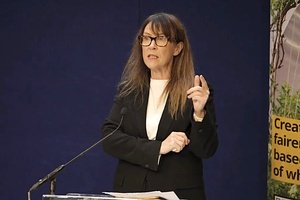


The study, led by Dr Nicole Martin from the University of Manchester alongside Dr Ralph Scott from the University of Bristol and Dr Roland Kappe from University College London, uniquely tracked thousands of English students from adolescence into adulthood.
It revealed that studying arts and humanities subjects such as History, Art and Drama during their GCSEs makes students more likely to support socially liberal and economically left-wing parties like the Green Party or Liberal Democrats.
In contrast, students who studied Business Studies or Economics at GCSE level showed increased support for economically right-wing parties like the Conservative Party.
Technical subjects also influenced views, leading to greater support for socially conservative and economically right-wing parties.
Crucially, these relationships between subjects and political support were found to persist into adulthood.
“Our research demonstrates that education’s influence on our political beliefs is far more nuanced than simply the level of education attained,” Martin said.
“The specific subjects that young people take in school - particularly at GCSE - plays a profound role in shaping their political compass.
“This might be because of the content, or because of different peer groups or role models.”
Published in the journal West European Politics, the research marks the first time such effects have been observed within compulsory secondary schooling, moving beyond studies that traditionally focus on university education.
By combining English administrative school records with a unique panel of adolescents, the study provides compelling evidence on the importance of secondary school subjects for political socialisation during the ‘impressionable years’ of adolescence.
“These findings are vital for understanding the evolving political landscape, and they highlight the significant - and often overlooked - impact of curriculum design on future generations of voters,” Martin says.
Commenting on Reddit in response to the research, one reader said they think this provides a good argument for why a well rounded education is required.
“Not just exposure to values or information you are self selecting from, but exposure to different peer groups to reduce polarisation,” they posted.
“Unfortunately there will likely always be a double empathy problem, because one side over-functions it and the other under-functions. I’m not sure how that can be constructively addressed.”
Another Reddit responder said they believe exposure to the humanities makes it hard to maintain conservative ideology, whereas in technical education one can really insulate themselves and not feel challenged if they don’t want to be.
“There’s definitely radical threads to follow within technical education but that’s something you’re choosing to go down due to beliefs you’re likely bringing in yourself,” Special-Garlic1203 said.
“Even doctors who know a policy doesn’t make sense will not necessarily shift politically as a result.
“I think humanities education does more centrally to change the way you view humanity.”
Another on Reddit said they think it’s far more likely that right wing people just don’t like the humanities.
“Anecdotally I know many left wing people in STEM/business, but zero right wing people with an arts/media career. Not a single one.
“The right leaning people I know tend to not engage with humanities in general, aside from TV, movies, and video games.”
The study authors said the research represents a valuable addition to emerging literature on the political effects of education but also to the political socialisation literature more generally.
“This focus on variation in the nature of the education that adolescents experience also moves beyond studies that estimates the effects of ‘more education’, and instead provides support and additional nuance to previous research...”
“...our main contribution ... is to emphasise the importance of understanding the diversity of education in evaluating its political effects, and not to treat it as a monolith.”