


The commitment, which has been strongly criticised by some university academics, forms part of the Coalition’s three-pronged plan to address what Leeser calls the ‘dire’ state of poor behaviour and disruption in Australian classrooms.
Speaking at an event hosted by The Centre for Independent Studies (CIS) last week, Leeser called for a national approach to behaviour in schools, citing data from three international assessments – PISA, TIMMS and TALIS – as well as a recent CIS study, to emphasise just how bad the scene had become.
“These measures show that the level of classroom disruption and behaviour in Australia is among the highest in the world and that this has a massive impact on learning
“So I am calling for a national approach to behaviour in schools.
“Because, put simply, regardless of where you are, if the kids aren’t on task, they’re not going to be learning.
“If the classroom is disrupted, it won’t matter how good the curriculum is, or how good the facilities are,” Leeser said.
It’s for this reason that the Coalition’s policy for school education has improving behaviour and the classroom environment as a key pillar, he added, calling behaviour a “fundamental determinant of learning”.
“And if we want to restore excellence to Australian schools, we need not only to be working from the best available evidence, but also embedding behaviour as a central consideration at every level – from initial teacher training, to professional standards, to support for schools, to culture-setting across the broader community, and as a priority for our national education institutions,” Leeser concluded.
Taking aim at ITE, and insisting that he was not ‘beating up on teachers’, the MP argued that for years now far too many educators had been let down by their training and had not been properly equipped to manage the classroom.
Restoring the link between funding and performance here is clearly necessary, he indicated – especially as mandated core content appears to be patchy.
“… last week we had the revelations, reported by Lucy Carroll, that after three years and despite the assurances to the contrary, some universities are discouraging explicit teaching, and some universities are using the discredited 'whole language' approach to reading instead of phonics.
“Institutions which resisted explicit teaching were nevertheless marked as having teacher training of ‘sufficient’ quality.”
We don’t really know how widespread the problem is either, Leeser flagged.
“Because of the 280-odd teacher education courses across the country, which train between 15 and 17 thousand teachers every year, ITE Quality Assurance Oversight Board only looked at 16 of them.
“It’s quite shocking really.
“If that’s the approach to phonics and pedagogy in the universities, what confidence do we have in their ability to train teachers in classroom management?”
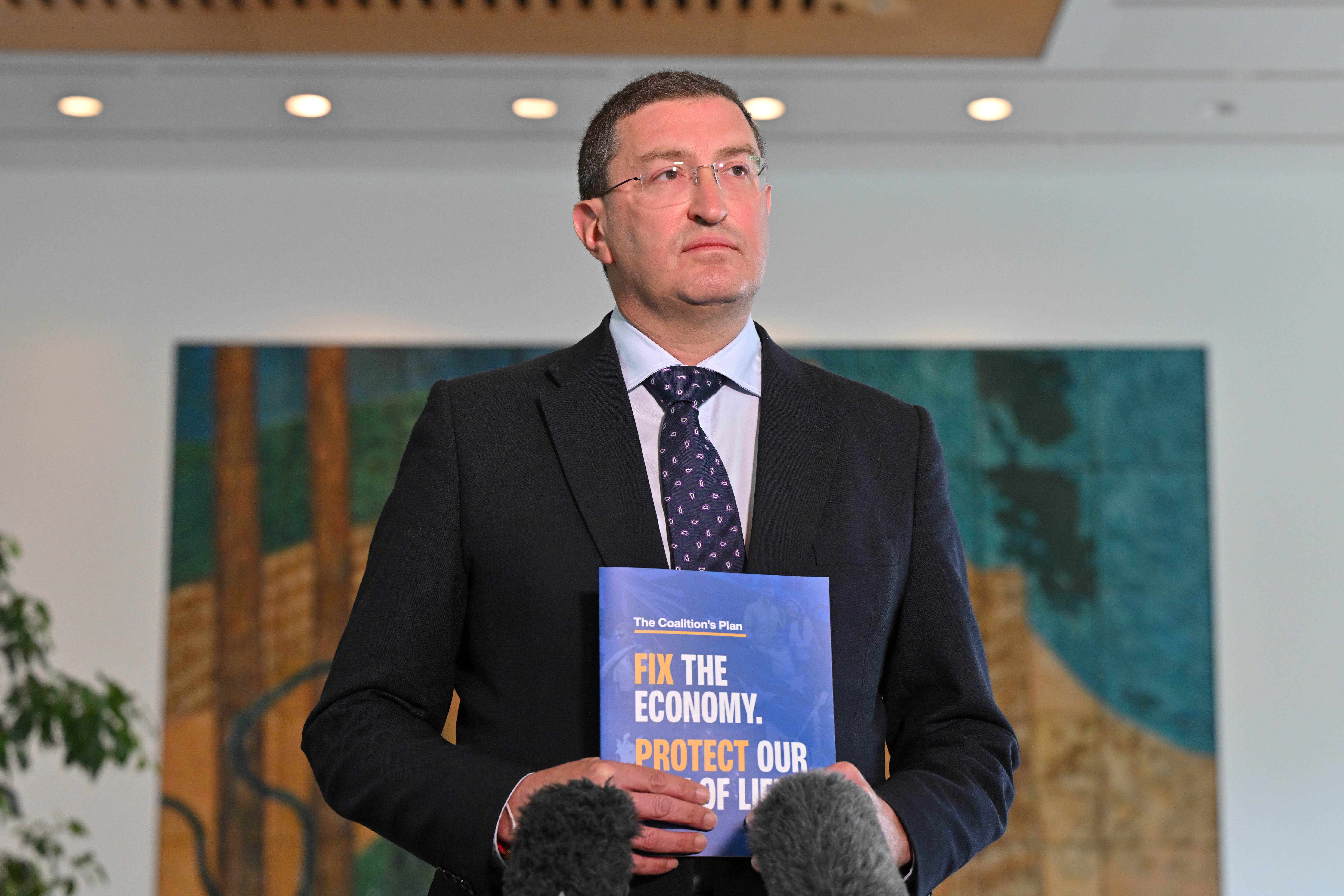
“Let the message go forward to the universities: no phonics no funding,” Shadow Minister for Education Julian Leeser says.
He queried why universities are being funded when they do not meet the minimum ITE standards that all Education Ministers have agreed on.
“Why are we allocating them Commonwealth Supported Places (CSP) which are paid for by the taxpayer?
“What’s the incentive to improve – particularly in the managed growth era, where universities no longer compete to attract students?” he implored.
Leeser said it was time that CSPs were allocated based on performance, as per the QITE review recommended some five years ago.
“This can be done tomorrow through a direction to the ATEC around the preferential allocation of Commonwealth supported places to universities that effectively implement content around behaviour management and other core skills,” he elaborated.
Leeser eluded to a broader resistance to comply amongst university heads.
“And I’m open to other measures too – like beefing up the ITE Quality Assurance Oversight Board, or establishing a National Inspector of ITE to stop the university leaders from weaselling out of change,” he added.
“…Let the message go forward to the universities: no phonics no funding.”
But Dr Reid O’Connor from The University of Sydney has hit back at Leeser’s plan, arguing that if we are serious about improving classroom behaviour, “we need to invest in preparing and supporting teachers, not threaten to defund the universities training them”.
“Universities should absolutely be accountable for preparing teachers to manage classrooms effectively. But simply requiring every university to teach particular behaviour management strategies doesn't mean graduates will know how to use them effectively in real classrooms,” O’Connor said.
“Defunding teacher education programs risks reducing the very capacity we need to address teacher shortages and strengthen the profession.”
Weighing in on the measure, Professor Murray Print, also from The University of Sydney, warned funding penalties might be a ‘blunt instrument’ when there are other ways to strengthen teacher preparation and bolster outcomes in schools.
There is merit, however, in ensuring ITE offers graduates more practical training in classroom management, particularly given longstanding concerns from new teachers who report needing more prep in this area, Print noted.
Commenting on LinkedIn, Ryan Shave, a former education lecturer and tutor at The University of Melbourne, said having worked in ITE, “I know how difficult it is to operate in this space. There are so many intangibles that make all the difference in our classrooms, yet they can be hard to teach or replicate”.
Leeser also laid out plans for a national survey of student behaviour to run across all jurisdictions and all sectors, saying there currently is no consistent, reliable measure of classroom disruption and behaviour that provides an evidence base on which we can target and scale reforms.
“There’s a basic truism that you cannot manage what you cannot see. And if you put it a little more forcefully: what is measured is managed.
“The basic point is that if we are going to improve behaviour in our schools, we need a reliable evidence base," he said.
Leeser said he suspected the national survey will confirm some of the trends we are seeing in the international data:
“...that our classrooms are disrupted; that it’s both a learning issue and a safety issue; that young women in the teaching profession are often particularly targeted; that different schools in different areas will have different needs; and that in too many cases behaviour management is inadequately taught in Initial Teacher Education degrees.
“But until we can put some numbers around it, we are hamstrung in designing effective policy interventions..." he noted.