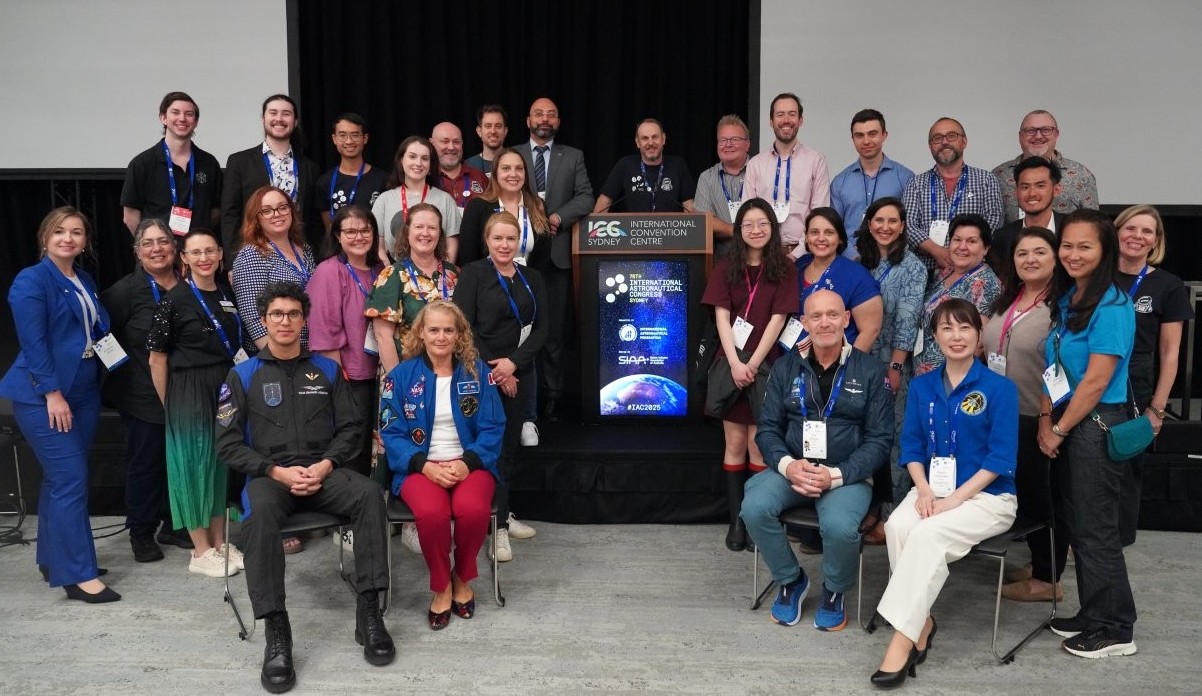
The launch of the Aldrin / Andy Thomas Ambassador Program will “be a launchpad into world-leading professional development, inspiring the next generation of students to reach for the stars,” according to NSW Department of Education Secretary Murat Dizdar, who announced the initiative during the International Astronautical Congress (IAC) 2025 in Sydney.
“It’s about building bridges between countries, institutions, and classrooms,” Dizdar said.
The program is a joint venture between the department, University of Sydney’s Sydney Academy of Teaching Excellence (SATE) , the Andy Thomas Space Foundation (ATSF), and the Aldrin Family Foundation – founded by the family of iconic moonwalker Dr Buzz Aldrin.
Professor Scott Sleap has driven the project, which has grown since the educator’s visit to the United States as part of a Churchill Fellowship he won in 2022.
Actively involved in the space industry, Sleap advises both the NSW Government and the Australian Space Agency, and alongside Professor Eddie Woo and Professor Philip Cummins at SATE, is a leader in professional learning and teacher development.
In 2023, Sleap dedicated two months to studying space and STEM education outreach, and workforce development in the States, collaborating with organisations like NASA, Lockheed Martin, NSF, National Space Council, and the White House.
“The Fellowship is what set a lot of this up, and when I was in North America at NASA and the White House, I got to speak to a whole range of people in the space industry," Sleap tells EducationHQ.
“The program, to a large extent, has been borne out of going over there.”
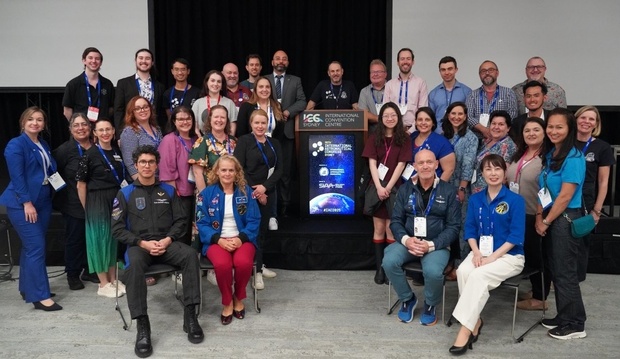
The Australian Space Curriculum Collaborative (ASCC), a four-day professional learning initiative, has just concluded in Sydney.
It brought together around 35 leading educators and preservice teachers to co-design open-access, curriculum-aligned space education resources aimed at building expertise in STEM and space science teaching across Australia.
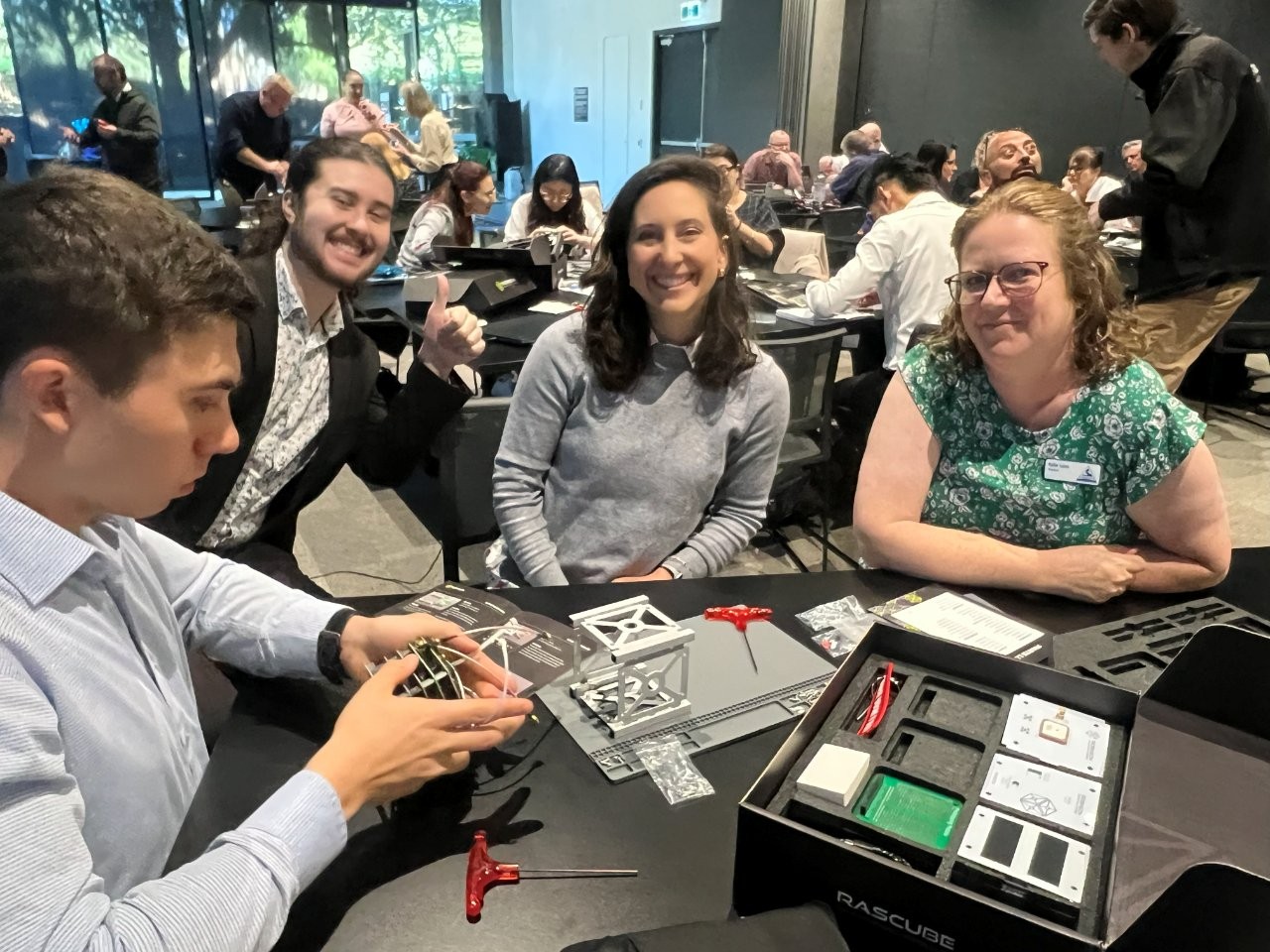
Teachers chosen as Aldrin / Thomas Ambassadors will receive three years of exclusive professional learning, international networking opportunities and a chance to co-develop curriculum with global partners.
“Basically, the whole reason we’re using space is it’s a way to get young people engaged in STEM,” Sleap says.
“The Aldrin Family Foundation, and Dr Andy Aldrin (Buzz’s son), say from their research that young children love dinosaurs and they love space – but they tend to grow out of their interest in dinosaurs and space remains with them.
“So we find through the programs that we do in the department, that if there is a space aspect to it, students become more engaged.”
Sleap says the department also has found that there’s less of a gender divide when it comes to interest in space, particularly when we’re talking about space in terms of doing good.
“So areas like looking at how we can improve the environment, looking after climate change and how space and satellites can be used to detect bushfires and help with rescue and things like that.
“So we put space in a very positive light in that way as well, so that students see space for good.”
Teachers chosen as Aldrin / Thomas Ambassadors will receive three years of exclusive professional learning, international networking opportunities and a chance to co-develop curriculum with global partners.
Ambassadors will also join the Aldrin Family Foundation’s existing US Ambassador network, forming a unique trans-Pacific community of space educators committed to inspiring students through STEM.
“The Aldrin Family Foundation’s ambassador program has been established for some time, and it’s all about providing outstanding teachers with opportunities to collaborate, develop curriculum resources within their group,” Sleap says.
Indeed, he says, the overriding purpose of the program is to create curriculum.
“We want to engage more students in STEM, so we want these teachers to work together, but we also to work with major organisations.
“So we’ve already worked with the CSIRO who launched their ‘space truck’ during IAC.”
The semi-trailer is part of a mission control vehicle which can be transported around the country to facilitate launches.
CSIRO also wants to run school-based programs so that when the space truck is not in use, it can be driven around schools across Australia to engage students.
“What we’re trying to do is connect these educators to opportunities like that, where they can write curriculum and materials that would be beneficial for the whole of Australia and other programs.
“We see our role as helping to facilitate that high-quality quality educational program. So teachers write good programs and resources, but for us they need to have that high level of quality assurance.”
Applications are open to teachers, school leaders and learning specialists right across the country who are actively engaged in delivering STEM or space-related programs in schools.
“The program is funded for seven teachers from around Australia, from every state and territory to participate,” Sleap says.
“There were more NSW people obviously at the ASCC than any other state, but we had representation from right across the country.
“We’re hoping in the future that this is just the first cohort that we will run potentially others in other states in the future.”
Sleap says part of his plan is to try to establish the NSW Department of Education as offering the highest standard of STEM education internationally.
“To do that, you have to be collaborative and you have to be open,” he shares.
“So we obviously want to celebrate the great stuff we do in NSW, we want our public school students to have the very best, but by providing these opportunities to other states and other areas, I think it really demonstrates our leadership and shows NSW public education in the best possible light.”