
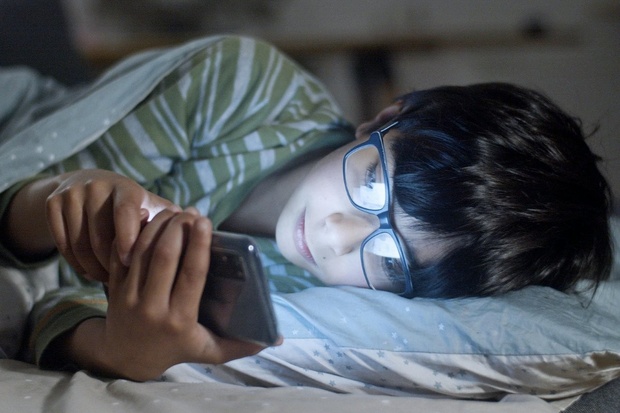
By age 14, almost 1-in-4 kids who had a smartphone at age 12 reported at least one eating disorder symptom, compared to fewer than 1-in-6 of kids who didn’t have a phone at 12.
Unsupervised smartphone use at an earlier age may increase exposure to appearance-focused social media during puberty, when they are particularly vulnerable, the researchers say.
Additionally, sleep disruption due to screen use could alter appetite and emotions.
The University of California research, published on Friday in the medical journal ‘JAMA Network Open’, is based on a comprehensive survey of approximately 9000 adolescents across the United States.
“Smartphones can put a world of appearance-focused content right into young people’s pockets, making them vulnerable to images and messages that promote unhealthy eating habits,” lead author Dr Jason Nagata says.
“It is important for parents to be aware that giving a smartphone is not just about giving a device. It can change a child’s access to various digital content.”
The study estimates that about 22 percent of children and adolescents worldwide show symptoms of eating disorders. The main difference between general eating disorders and severe ‘eating disorders’ depends on the severity and whether a person meets the diagnostic criteria.
Both conditions can involve behaviours such as excessive focus on food and weight, distorted perceptions of body size and shape, restricting food intake, or purging through vomiting or excessive exercise.
Using data collected from the ‘Adolescent Brain Cognitive Development Study’, a large and long-term study on the brain development and health of American children, Nagata and his team found that 70 percent of 12-year-olds had their own phones.
Of these, 24 percent showed symptoms of at least one eating disorder by the age of 14. In comparison, less than 16 percent of adolescents who did not have a smartphone at age 12 showed such problems two years later.
According to Nagata, this age is a very important time for physical and emotional development. Significant changes in the body and its shape occur in early adolescence, he says, “so it is natural for children to compare themselves to each other”.
“Before smartphones and social media, such comparisons were mainly among peers,” he says.
“But when you start comparing yourself to influencers posting curated, edited, and filtered photos, it can increase body dissatisfaction and low self-esteem.
“And this can become a risk factor for eating disorders.”

“When you start comparing yourself to influencers posting curated, edited, and filtered photos, it can increase body dissatisfaction and low self-esteem,” Dr Nagata says. “And this can become a risk factor for eating disorders.”
The study found that children who had smartphones at age 12 were twice as likely to link their self-esteem to their weight.
Similarly, they were 1.5 times more likely to try to control their weight by adopting methods such as eating low-calorie foods or exercising excessively.
Nagata says that while most major social media platforms set a minimum age of 13 to create an account, his previous research has showed that about two-thirds of children aged 11 and 12 had accounts on platforms like TikTok and Instagram.
“This latest study does not provide a magic solution on what age is appropriate to give a child a smartphone, however, if parents do give young children their own phones, they may need to adopt ‘extra safety measures’,” he says.
“For example, limiting the apps children can download and not allowing phones in bedrooms to make it easier to monitor their activity.”
The researcher says it is extremely important for parents to be involved in their children’s digital lives.
He suggests setting basic rules for phone use, openly discussing what children are watching online, and paying attention to any changes in their eating habits or conversations about their bodies.
Another global study of more than 100,000 young people last year, found that children who get their first smartphone before their 13th birthday are likely to end up with poorer mental health during young adulthood.
Using data on 18-24-year-olds participating in a global mental health study, the researchers compared a range of mind health factors with how early the participants received their first smartphone.
They say receiving a smartphone at age 12 or lower was linked to lower overall mental health, with this link strongest for suicidal thoughts, aggression, detachment from reality and hallucinations.
Much of this link to poorer mental health was explained by access to social media, cyberbullying, disrupted sleep and poor family relationships, the researchers add.
A team of experts from Sapien Labs, which hosts the world’s largest database on mental wellbeing, the Global Mind Project — where the data for this research was pooled from — called for urgent action to protect the mind health of future generations.
“Our data indicate that early smartphone ownership — and the social media access it often brings — is linked with a profound shift in mind health and wellbeing in early adulthood,” lead author neuroscientist Dr Tara Thiagarajan, the founder and chief scientist of Sapien Labs, said last year.
“These correlations are mediated through several factors, including social media access, cyberbullying, disrupted sleep, and poor family relationships leading to symptoms in adulthood that are not the traditional mental health symptoms of depression and anxiety and can be missed by studies using standard screeners.
These symptoms of increased aggression, detachment from reality and suicidal thoughts can have significant societal consequences as their rates grow in younger generations, Thiagarajan said.
“Based on these findings, and with the age of first smartphones now well under age 13 across the world, we urge policymakers to adopt a precautionary approach, similar to regulations on alcohol and tobacco, by restricting smartphone access for under 13s, mandating digital literacy education and enforcing corporate accountability.”
Several Australian studies and reports indicate that giving children smartphones before the age of 12 can negatively impact their development.
While the largest recent statistical studies on this specific age cutoff have originated in the US, Australian research institutions and government bodies heavily track these metrics and report clear developmental risks.