Led by former primary school teacher and PhD candidate Mesouda Laine from Monash University, the systematic review evaluated the impact of popular social and emotional learning (SEL) programs used across the country, including You Can Do It! Education, KooLKIDS Whole-of-Class Program, Health-Promoting Schools Approach, and Aussie Optimism Positive Thinking Skills.
Fifteen studies involving 7814 students were canvassed, with the programs found to have either zero or varied effects on children’s emotional distress, problem behaviour, and positive social behaviour.
Laine says she wanted to clarify what the evidence says about tested SEL programs – are they actually improving the skills they aim to?
There’s not always clear guidance about what social and emotional skills schools should be teaching either, she adds.
“The results showed that on the three outcomes I looked at, which were emotional distress, problem behaviour and positive social behaviour, the results are really inconclusive, they weren’t consistent.
“It would be too broad to say that the SEL programs that the schools use don’t work, that wouldn’t be true.
“But they didn’t [show] consistent positive gains or improvements…” she tells EducationHQ.

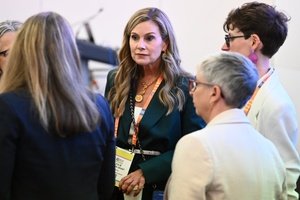
Phd candidate Mesouda Laine says bigger questions remain around how much responsibility teachers can take on when it comes to children’s social and emotional development.
Mixed impact on emotional distress
Of 15 studies that have assessed SEL programs impact on students’ emotional distress, most drew null or mixed results.
Furthermore, follow up analysis on one program (Aussie Optimism Positive Thinking Skills) that did see significant reductions in emotional distress symptoms, found these effects were not sustained over time.
Three other programs had mixed findings, while the remaining programs showed no statistically significant changes.
“Effect sizes varied from very small/negligible to large, but were often very small or unavailable, limiting interpretation of magnitude,” the study flags.
What about problem behaviours?
Of seven programs that target problem behaviours, two were found to have positive outcomes, although the effect sizes were generally tiny. Five showed no evidence of any improvements in students’ behaviour at all.
Positive social behaviour outcomes
The researchers looked at nine studies which assessed various programs’ impact on students’ prosocial behaviour, including their peer relationships and social skills.
Significant improvements were reported for three programs: You Can Do It! Education, KooLKIDS, and Health-Promoting Schools Approach, but the remaining six had no positive impact, with one significant finding pointing to increased peer difficulties rather than improved social behaviour.
Laine says she did not set out to create a ranking of what works and what doesn’t. It wasn’t a case of comparing apples with apples, she says.
There is also the possibility that evaluations of SEL programs might miss some of the benefits occurring.
“…in terms of just what we measure, it doesn’t always closely match what the program is teaching. So, for example, there might be a program that’s teaching children to recognise emotions, but the measure that we’ve used might be more of a symptom measure, eg. does the symptoms of problem behaviour decrease?
“So, there might be some misalignment there…”
A 2025 study looking at more than 18,000 Year 6 students in NSW found that formal SEL programs can work, finding students who received structured, evidence-based programs over three to four years had better social and emotional skills on a self-report survey than those who did not.
“Our research shows how programs teaching social and emotional skills can give young people fundamental skills to navigate learning and life beyond school. But implementation is patchy and not always based on evidence,” the researchers flagged via The Conversation.
For Laine, bigger questions remain about just how much responsibility teachers can take on when it comes to children’s social and emotional development.
“I think something that’s really important is that when social-emotional learning is taught, to ensure that it’s successful, is thinking about those implementation factors.
“So how often is it the content being taught, are you providing enough opportunity? Is it consistent, who is teaching it?”
She suggests the CASEL framework is a good starting point here.
“They use acronym SAFE: Is it sequenced? Is it active? ... Is it focused – has it got a clear intention? And is it explicit? Is the teacher actually targeting and defining specific skills and then leading through their instruction?
“Those types of things can really help in terms of how we can ensure a program will be more successful.”
Clouding the picture for our primary school and system leaders is the lack of a robust evidence base to draw upon when selecting from the plethora of student wellbeing initiatives on offer.
It’s critical that we get this right, Laine suggests, and the SEL isn’t left to slip away or be pushed down the priority list.
“Through teaching I just was able to see how closely children’s social and emotional development connects with their participation and learning and in their relationships at school, and how different teachers take different approaches really prompted my [research interest].”
She advises teachers to “be clear about the skills you want children to develop”.
“[Ask yourself if] your teaching approaches and the evidence are matching the goals that you want for [your students].”