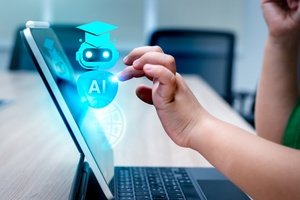


CSER Project Lead and Senior Research Fellow Dr Rebecca Vivian says her team is partnering with the global charity the Raspberry Pi Foundation to bring the Experience AI program to Australia.
“Teachers will have access to free teaching materials including lesson plans with speaker notes, slide decks, videos, student activities, and assessments, while students will get to experience cutting-edge AI education tools and classroom activities to demystify how AI systems function in student-friendly ways,” Vivian says.
“Our Project Officers will help teachers upskill and implement the Experience AI resources in alignment with the Australian Curriculum.
“It’s exciting to be piloting the Experience AI program in Australia, and joining 195 other countries in expanding AI education.”
CSER has been providing open, online professional learning in digital technologies, AI, cybersecurity and maths for teachers since 2014.
“AI is not magic, it’s underpinned by data and it’s making predictions, and so being really clear about helping people understand bias and how that comes into play, and how to evaluate what’s being generated by AI, and how they could use AI in the best possible ways is important.
“There’s lots of content and the resources through Experience AI has modules, so we’re looking at how we build those foundational understandings and skills, and we get teachers involved in that hands-on learning, so they’re testing and exploring the tools that they would be using with their students.
“That’s really important in building their confidence, so then they have that confidence to go into the classroom as well.”
Significantly, the program is open to teachers of all year levels with no assumption of any prior knowledge.
“We start from the foundations, but then we introduce layers so that teachers who do have that foundational understanding still come in and [are] able to take away a lot of new things and new ideas to use.
“This is a great program for even early primary teachers who are thinking, ‘what is AI, what does it mean?’ And then teachers can even work with us in our project offices to think about how they might introduce it at different year levels as well.
“...schools are now introducing AI technologies and it’s even thinking about what kind of data you share and how to think about data and privacy for students and for yourself as a teacher as well.
“So I think all of that is quite important regardless of the year level.”
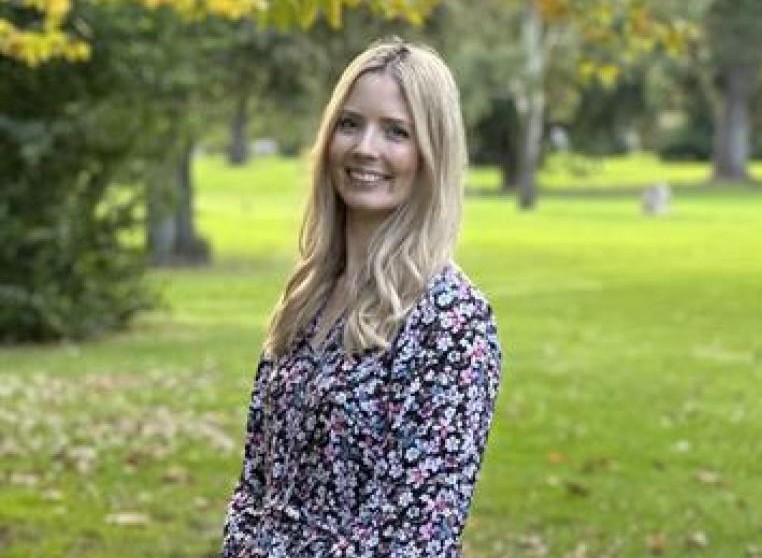
Dr Rebecca Vivian says the Experience AI program is grounded in rigorous research, with free teaching materials including lesson plans, slide decks, videos, student activities, and assessments that introduce students to the foundations of AI.
Teachers can take part on an individual basis through any of CSER’s online workshops or face-to-face events, or can indicate their interest in upcoming events.
“Our online courses are typically self-paced and online. This particular program is delivered by project officers who work directly with the teachers.”
Complemented by CSER’s broader digital technology initiatives, including free online MOOCs and the National Lending Library of classroom tech kits, teachers’ professional learning in the program involves six hours of interactive workshops and webinars, broken into two three-hour sessions.
Teachers receive a certificate upon completion of the program.
“We’re being provided with the funding to be able to deliver that hands-on experience, that close workshop, working alongside teachers, helping them answer questions that they might have and think about their classrooms and how to apply with their students.”
As a CSER project lead and senior research fellow, Vivian is in a good place to gauge where we’re at and where we’re headed in terms of AI in our schools and the implications of it.
“We see the importance of learning about AI now as so important for our students’ futures,” she shares.
“They’re going to be the ones who are the AI innovators and they’re going to be the ones using and developing AI across all the different roles that they might go into.
“We don’t know what those careers will look like or what work looks like, but it’s so important that we’re building those fundamental skills, the digital skills now in the classroom so that we can prepare students for using the technology in their careers and so those skills can evolve.”
The expert says it’s really about building students as learners alongside these technologies as well - the self-regulation, the ability to think about using technologies innovatively and building their skills to be those innovators.
“There’s a great opportunity in Australia and we’ve seen a lot of conversation around being able to embrace the AI opportunities for economic benefits as well, and so we really want to see the skilled workforce building up.
“It’s thinking about these technology careers, and it’s not just about directing students into AI careers, it’s about building skills with technology and digital skills for all careers.
“Think about what nursing and medicine and architecture, game design looks like in the future. They will probably all need these kinds of skills.”
Vivian says CSER is always watching what’s coming up and thinking about ways it can help teachers in schools.
“We’ve been working in this space for so long now, we’ve got a team of passionate educators and we’re excited about emerging technologies and keeping up to date with what’s coming out and helping teachers embrace and build their skills in these new emerging technologies.”