

In a submission to a parliamentary inquiry looking into education attainment, the Australian Primary Principals Association (APPA) seemingly pushes back against the explicit teaching shift underway in school systems across the country, arguing that “there is no single pedagogical approach that is effective for every learner, every context or every stage of development”.
“While literacy and numeracy remain fundamental, young people require access to the full breadth of the Australian Curriculum and opportunities to develop critical thinking, creativity, collaboration, communication and problem-solving capabilities.
“Educational attainment improves when students encounter a curriculum that engages them intellectually, emotionally and socially,” the association states.
The inquiry is examining a wide range of factors that influence educational outcomes, including variations between boys and girls, cultural and linguistic diversity, and socio-economic status.
The overarching aim is to identify practical, evidence-based strategies to improve outcomes for all learners throughout the course of their education, from the early years right through to tertiary studies and the workforce.
A 2025 report warned that Australia is facing a growing crisis in boys’ education that is being largely overlooked, with boys struggling in literacy and over-represented among the most academically vulnerable school students – a trend researchers said was driving negative outcomes for young men in higher educational attainment, employment participation and across other life stages.
The most recent NAPLAN data shows an overall trend of girls performing slightly higher than boys in reading, but in numeracy boys are performing slightly higher than girls.
Analysis of 2013-19 NAPLAN data by AERO found that boys were over-represented among those who remained consistently at or below the National Minimum Standard for reading (64 per cent of the cohort), while girls were over represented among students who remained consistently at or below the National Minimum Standard for numeracy (54 per cent of the cohort).
Call for movement and hands-on learning
APPA notes that primary school leaders have “observed clear pattens” that are contributing to boys’ declining attainment that goes beyond academic progress.
“Boys are more likely to enter school with developmental vulnerabilities in language, emotional regulation and social competence, which can compound over time if not addressed early.
“Principals also report that boys often mask anxiety through behaviour, disengage quickly when they feel incompetent, and respond strongly to relational disconnection with teachers,” the association maintains.
Reduced opportunities for ‘purposeful movement’ and hands-on learning in schools, among other broader social factors, are compounding the situation for boys, APPA argues.
“Primary school leaders observe that many boys benefit from learning environments that incorporate movement, collaboration, hands-on learning, problem-solving and opportunities for agency and purpose.
“Equally, girls benefit from educational environments that challenge stereotypes, foster confidence and provide opportunities for leadership, creativity and participation across all curriculum areas…” APPA adds.
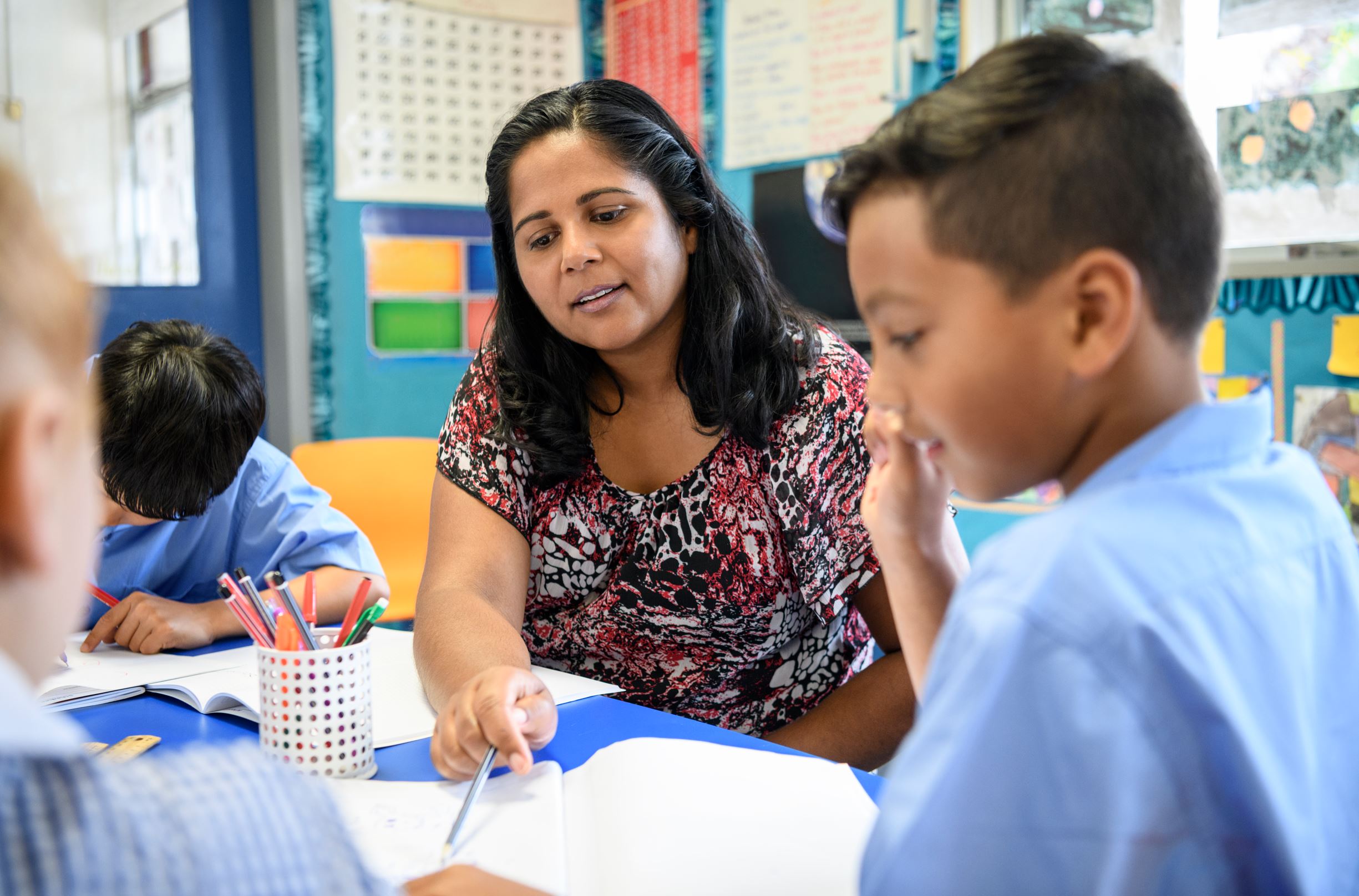
Schools should use evidence-based teaching practices in all classrooms, AERO has told the inquiry, including explicit instruction which is paired with the systematic provision of extra support for students who are at risk of falling behind.
The association also draws attention to behavioural incidents and suspensions, which it says school leaders consistently report most often involve boys.
“These behaviours often reflect underlying wellbeing challenges rather than defiance,” it argues.
“When boys experience relational rupture, repeated failure, or limited opportunities for agency and movement, they are more likely to withdraw, act out or disconnect from learning…”
Yet as Distinguished Professor Pamela Snow from La Trobe University flags in a blog post, being unable to read, write and spell is a ‘major correlate’ of emotional and behavioural difficulties.
“I’ve been researching the school-to-prison pipeline for the last two decades and the link between low literacy, behaviour problems and school disengagement is one of the most robust and immovable findings,” Snow writes.
“…it’s not play-based activities that youth offenders need to give them a chance at educational, vocational, and economic engagement.
“It’s having the mysteries of the English writing system unlocked for them – as efficiently and painlessly as possible…”
Earlier this year, one expert warned that commercially-motivated influencers in the manopshere are indoctrinating Australian boys, teaching them to reject the authority of teachers and the ‘woke’ school system.
A growing body of research has also found that boys are increasingly falling prey to a ‘regressive masculinist supremacy’ espoused by notorious ‘manfluencers’ such as Andrew Tate, with teachers reporting disturbing shifts in their behaviour and attitudes towards women.
Schools bearing the burden of wellbeing challenges
Health and wellbeing challenges amongst students have created a huge administrative burden for principals, the APPA signals – one that is ‘largely unfunded’ and that is diverting attention away from teaching and learning.
“Schools are increasingly facilitating vision, hearing and dental checks for children who did not access, or had access, to early health screening programs.
“Principals report that significant time is now spent managing consent forms, distributing reports, coordinating appointments and supporting families to access services,” it states.
Schools are now bearing too much responsibility in this space, the APPA suggests.
“The question must be asked: just because schools are present in every community, should they become responsible for every community challenge?” it poses.
AERO offers a different take
Meanwhile, AERO maintains that improving teaching quality is the greatest leaver schools have to ensure long-term improvement in educational attainment for all students.
Schools should use evidence-based teaching practices in all classrooms, it told the inquiry, including explicit instruction which is paired with the systematic provision of extra support for students who are at risk of falling behind in their learning.
AERO says that rigorous evidence demonstrates that there are particular teaching practices that benefit all children, regardless of year level, subject and background.
These include explicit instruction and guided practice which help to manage cognitive load, ensuring that new information is introduced in small, manageable chunks, the organisation says.
“These practices align with the cognitive science behind how students learn through the process of acquiring, retaining, retrieving and consolidating knowledge.
“Learning is most effective, when students can connect new information to prior knowledge. Students learn by transferring information from working memory, which has limited capacity, to long-term memory, where it is stored and used to build complex mental models.”
Timely feedback, opportunities for practice and meaningful tasks that allow students to draw on their growing mental models help to retain what is learned, AERO notes.
“Guidance is gradually reduced as students build stronger connections to knowledge in long-term memory, fostering independence and mastery in applying their learning.”
Committee Chair, Labor MP Tim Watts, says educational attainment has a profound impact on individuals, communities, and the broader economy.
“We want to hear directly from parents and students, school communities, educators, and experts about what is working well and where improvements are needed,” he said in a call for submissions, which have now closed.
“Submissions are a vital part of the inquiry process. They help us understand the issues and ensure that recommendations are informed by evidence and real-world experience.”