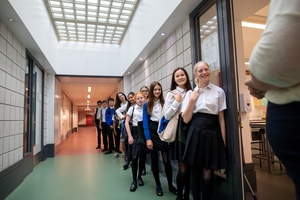

Recently, for example, I came up with ‘les arts du cirque’ for my Year 7 students.
We have numerous expressions that include the word ‘cirque’ in French, such as ‘Arrête ton cirque!’ which expresses the fact you are annoyed by somebody.
It can also refer to chaos, such as ‘c’était le cirque à la maison’ – a phrase used when children are doing what they want and are out of control.
But we must remember that circus as an artform is about magic, passion and freedom.
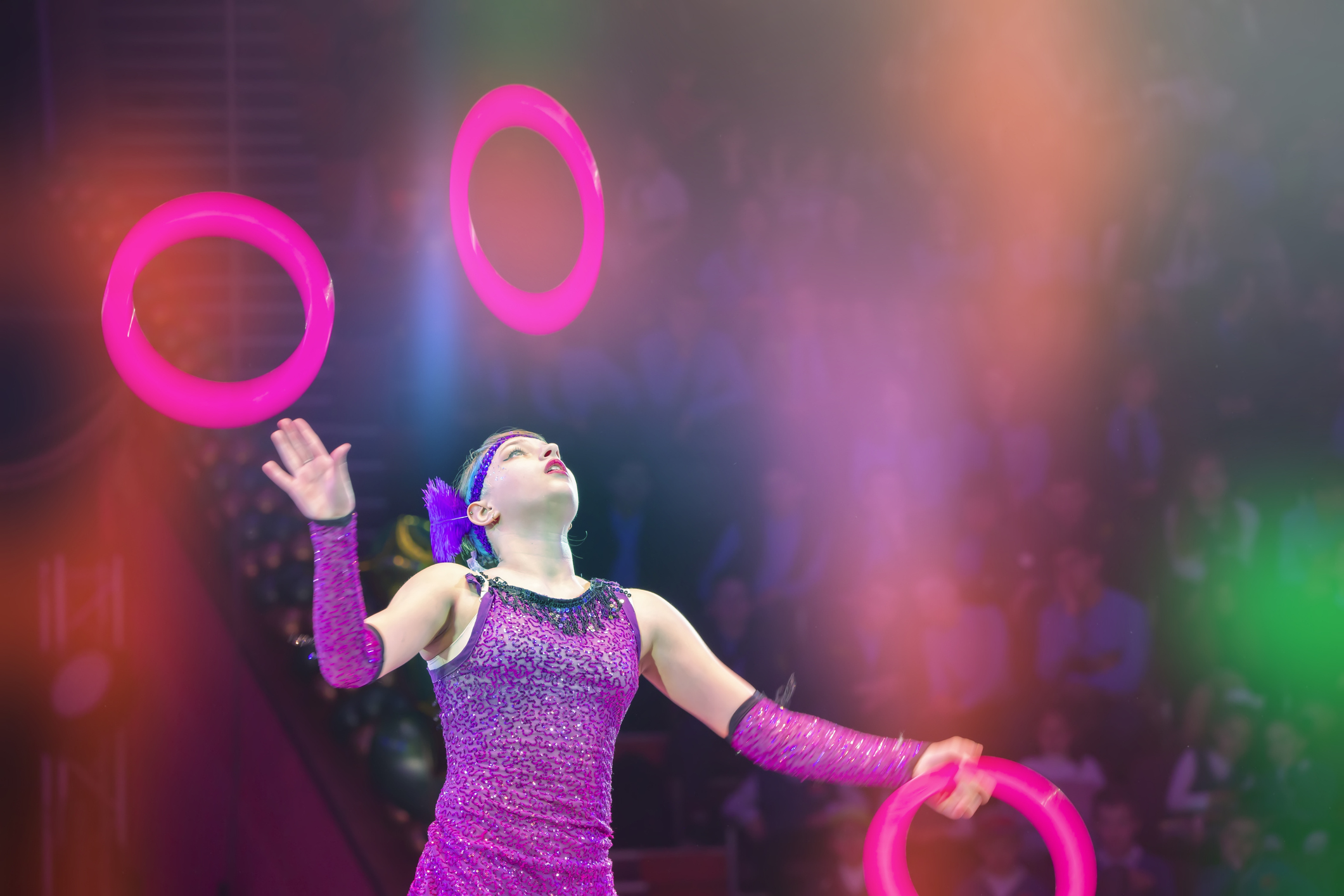
Among different techniques, juggling is one of the most well knwn. It stimulates hand-eye coordination and dexterity.
In our special circus workshop, students started practising with a scarf (which fall slower and is called ‘le foulard’) and juggling balls.
Then, they tried the trick with flower sticks (bâtons-fleur) and spinning plates. I wanted my students to focus, have fun, but also be immersed in French.
This is where Anthony Panel, Director of the French Circus school stepped in.
As Anthony underlined to my students: "In circus, nothing is easy – just like in life. Students often want to move straight to difficult tricks, which requires learning listening, patience, and repetition. [Workshops like these] help them develop perseverance, coordination, focus, as well as self-confidence through a progressive learning process’.
This activity is also a fantastic idea for students with special needs, he suggested.
“I have been teaching sport and circus activities for over twenty years, and through my experience working with children with special needs, I have consistently observed that circus always brings something positive.
“Every child is able to find their place within the activities, as each discipline requires a different form of focus and engagement, and the sessions are non-competitive.
“This inclusive environment allows each participant to progress at their own pace and to experience success in a way that suits their abilities and needs”.
As Anthony emphasised, “I am not an artist, I am a teacher”.
“When I was a teenager, some older friends of mine practiced juggling, and I found it very inspiring. I was fascinated by it, as it seemed both accessible and highly challenging. The sense of challenge it represented has always attracted me, as well as the constant progression that these disciplines allow.
“Originally, I planned to become a general classroom teacher, but life eventually led me towards sport and then circus. Through the circus teaching, I discovered a unique and engaging way to teach, support young people in their development, and help them build confidence.”
But there is of course a distinction between the circuses of old and what we see today.
We all remember the traditional ones with clowns and animals, which have changed over the years to be replaced by a more artistic and ethical offerings.
Anthony said he had never been particularly drawn to the traditional circus.
“My inspiration mainly comes from contemporary circus. I am especially inspired by companies such as Cirque Plume, as well as smaller companies that combine artistic research with strong technical skills. I began my circus journey spending countless hours training and exploring different circus disciplines.
“Over the years, I have been fortunate enough to meet some outstanding artists and educators who helped me grow both technically and pedagogically, such as Bruno Frenette, a prominent circus art pedagogue, technical director and funambulist (wire-walking) specialist based at the Centre européen de funambulisme, in Brussels.”
You will appreciate how the benefits and pedagogical approach of this circus workshop was more focused on the joy of play rather than fostering competition.
Students learn to accept a dropped ball, a loss of balance and to persevere. Isn’t it what we try to teach them every day?